War at sea
Ukraine offers Russia Black Sea ceasefire as grain exports plunge
Kyiv has proposed suspending attacks on civilian targets after Russian strikes drove ships away from Odesa and cut a route crucial to global food markets.
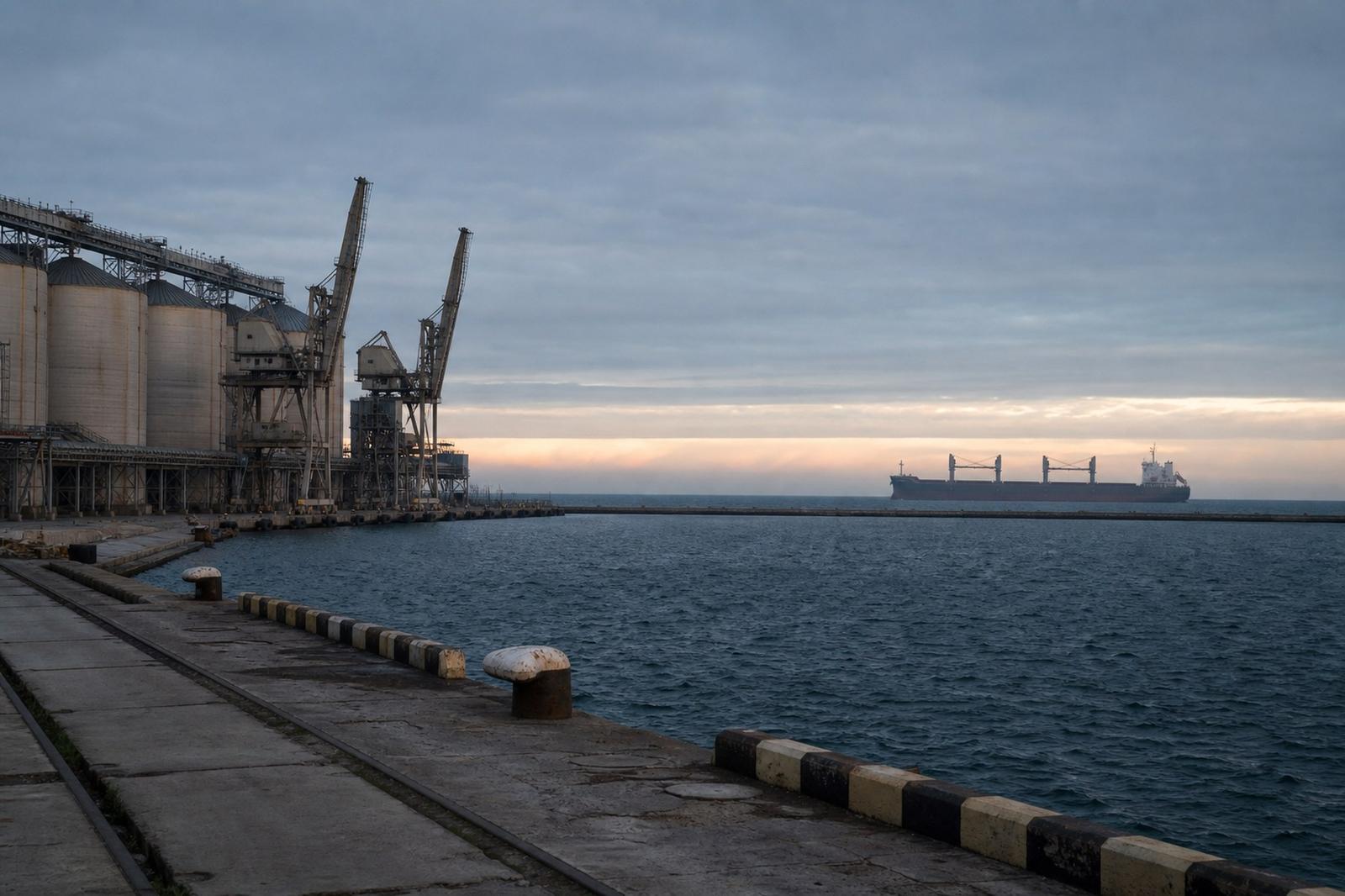
Ukraine has sent Russia a proposal to stop attacks on civilian targets in the Black Sea, seeking to reopen a maritime corridor that has been progressively closed by strikes on ports, merchant vessels and grain terminals. The offer was transmitted through a third party, according to a person familiar with it who spoke to Reuters, and Kyiv was still awaiting a response.
The initiative is not a general ceasefire in the war. It is a narrower attempt to impose rules on a maritime confrontation that is damaging both countries’ export infrastructure, although Ukraine has suffered the more immediate loss of access to commercial shipping. Russia has not acknowledged receiving the proposal. Alexander Grushko, its deputy foreign minister, said Moscow had heard public discussion of moratoriums but had not been presented with one formally.
We have not received any formal proposals. — Alexander Grushko, Russia’s deputy foreign minister, according to TASS
Turkey, which controls access between the Black Sea and the Mediterranean, urged both sides on Sunday to suspend attacks in the area. Ankara helped the United Nations broker the 2022 agreement that allowed Ukrainian food exports to pass safely after Russia’s full-scale invasion. Moscow declined to extend that arrangement in 2023, after which Ukraine established its own coastal corridor. That route continued to function until the latest escalation made the risks unacceptable to many shipowners.
A blockade measured in missing ships
The commercial effect has been abrupt. Ukrainian grain exports are down 76% year on year so far in August, according to a senior official at state railway Ukrzaliznytsia. Shipowners began suspending calls at the main ports around Odesa in late July after Russian forces repeatedly struck ships and logistics sites.
Odesa regional prosecutors said 28 civilian vessels were hit and 21 people killed between 20 June and 20 July. One Russian strike on a ship carrying corn killed ten people, most of them foreign crew members. The mounting human cost, together with higher war-risk insurance and uncertainty over whether ships can leave after loading, has turned the threat of blockade into an effective commercial barrier.
Ukraine’s farmers’ union estimates that the country has lost roughly one-third of its Black Sea grain-export capacity. Monthly capacity has fallen from about six million tonnes to around four million. That matters because approximately 90% of Ukraine’s exports of wheat, corn and sunflower seeds normally pass through the Black Sea. Ukraine accounts for about 6% of global wheat supply and 11% of corn, making even a partial interruption visible far beyond the war zone.
The export war reaches both shores
The maritime campaign is not one-sided. Ukraine has expanded attacks on Russian military logistics, oil tankers and other vessels in the Black Sea and Sea of Azov. Its strike on Novorossiysk this week damaged two of the Russian port’s three grain terminals, according to reporting cited by the Associated Press, and one terminal stopped operating. Russia then struck sites in Ukraine’s Odesa region, including infrastructure at Chornomorsk.
Kyiv argues that its operations are intended to isolate occupied Crimea and reduce Russian energy revenue. Moscow says the vessels and port installations it targets support Ukraine’s armed forces. Those competing claims do not remove the risk to civilian crews or to the food cargoes sharing the same waters.
The result is a struggle over two of the world’s largest grain exporters at the moment when the harvest should be moving towards buyers. The market has already registered the danger. During a sharp phase of the escalation in mid-July, benchmark wheat on Euronext rose 7% in a single session to €231.75 per tonne, its highest level since February 2025. Prices later surrendered part of their gains when news of the Ukrainian proposal emerged, showing how quickly expectations now turn on the prospect of safe passage.
Europe can absorb only part of the traffic
Ukraine can move some crops through Danube ports, by rail and through so-called dry ports along its western frontier. Cargo can also be redirected towards Romania’s Constanța complex. These routes prevented a complete shutdown during earlier phases of the war, but traders and logistics specialists say they cannot replace the full capacity of Odesa, Chornomorsk and Pivdennyi. Longer journeys, border transfers and scarce storage also raise costs.
That is the concrete European dimension. Disruption in the Black Sea shifts demand towards European Union grain, sends more freight towards Romania and exposes Euronext prices to every military development around the ports. Luxembourg is not a principal grain-trading centre, but its households and food businesses buy within that European market.
A maritime ceasefire would therefore do more than protect Ukrainian exports. It could reduce pressure on shipping insurance, restore confidence among crews and prevent a bilateral campaign against ports from becoming a broader food-security shock. For now, however, the proposal remains unconfirmed by Moscow and unsupported by an enforcement mechanism. The missing ships off Odesa show that the commercial blockade is already real, even before the diplomacy has formally begun.
Frequently asked
- Has Russia accepted Ukraine’s Black Sea proposal?
- No. Kyiv was awaiting a response, while Russia’s deputy foreign minister said Moscow had received no formal proposal.
- Why do Ukraine’s ports matter to global food supplies?
- Ukraine supplies about 6% of the world’s wheat and 11% of its corn, with roughly 90% of its main crop exports normally travelling through the Black Sea.
- Can Ukraine replace the Black Sea route?
- Railways, Danube ports and routes through Romania can carry some grain, but they lack the capacity and efficiency to replace the main Odesa ports.
Sources
Around Europe
A look at recent reporting on europe from the Étude newsroom.
Related by topic
Other Étude stories tagged with the same topics as this article.
More in Europe




Trending at Étude
Culture Luxembourg's cuisine: the national dish and traditional classics
Travel & Climate Weather and Climate in Luxembourg: What to Expect, Month by Month
Family finance Child Benefit in Luxembourg: Amounts and How to Claim the Allocations Familiales
Mobility Alzingen bypass: why Luxembourg is moving a EUR 390 million road bill now