Europe’s fire emergency
Wildfires near Bordeaux and Madrid force more than 250,000 to flee
A renewed advance in Gironde prompted 55,000 additional evacuations as France deployed troops and Spain managed its first national wildfire emergency.
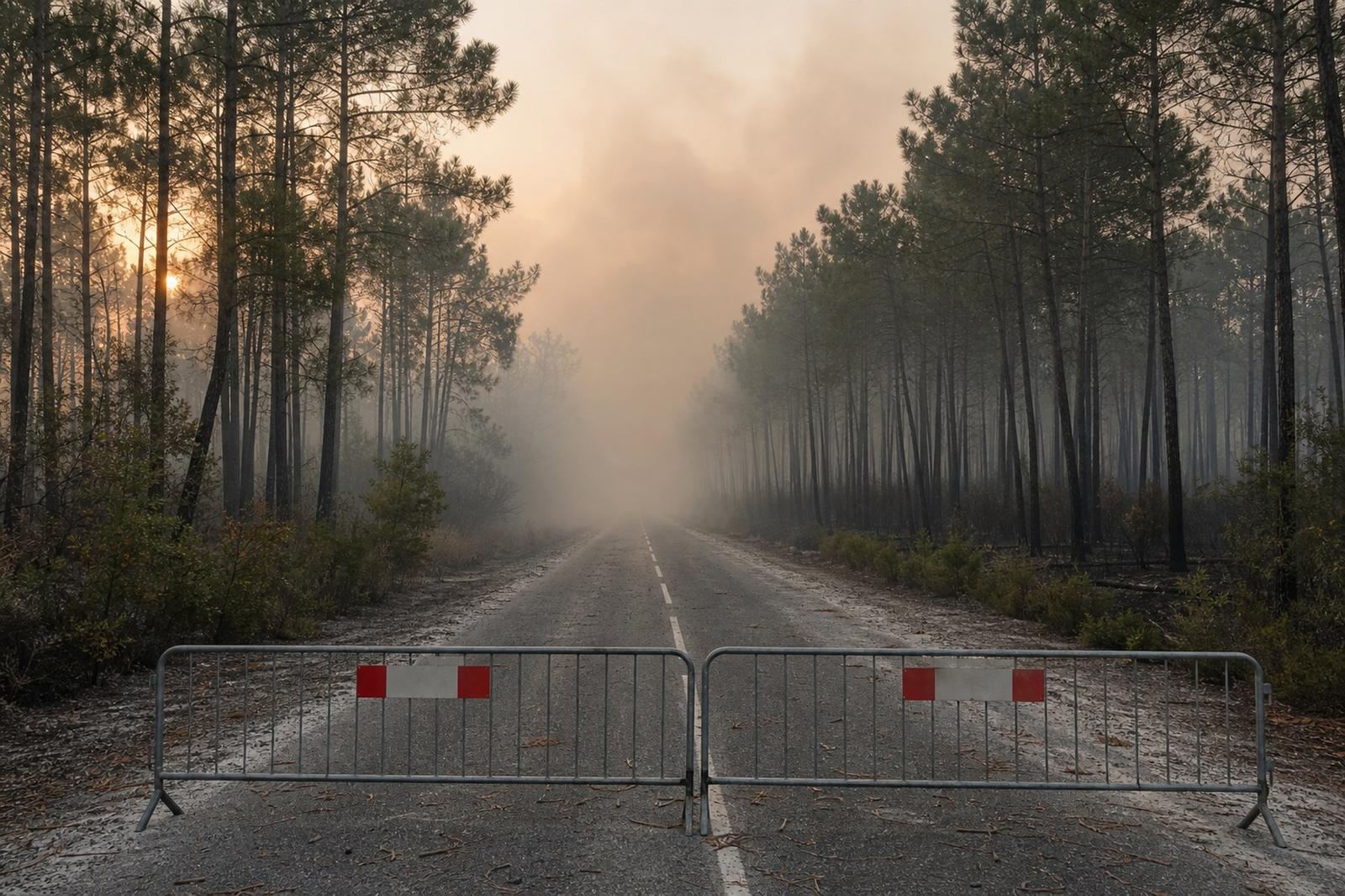
More than a quarter of a million people had been driven from homes, campsites and holiday accommodation in France and Spain by early Sunday as fast-moving wildfires threatened the approaches to Bordeaux and communities west of Madrid. The evacuations, spread across several distinct fires, have turned a severe summer fire season into a mass civil-protection emergency spanning two of the European Union’s largest countries.
The latest escalation came in Gironde on Saturday evening, when authorities ordered another 55,000 people in five municipalities on the western side of the Bordeaux metropolitan area to leave. Residents and tourists had already been evacuated from the Arcachon basin, the Cap-Ferret peninsula and parts of neighbouring Landes. Some earlier evacuees escaped by boat when roads became congested or unsafe.
The Gironde fire reaches the edge of a major city
The principal Gironde fire began near Lège-Cap-Ferret on Wednesday, 22 July. By Saturday it had covered more than 32,000 hectares, consuming maritime-pine forest and destroying homes as shifting winds repeatedly changed its direction. What began as a coastal forest emergency consequently became a threat to the western approaches of Bordeaux, forcing authorities to organise evacuations on an urban scale.
Interior Minister Laurent Nuñez said the decisive change came when the wind turned and the fire began generating enough energy to sustain its own advance. Officials have said evacuees will not be permitted to return until firefighters have stopped the front’s progress and local authorities have declared individual areas safe.
“We learned in the middle of the afternoon that, following the wind shift, it had become a large, self-sustaining fire that is extremely difficult to bring under control.”
Laurent Nuñez, French interior minister, speaking to TF1
France reinforced civilian crews with 1,500 soldiers and deployed an adapted A400M military transport aircraft capable of dropping 20 tonnes of water or fire retardant. Its first operational mission over Gironde illustrated the scale of the response. The final stage of the Tour de France was shortened so that police and security personnel could be reassigned to the emergency.
The wider national picture is also exceptional. Nuñez said fires had burned nearly 98,000 hectares across France since the beginning of 2026, a historic annual total even though the summer is far from over. Other active fronts included a fire in the Var that had burned about 4,000 hectares and another near Corte in Corsica.
Spain invokes national powers for the first time
In Spain, at least 60,000 people were evacuated from towns and villages in and around Madrid and Ávila. Two major fires west of the capital merged, while authorities sought to protect settlements near the Sierra de Guadarrama. The central government declared a national wildfire emergency for the first time, allowing it to coordinate additional resources above the regional level.
The Spanish crisis consists of several simultaneous fires rather than one continuous front. A man died in a separate blaze near Valencia, according to local authorities. Earlier fires had already caused extensive destruction elsewhere in the country, leaving crews and aircraft stretched before the latest outbreak around Madrid and Ávila.
That distinction matters when reading the evacuation figure: more than 250,000 people have been displaced across two countries and multiple emergencies. It is not a single fire perimeter, and investigators have not established one common cause for the outbreaks.
European aircraft cross borders
Both governments requested assistance from European partners. Croatia and Portugal pledged firefighting aircraft to France, while the Czech Republic and Slovakia provided heavy helicopters. Italy and Greece each sent two Canadair water-bombing aircraft to Spain. The movements show why specialised aircraft are pooled internationally: simultaneous fires can exhaust a country’s fleet just as weather conditions become most dangerous.
For Luxembourg, the link is institutional rather than geographical. The Grand Duchy is not in the fire zone, but it participates in the same EU Civil Protection Mechanism now moving scarce equipment and crews across borders. The emergency is therefore a practical test of a shared European system, not an invented local threat.
A narrow weather window before the heat returns
Crews gained limited relief from lower temperatures and higher humidity in some areas, but forecasts point to another deterioration. France’s fourth major heatwave of the summer is expected to begin in the south-west on Tuesday, 28 July, spread across much of the country on Wednesday and bring widespread highs of 35°C to 40°C. Forecasters say the episode could persist through the weekend of 1 and 2 August.
A forecast is not a verdict on how an individual fire will behave: wind direction, humidity, terrain and the success of containment lines remain decisive. It does, however, leave firefighters with little margin. Until the Gironde front stops advancing and the fires west of Madrid are secured, the central news remains the protection and shelter of displaced people rather than any early promise of recovery.
Frequently asked
- How many people have been evacuated?
- Authorities report more than 250,000 evacuations across France and Spain, including 55,000 additional orders around Bordeaux on Saturday.
- Where are the largest current fires?
- The principal fronts are in Gironde near Bordeaux and in central Spain west of Madrid, with other active fires in Landes, Var, Corsica and additional Spanish regions.
- Why is the European Union involved?
- France and Spain requested cross-border assistance, prompting EU partners to provide specialised firefighting aircraft and helicopters.
Sources
Around Europe
A look at recent reporting on europe from the Étude newsroom.
More in Europe




Trending at Étude
United Kingdom Starmer Quits, and Britain Lines Up Its Seventh Prime Minister in a Decade
Connectivity Mobile and internet providers in Luxembourg compared
Personal Finance How to Open a Bank Account in Luxembourg: A Guide for Newcomers, Residents and Cross-Border Workers
Critical minerals Washington Backs a Kazakh Tungsten Mine. The President's Sons Are Inside the Deal.