Circular economy
EU bans large companies from destroying unsold clothes and shoes
From today, covered businesses must seek a useful destination for unwanted fashion stock, while narrowly defined exemptions remain for unsafe, damaged or otherwise unusable goods.
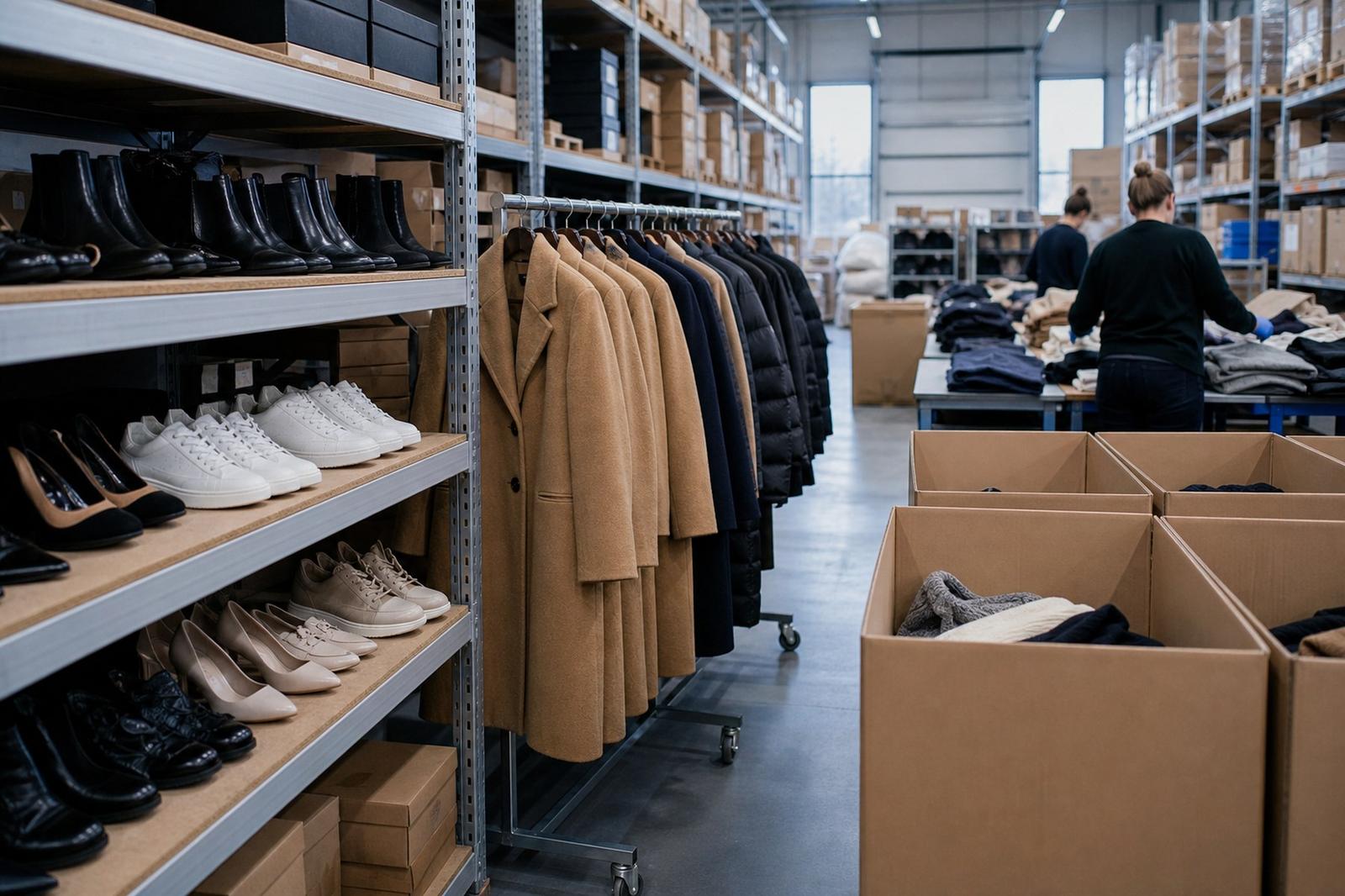
BRUSSELS — Large companies operating in the European Union are from Sunday prohibited from routinely destroying unsold clothes, clothing accessories and footwear, as a delayed but consequential part of the bloc’s sustainable-products legislation begins to apply.
The measure changes what businesses may do with stock that has failed to sell or has been returned by customers. Covered operators are expected to pursue resale, donation, reuse, refurbishment or remanufacturing instead of sending usable products for recycling, incineration or landfill. The prohibition applies directly across the EU, including Luxembourg.
It is not an absolute ban on disposing of every garment. EU legislation retains exemptions for products that are dangerous, unlawfully non-compliant, contaminated, irreparably damaged or affected by substantiated intellectual-property restrictions. But destruction is meant to become a documented last resort rather than an ordinary solution to overproduction or costly returns.
A broad definition of destruction
The rule forms part of the Ecodesign for Sustainable Products Regulation, adopted in 2024. Its definition matters: destruction includes deliberately damaging or discarding a product, and it generally encompasses recycling as well as energy recovery, incineration and landfill when an unused product is turned into waste.
Simply shredding an unworn shirt for fibre recovery therefore does not provide a routine escape from the prohibition. Delivering a product for preparation for reuse, refurbishment or remanufacturing is treated differently because the product can retain its intended function.
The initial ban covers apparel, clothing accessories and footwear. Large enterprises are covered from 19 July 2026. Medium-sized businesses are due to enter the regime on 19 July 2030, while micro and small enterprises are exempt from the prohibition. National authorities are responsible for oversight.
The Commission has also established a standard format through which businesses will disclose the quantities and weight of unsold consumer goods discarded, as well as the reasons and subsequent treatment. That format applies from February 2027. The transparency obligation is intended to expose waste that has been difficult to measure consistently.
Exceptions require evidence
Companies may still destroy an item if it poses a health or safety risk, cannot legally be sold, is contaminated, or has damage or deterioration that makes consumer use unacceptable and cannot feasibly be repaired. Non-functional products with design or manufacturing defects may also qualify when repair is technically impossible.
Intellectual-property cases are covered, but the rules demand substantiation rather than a general claim that discounted stock could weaken a brand. Other exemptions address products for which protected markings cannot feasibly be removed and limited contractual restrictions that genuinely prevent further distribution.
If none of the principal exemptions applies, a company may seek permission to destroy stock after offering it for donation to at least three suitable social-economy organisations in the EU, or advertising the offer on an accessible company webpage for at least eight weeks, without finding a recipient.
Businesses using an exemption must retain the relevant evidence for five years and provide it electronically to a competent authority when requested. Even where destruction is permitted, the EU waste hierarchy gives priority to recycling over energy recovery and disposal.
“The textile sector is leading the way in the transition to sustainability, but there are still challenges. The numbers on waste show the need to act,” EU environment commissioner Jessika Roswall said when the implementing measures were presented in February.
The scale behind the rule
The European Environment Agency estimates that 4% to 9% of textile products placed on the European market are destroyed before their intended use. That represents roughly 264,000 to 594,000 tonnes a year, although the agency cautions that available data remain fragmented.
Online retail is a significant part of the problem. The agency estimates that about one in five garments bought online in Europe is returned, a rate up to three times that of physical shops. Between 22% and 43% of returned online clothing may subsequently be destroyed.
Processing and destroying returned or unsold textiles may generate as much as 5.6 million tonnes of carbon-dioxide-equivalent emissions, according to the agency. Those emissions reflect materials, manufacturing, packaging and transport already invested in products that are never used as intended.
What changes in Luxembourg
For Luxembourg consumers, Sunday’s change will mostly occur behind the shopfront. The regulation does not create a right to buy every leftover item at a discount, nor does it require retailers to donate stock to a particular organisation. It changes the obligations of covered businesses once goods remain unsold.
Large fashion groups selling in Luxembourg must be able to account for how they handle unwanted inventory, including returns from online customers. Regional warehouses or group-level stock systems do not remove the obligation when the economic operator falls within the regulation’s scope.
The commercial effect may be more outlet sales, better forecasting, repair, redistribution or partnerships with social organisations. The precise mix will be chosen by companies. The legal direction, however, is clear: destroying usable fashion stock to solve an inventory problem is no longer an accepted default in the EU.
Frequently asked
- Does the EU ban apply in Luxembourg?
- Yes. It is contained in an EU regulation that applies directly across member states, including Luxembourg.
- Can damaged or unsafe clothes still be destroyed?
- Yes, when a defined exemption applies and the company can document why reuse, repair or another lawful option is unavailable.
- Are small retailers covered immediately?
- No. Micro and small enterprises are exempt from the prohibition, and medium-sized businesses are scheduled to become subject to it in 2030.
Sources
Around Europe
A look at recent reporting on europe from the Étude newsroom.
Related by topic
Other Étude stories tagged with the same topics as this article.
More in Europe

Atari Relocates Its Legal Home to Luxembourg After Shareholders Back France Exit


How to buy a property in Luxembourg: the process, costs and notary
Trending at Étude
Intelligence Japan launches its first central spy agency since 1945 to counter Russia and China
Cross-border rail CFL to halt all trains between Luxembourg and Thionville for five weeks this summer
Parent guide The Luxembourg school system explained: public, European and international schools
Family finance Child Benefit in Luxembourg: Amounts and How to Claim the Allocations Familiales