Finance

Luxembourg is Europe's second-largest investment-fund centre. We cover the asset managers, the regulator, cross-border tax rules, fintech, and the policy fights that determine where capital flows in the Grand Duchy and beyond.

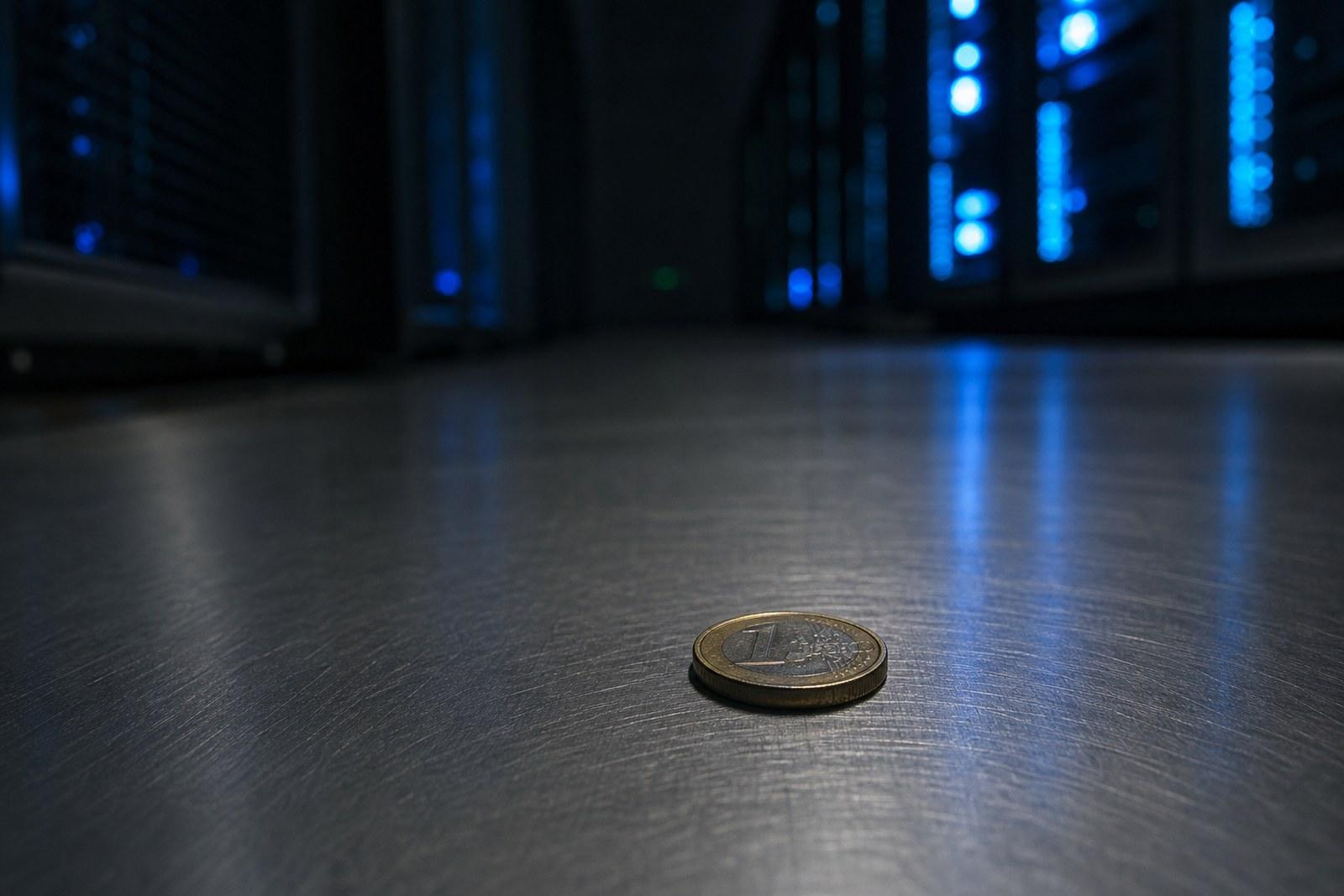
A single euro coin on the brushed-steel floor of a dark data-centre aisle, lit by cool blue equipment light.
Monetary sovereignty

Europe's race for a digital euro runs through Luxembourg

A US law has accelerated dollar-backed stablecoins, prompting the ECB to push for a digital euro by 2029. Luxembourg, the EU base for PayPal and Amazon and a hub for blockchain-bond experiments, is unusually exposed to the outcome.

By Pierre Hansen

  • A parent pushes a pram along a tree-lined avenue in Luxembourg, seen from behind.
    Family finance

    Child Benefit in Luxembourg: Amounts and How to Claim the Allocations Familiales

    Luxembourg's family allowance pays €315.04 per child per month, rising with age supplements at 6 and 12. A back-to-school allowance of €115 or €235 is added each August, and a €1,740.09 birth allowance is paid in three tranches. The Caisse pour l'avenir des enfants (CAE) handles every claim, for residents and for the children of cross-border workers alike.

    By Luc Bertemes

  • A person waits in a public employment-office corridor in Luxembourg.
    Money & Work

    Unemployment benefits in Luxembourg: who qualifies and how much you get

    Lose your job in Luxembourg through no fault of your own and the State pays full unemployment benefit (indemnité de chômage complet): 80% of your prior gross salary, or 85% with a dependent child. You must register with ADEM within four weeks, apply within two weeks of registering, have worked at least 182 days in the previous 12 months, and be a resident aged 16 to 64. Benefit runs for up to 12 months and is applied for online.

    By Luc Bertemes

  • Dawn commuter traffic heads toward Luxembourg City on a cross-border motorway.
    Cross-border workers

    Frontalier taxes in Luxembourg: the 90% rule and the remote-work day limits explained

    Nearly half of Luxembourg's workforce commutes from France, Belgium or Germany. These frontaliers are taxed at source in tax class 1, but can opt for resident assimilation to unlock class 2 and deductions if 90% of household income is taxed in Luxembourg (50% for Belgians). A separate 34-day limit governs how many home-working days stay tax-free; social security uses yet another rule, allowing up to 49% remote work.

    By Pierre Hansen

  • Filing a tax return on a laptop at a home desk at night in Luxembourg.
    Personal finance

    How to file your income tax return in Luxembourg

    Many Luxembourg residents and non-residents must file a full income tax return on the modèle 100 form. Filing is mandatory if taxable income tops 100,000 euros, if non-withheld income exceeds 600 euros, or if combined salaries exceed 36,000 euros. For the 2025 tax year the return can be filed from 7 April 2026 to 31 December 2026, online via MyGuichet.lu or on paper. Those only seeking a refund can instead request an annual adjustment (décompte annuel).

    By Luc Bertemes

  • An older person's hands rest on a cane on a park bench in autumn.
    Personal finance

    How the Luxembourg state pension works: retirement age, contributions and how it's calculated

    Luxembourg's statutory pension is a contributory first-pillar scheme run by the CNAP. The standard retirement age is 65, with early options at 57 or 60 under strict conditions. You need at least 120 months (10 years) of insurance to qualify. Contributions total 25.5% of capped pay, split equally between employee, employer and state (raised from 24% in January 2026). The pension combines a flat-rate part tied to career length and a proportional part based on lifetime earnings.

    By Pierre Hansen

  • A signed deed, a fountain pen and house keys on a notary's desk by a window over Luxembourg townhouses.
    Homeownership explained

    How to buy a property in Luxembourg: the process, costs and notary

    Buying a home in Luxembourg follows a clear path: a bank pre-approval, a signed offer, a binding compromis de vente, then the notarial deed (acte notarié) that transfers ownership. On top of the price, expect registration and transcription duties of roughly 7% plus a notary fee of around 1%. The Bëllegen Akt tax credit of up to EUR 40,000 per buyer and the 3% VAT on building cut those costs. There are no restrictions on foreigners buying.

    By Luc Bertemes

  • A supermarket trolley of groceries with a long receipt, in Luxembourg.
    Money & living costs

    The Cost of Living in Luxembourg: Is It Expensive, and How Much Do You Need?

    Luxembourg ranks among Europe's most expensive countries, driven overwhelmingly by housing. A one-bedroom flat in Luxembourg City rents for roughly €1,966 a month (Numbeo, May 2026). A single person can expect about €2,700-3,300 a month including rent; a family needs more. Free public transport, high salaries and an indexed minimum wage of €2,703.74 gross partly offset the cost. This explainer breaks down rent, groceries, transport, childcare and health.

    By Pierre Hansen

  • A half-renovated house with scaffolding, blueprints and a hard hat on a table in warm light.
    Housing finance

    How to Get the 3% Super-Reduced VAT for Building or Renovating Your Home in Luxembourg

    Luxembourg's "TVA logement" scheme cuts VAT to a super-reduced 3% (instead of the 17% standard rate) on building or renovating a dwelling used as a principal residence. The benefit is capped at €50,000 of VAT per dwelling. Claim it by direct application (the contractor invoices at 3% after AED approval) or by reimbursement of the difference afterwards via the AED. The home must be a main residence for at least two years. Separate from the Bëllegen Akt purchase credit.

    By Pierre Hansen

  • Ripe cocoa pods on a tree and cocoa beans drying on mats under bright sun.
    Commodities

    From shortage to glut: how the cocoa boom turned into a West African crisis

    Cocoa nearly tripled to a record above $12,000 a tonne in December 2024, then crashed to about $3,100 by early 2026 as the market swung from deep deficit to a 300,000-400,000-tonne surplus. Better West African weather lifted output just as chocolate-makers cut bar sizes and substituted cocoa butter, destroying demand. Now Ivory Coast and Ghana, together nearly 70% of world supply, cannot sell their beans. This explainer unpacks the cycle, the human cost and what to watch.

    By Luc Bertemes

  • A debit card and a smartphone with a banking app on a clean desk in cool light.
    Personal Finance

    How to Open a Bank Account in Luxembourg: A Guide for Newcomers, Residents and Cross-Border Workers

    Both residents and non-residents can open a bank account in Luxembourg. The main retail banks are Spuerkeess (BCEE), BGL BNP Paribas, BIL, ING Luxembourg and POST Finance, alongside neobanks like Revolut and N26 for everyday spending. You typically need a valid passport or ID, proof of address, your matricule (national social security number) and often an employment contract. An in-branch identity check is common, but several banks let you start online. Fees vary by bank.

    By Luc Bertemes

  • A vast LNG terminal at night, storage tanks and a tanker under floodlights with a gas flare.
    Energy markets

    How One Strike on Qatar Flipped the Global Gas Market Into Deficit

    In early March 2026, attacks on Qatar's Ras Laffan complex knocked out an estimated 17% of LNG capacity, damaging two of 14 liquefaction trains and a gas-to-liquids unit and sidelining about 12.8 million tonnes a year for three to five years. QatarEnergy declared force majeure on contracts to Italy, Belgium, South Korea and China. Gas prices spiked, and a market braced for a record glut swung into a multi-year deficit. What LNG is, who is hit hardest, and what to watch.

    By Pierre Hansen

  • A vast terraced open-pit copper mine under a clear sky, haul roads spiralling down.
    Commodities

    Copper's Wild Year: Record Highs, a Zero-Dollar Smelting Fee, and the Metal Powering Electrification

    Copper crossed $12,000 a tonne for the first time in December 2025 and spiked to a record near $14,500 intraday on 29 January 2026, driven by electrification, AI data centres and tight supply. The twist: the 2026 treatment-and-refining-charge benchmark settled at $0, the lowest ever, squeezing smelters. The IEA warns of a possible 30% supply deficit by 2035 and flags that China controls about half of global smelting capacity.

    By Pierre Hansen

  • A wall of softly glowing financial-data screens in a dim dealing room, figures blurred.
    Fund Regulation

    Brussels sets higher liquidity benchmarks for money-market funds, putting Luxembourg's vast sector on notice

    The European Commission has published its long-awaited review of the EU's Money Market Funds Regulation, alongside new guidance recommending, for the first time, liquidity benchmarks above the legal minimums. The FAQs point to weekly liquid asset levels of 40% for stable-NAV funds and 20% for variable-NAV funds. Luxembourg's CSSF flagged the move to the local fund industry on 15 May 2026.

    By Pierre Hansen

  • Euro banknotes and coins beside a payslip on a desk in warm light.
    Pay explained

    What is the average salary in Luxembourg — and what's left after tax?

    Half of Luxembourg's full-time employees earn under €58,126 gross a year (STATEC). The average — €75,919 — is pulled up by high finance salaries. After ~12% social security and progressive income tax (0–42% plus a surcharge), most workers take home roughly 65–80% of their gross, depending on income and tax class.

    By Luc Bertemes

  • A desk with a calculator, a pen and a printed tax form in soft morning light.
    Luxembourg taxes

    Tax Classes in Luxembourg (1, 1a, 2) Explained: Which One Are You In?

    Luxembourg sorts taxpayers into class 1 (single, no children), class 1a (single parents, widowed, people 65+) and class 2 (married couples and PACS partners taxed jointly, usually the most favourable). Your class is on your withholding tax card. Tax runs from 0% to 42% plus a 7-9% surcharge. Married cross-border workers default to class 1 unless they request assimilation. A reform replaces the classes with one from 2028.

    By Pierre Hansen

  • A polished corporate lobby with a wall of frosted glass and an empty reception desk in cool morning light.
    Corporate Relocation

    Atari Relocates Its Legal Home to Luxembourg After Shareholders Back France Exit

    Atari, the iconic gaming brand currently headquartered in France, will move its legal domicile to Luxembourg after shareholders approved the re-domiciliation by 95.25% at a general meeting on 27 May 2026. The cross-border conversion of Atari SA into a Luxembourg public limited company is expected to complete by July and runs alongside a reverse stock split and the acquisition of Sweden's Thunderful.

    By Pierre Hansen

  • A smartphone displaying a euro symbol over a contactless payment terminal.
    Money

    The digital euro inches closer: what it is, and what it is not

    The European Central Bank spent 2026 moving its digital euro from study to trial, inviting banks to join a pilot and pressing lawmakers to pass the enabling regulation. A digital euro would be public money on your phone - a complement to cash, not a replacement - with a cap on how much you can hold and a cash-like privacy mode offline. Here is where the project stands and what it would mean.

    By Tom Reuter

  • A smartphone showing a bank transfer screen with a name-match confirmation.
    Banking

    Why your bank now checks the name behind every IBAN

    Since 9 October 2025, banks across the euro area - Luxembourg included - must run a free "Verification of Payee" check before you confirm a transfer, flagging when the name you typed does not match the IBAN's real account holder. It is part of the EU's Instant Payments Regulation, which also forces banks to offer ten-second transfers at no extra cost. Here is what changed and why.

    By Luc Bertemes

navigateopenescclose