Federal Reserve
Alan Greenspan, the Fed's maestro and its reckoning, dies at 100
For nearly two decades and four presidents he was the most powerful economic official in the world. The crash of 2008 forced a humbler verdict on his record.
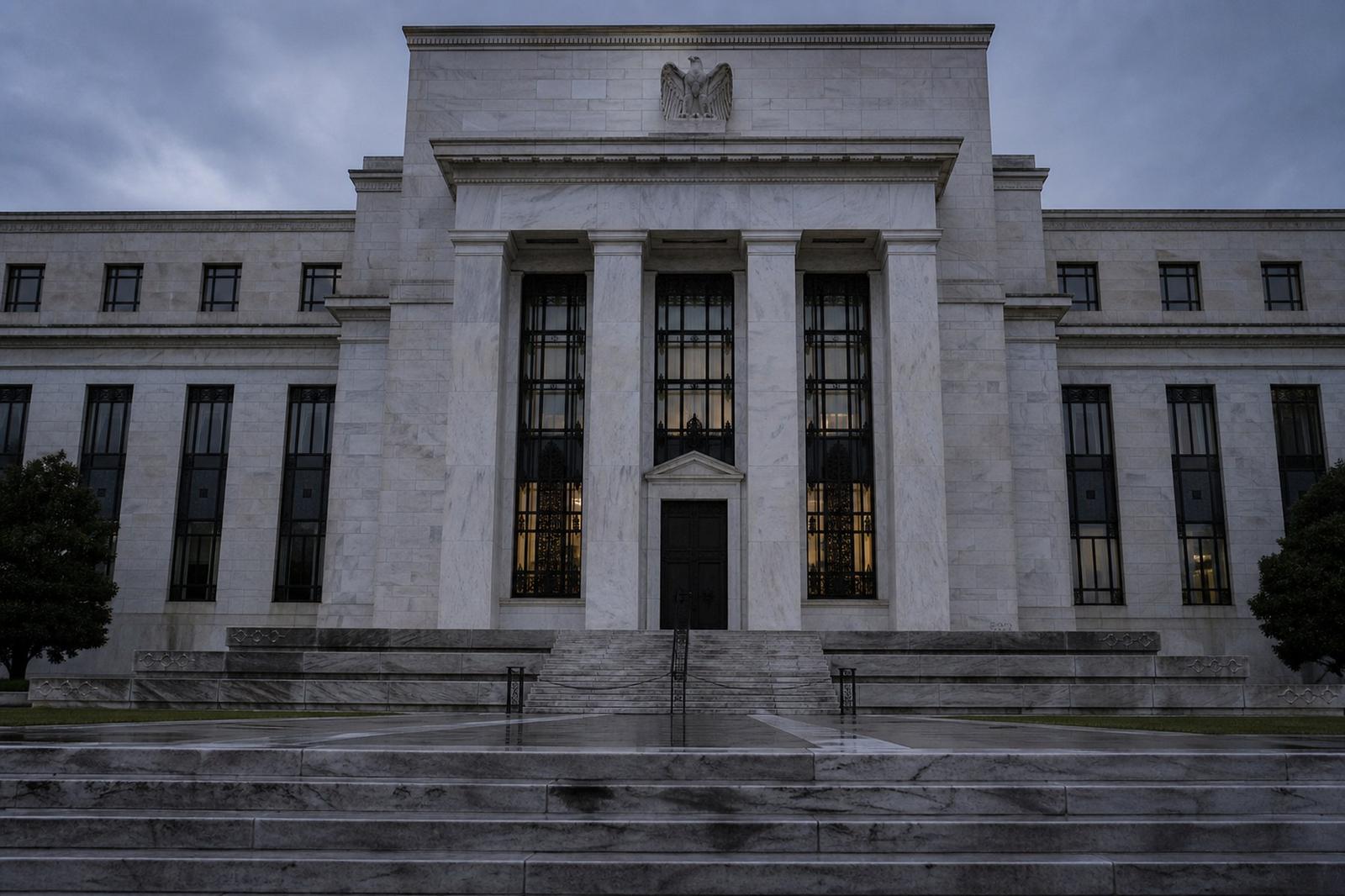
Alan Greenspan, who for nearly two decades presided over the Federal Reserve and came to personify the belief that a single technocrat could steer the world's largest economy, died on Monday at the age of 100. His wife, the NBC News correspondent Andrea Mitchell, said the cause was complications of Parkinson's disease.
Appointed by President Ronald Reagan in 1987 and reappointed by three of his successors, Greenspan ran the US central bank until 2006 — the second-longest tenure in its history. His years in office stretched from the last act of the Cold War through the dot-com boom to the eve of the credit bubble that would burst after he left. To admirers he was simply "the maestro." To critics he became, in time, an author of the excesses that brought the system down.
A baptism by crash
Greenspan had held the job for barely two months when Wall Street suffered its worst single-day fall on record, on 19 October 1987. His answer — flooding the banking system with cash and letting it be known that the Fed stood behind the markets — set a pattern that would define his era. Investors came to assume the central bank would always cushion their losses, a reflex traders christened the "Greenspan put."
What followed was one of the longest expansions in American history, a run of growth from 1991 that hardened his reputation as an almost oracular figure. In December 1996 he coined the phrase that outlived his chairmanship, asking how policymakers could "know when irrational exuberance has unduly escalated asset values." Markets dipped, then climbed for years more.
- Appointed Fed chairman in 1987 by Ronald Reagan
- Served under Reagan, George H.W. Bush, Bill Clinton and George W. Bush
- Stepped down in 2006 and was succeeded by Ben Bernanke
The man markets tried to read
For a generation, Greenspan's every utterance was treated as scripture. Traders parsed his testimony for hidden signals; commentators joked that a raised eyebrow could move bond yields. He cultivated the obscurity, once remarking that if he had made himself clear he must have been misunderstood. The cult of the chairman reflected a wider faith of the age: that deregulated, self-correcting markets, lightly guided by an enlightened central bank, would deliver permanent stability.
A reckoning he conceded
That faith cracked in 2007 and 2008, as the subprime mortgage market collapsed and the global financial system seized. Critics argued that Greenspan's prolonged low interest rates and his confidence in financial self-regulation had helped inflate the bubble. In October 2008, summoned before a congressional committee, he conceded a flaw at the heart of his worldview.
"Those of us who have looked to the self-interest of lending institutions to protect shareholders' equity, myself included, are in a state of shocked disbelief."
It was an extraordinary admission from a man who had spent a career insisting that markets policed themselves better than regulators could. He had been shaped, in his youth, by the libertarian author Ayn Rand, and he never fully renounced that creed — but he allowed that the model he had trusted had failed to work as he had expected.
The verdict still argued
Greenspan spent his later years defending a record that had curdled in the public memory, publishing his memoir, "The Age of Turbulence," in 2007, just as the storm broke. He measured himself with a banker's candour. "I was right 70 per cent of the time," he liked to say, "but I was wrong 30 per cent." The argument over which decisions fell into which column has never settled, and his death will reopen it.
What is not in dispute is the scale of the role he played. For eighteen years the global economy turned, in part, on the judgement of one cautious, jazz-trained economist in Washington. The institution he left has spent the years since rewriting the rules he once embodied — a quiet measure of both his reach and its limits.
Frequently asked
- When and how did Alan Greenspan die?
- He died on 22 June 2026 at the age of 100 from complications of Parkinson's disease, his wife, the NBC News correspondent Andrea Mitchell, said.
- Why is Greenspan blamed for the 2008 financial crisis?
- Critics argue that his prolonged low interest rates and his faith in financial deregulation and self-regulation helped inflate the housing and credit bubble that burst in 2007-08.
- What was the 'Greenspan put'?
- It was the market expectation that the Fed under Greenspan would always step in with easier money to limit investors' losses, encouraging greater risk-taking.
Sources
Around Finance
A look at recent reporting on finance from the Étude newsroom.
Related by topic
Other Étude stories tagged with the same topics as this article.
More in Finance


Trending at Étude
Luxembourg taxes Luxembourg's income-tax classes (1, 1a, 2) explained: who falls into each
Homeownership explained How to buy a property in Luxembourg: the process, costs and notary
Connectivity Mobile and internet providers in Luxembourg compared
Personal finance How the Luxembourg state pension works: retirement age, contributions and how it's calculated