European banking consolidation
UniCredit's stake in Commerzbank rises to 47.6% as Berlin refuses to sell
The Italian lender's tender offer lapsed with barely 1% of free-float shareholders taking part, yet it leaves Andrea Orcel within reach of controlling Germany's second-largest listed bank — and hands the decisive judgment to the European Central Bank.
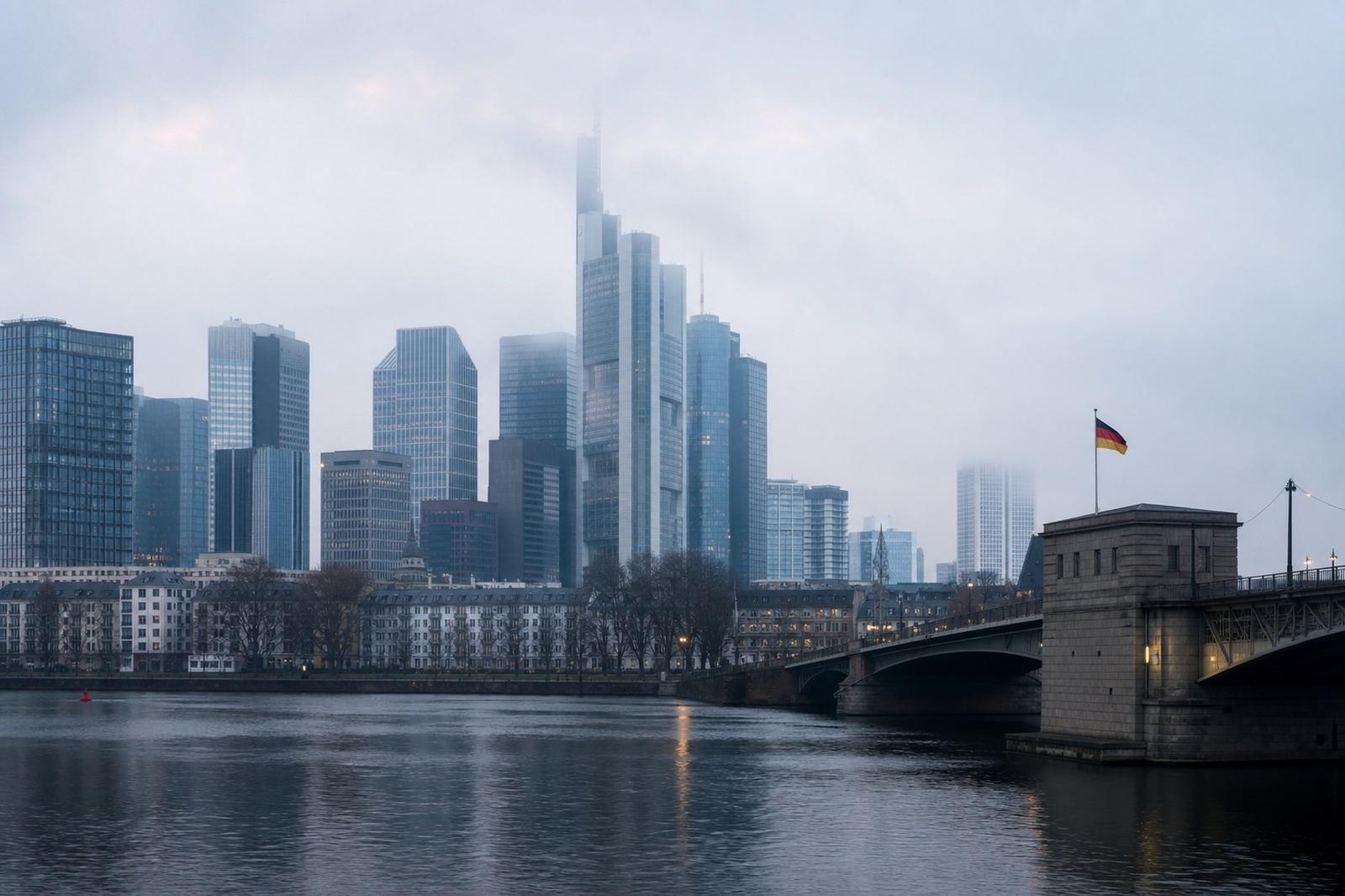
UniCredit moved to the brink of controlling Commerzbank on Wednesday, announcing that the final tally of its long-running takeover offer had raised the stake it can oversee in the German lender to 47.6%. The result caps a nine-month campaign by Andrea Orcel, the Italian bank's chief executive, that has redrawn the map of European banking even as it stops just short of an outright takeover.
The paradox of the moment is stark. Even as UniCredit closes in on effective control, the offer itself was a flop with ordinary shareholders: only around 1% of Commerzbank's free float accepted, and retail investors tendered a mere 0.05% of their holdings. Shares representing 17.6% of the bank's capital were tendered by the 3 July deadline, more than five percentage points of that arriving during a two-week reopening of the offer. UniCredit reached its commanding position not by persuading investors but by steadily accumulating shares, options and derivatives since 2024.
An offer few wanted to accept
UniCredit launched a €35bn all-stock bid on 16 March, offering 0.485 of its own shares for each Commerzbank share — an exchange ratio that valued the target at roughly €34.35 a share. The market never bought it. Commerzbank closed last week at €37.79, about 10% above the implied value of the offer, a clear signal that investors expect either a better deal or a standalone future worth more than UniCredit is paying.
Commerzbank's board, led by chief executive Bettina Orlopp, urged shareholders throughout to reject the terms, arguing that the lender's own "Momentum 2030" plan — which targets a return on tangible equity of around 21% by the end of the decade — would deliver more value than absorption into a foreign rival. The German government, which still owns roughly 12% of the bank after its post-2008 rescue, has flatly refused to sell, calling UniCredit's tactics aggressive and its offer inadequate.
The final scorecard underscores how unusual UniCredit's position is:
- Stake UniCredit can oversee after the offer: 47.6%.
- Commerzbank capital tendered by the 3 July deadline: 17.6%, including more than five percentage points during the two-week reopening.
- Free-float acceptance: about 1%; retail investors: roughly 0.05%.
- German government stake, unsold: about 12%.
Control without a takeover
What UniCredit has built is a controlling economic interest without the clean majority that would let it merge Commerzbank outright. That leaves the decisive judgment to the European Central Bank, which on Wednesday began reviewing whether the Italian group should be classified as being in control, how the German bank should be consolidated, and how the deal is treated for capital purposes. The answer carries a heavy price: without a formal majority, folding Commerzbank into its accounts could cost UniCredit far more in core capital, an outcome the bank has spent months trying to avoid.
Orcel, who spent much of the spring insisting that full control was not the plan, has shifted his language as the numbers climbed.
"We never launched this offer to go to control. Now we are in a situation where we might," Orcel said, adding that it was "a lot more probable that we end up with what the ECB would call control than not."
The Berlin blockade matters here. With the state clinging to its 12%, any squeeze-out of the remaining minority holders — the usual route to full ownership — is all but impossible. UniCredit is left in an awkward halfway house: powerful enough to shape Commerzbank's strategy and boardroom, yet unable to complete the merger it has pursued since it first surprised the market by converting a stake in 2024.
Why it matters beyond Frankfurt
The standoff is the most consequential test yet of Europe's long-promised banking union, the project meant to let strong banks buy weaker ones across borders and forge lenders big enough to rival American and Chinese giants. In practice, national politics keeps intervening: Berlin's defence of Commerzbank echoes the resistance UniCredit met in its earlier approaches to the bank, and mirrors the protectionist reflexes seen across the bloc whenever a national champion is in play.
For Luxembourg, a financial centre where both banks operate, the outcome is not academic. Commerzbank runs a Luxembourg branch on the rue Edward Steichen in Kirchberg, and UniCredit maintains its own presence in the Grand Duchy; both fall under the same ECB supervision that will now rule on the deal. A wave of cross-border consolidation would reshape the custody, fund-servicing and correspondent-banking relationships that anchor Luxembourg's role in European finance.
For now, the saga enters a slower, more procedural phase. The ECB's verdict on control, expected to take months, will determine whether Orcel's patient accumulation ends in the first truly pan-European banking champion since the euro's creation — or in an expensive stalemate with the German state.
Frequently asked
- How big is UniCredit's stake in Commerzbank now?
- After the offer, UniCredit can oversee 47.6% of Commerzbank through shares, options and derivatives — close to a majority but short of the level needed for a straightforward merger.
- Why did so few shareholders accept?
- Commerzbank's board recommended rejection, and the shares trade about 10% above the offer's implied value, so tendering meant accepting less than the market price.
- What is the ECB's role?
- The ECB will decide whether UniCredit counts as being in control, which determines how Commerzbank is consolidated and how much capital UniCredit must hold.
- Does this affect Luxembourg?
- Both banks operate in Luxembourg under ECB supervision, and cross-border consolidation could reshape custody, fund-servicing and correspondent-banking ties central to the financial centre.
Sources
Around Finance
A look at recent reporting on finance from the Étude newsroom.
Related by topic
Other Étude stories tagged with the same topics as this article.
More in Finance



Luxembourg's next wage-indexation tranche forecast for June 2026, pending official index data
Trending at Étude
Living in Luxembourg How to register with your commune when you move to Luxembourg (déclaration d'arrivée)
Family finance Child Benefit in Luxembourg: Amounts and How to Claim the Allocations Familiales
Pay and employment Luxembourg minimum wage in 2026: current amounts and the next indexation forecast
Economy How Luxembourg, with the world's highest GDP per capita, built its wealth from steel to funds