Cross-border wealth
Belgium's Wealthiest Still Bank on Luxembourg
A Le Soir–De Tijd investigation maps €91 billion held by the country's 100 richest families through 416 companies in the Grand Duchy.
For Belgium's wealthiest families, the work of managing a fortune still points in one direction: north, across the motorway to the Grand Duchy. A joint investigation by the Belgian dailies Le Soir and De Tijd, published on 20 June, calculates that the country's 100 richest families hold roughly €91 billion in assets through 416 companies registered in Luxembourg.
The figure is striking less for its novelty than for its persistence. When the same two newsrooms last mapped this terrain, in 2018, they arrived at €48 billion. In less than a decade the Belgian elite's Luxembourg footprint has nearly doubled — through tax reforms, transparency drives and a steady run of data leaks that were supposed to make the arrangement less attractive, not more.
A well-worn route north
Belgians are not occasional visitors to Luxembourg's commercial register. According to the investigation, some 9,800 Belgian nationals control, wholly or in part, around 11,200 companies in the Grand Duchy — enough to make them the third-largest nationality in the register, behind only the French and the Luxembourgers themselves. The concentration at the top is steep: the 50 wealthiest families alone account for €85.5 billion of the total.
The names are familiar to anyone who follows Belgian capital. The fortune of the Wittouck family, the country's richest, has long been steered through the Luxembourg holding Artal; the founding families behind the brewing giant AB InBev hold their stake through a Luxembourg vehicle of their own. They are joined, the investigation notes, by a wider cast of heirs, entrepreneurs, doctors, lawyers and high-earning athletes.
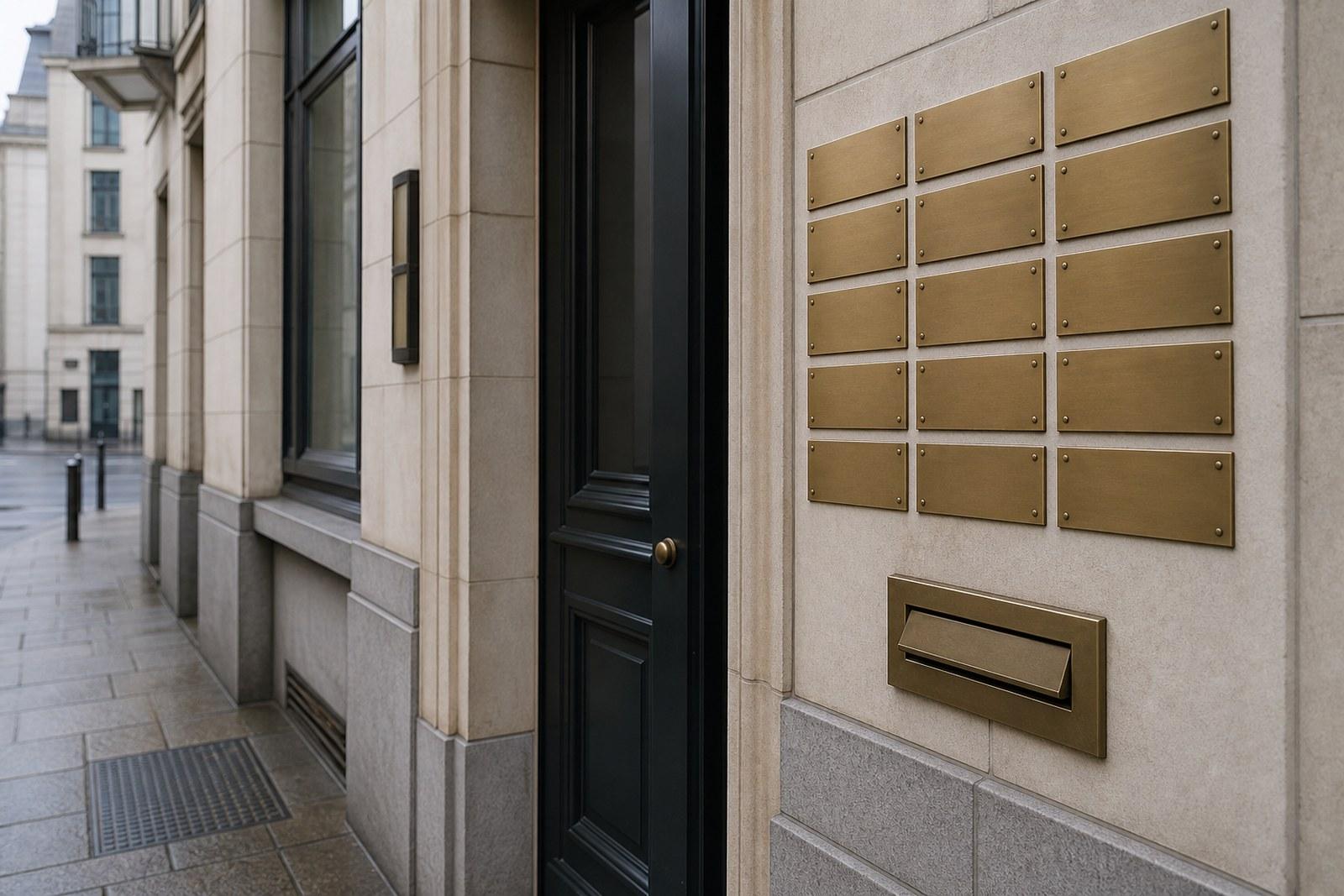
Brass plates, few offices
What gives the numbers their edge is what sits behind the doors. The reporters found that at least 307 of the Belgian-linked companies employ no one and maintain no physical office in Luxembourg — registered addresses rather than going concerns. Fifty-two of the wealthiest families rely on such light-touch structures, holding some €54 billion between them.
The manoeuvre, the investigation stresses, is not necessarily illegal.
That caveat is the heart of the matter. Most of these entities are SOPARFIs — sociétés de participations financières, the standard Luxembourg holding company — which can receive dividends and capital gains from qualifying shareholdings without further tax. Used to consolidate a family's stakes in one place, the structure is entirely lawful. The question the investigation poses is not whether laws are broken, but why so much European wealth still finds it worthwhile to be administered from a country of fewer than 700,000 people.
This is not the first time Luxembourg's register has been turned into a mirror for its neighbours. The 2021 OpenLux investigation, led by Le Monde, trawled the same public filings and surfaced tens of thousands of companies linked to wealthy individuals. Belgium's tax authorities have since pressed harder on undeclared foreign holdings, and the debate over a fairer levy on capital remains a live one in Brussels. Yet the headline figure keeps climbing.
Why Luxembourg, still
The Grand Duchy's answer is that it offers what large fortunes prize: legal certainty, a deep bench of lawyers and fund administrators, proximity, and a workforce at ease in French, Dutch, German and English. Luxembourg has also spent the decade since the LuxLeaks affair tightening substance requirements, adopting EU anti-avoidance rules and exchanging tax information automatically. Officials here bristle at the “tax haven” label, arguing that a holding company is not, in itself, a hiding place.
For Luxembourg, the investigation lands on familiar and slightly tender ground. The holding-and-fund business is not a sideline here; it is the financial centre's core, and the source of much of the country's prosperity. Each new survey of foreign money parked in the register is therefore read twice — as a measure of the sector's enduring appeal, and as a reminder of how quickly that appeal can be recast, in a neighbour's headlines, as something closer to avoidance.
The Belgian numbers will not change that calculus on their own. But they are a precise snapshot of a quiet cross-border arrangement that two decades of reform have failed to unwind — and that, for now, both sides of the frontier seem content to keep.
Frequently asked
- Is it illegal for wealthy Belgians to hold assets through Luxembourg companies?
- No. Most are SOPARFI holding companies, a lawful structure used to consolidate shareholdings. The investigation stresses the arrangements are not necessarily illegal, even if they raise questions of transparency and tax fairness.
- Why do so many Belgian fortunes choose Luxembourg?
- Proximity, legal certainty, a participation-exemption regime for qualifying dividends and capital gains, and a multilingual ecosystem of lawyers and fund administrators.
- What is the Luxembourg angle?
- Holding and fund structuring is the core of Luxembourg's financial centre. The investigation puts a precise number on foreign wealth administered from the Grand Duchy and revives the recurring tax-haven debate.
Sources
Around Finance
A look at recent reporting on finance from the Étude newsroom.
Related by topic
Other Étude stories tagged with the same topics as this article.
More in Finance


Trending at Étude
Luxembourg taxes Luxembourg's income-tax classes (1, 1a, 2) explained: who falls into each
Homeownership explained How to buy a property in Luxembourg: the process, costs and notary
Connectivity Mobile and internet providers in Luxembourg compared
Personal finance How the Luxembourg state pension works: retirement age, contributions and how it's calculated