Property
Selling property in Luxembourg: the five-year line that decides your tax bill
Sell your own home and you pay nothing. Sell anything else inside five years and the gain is taxed like salary, at up to 42%.
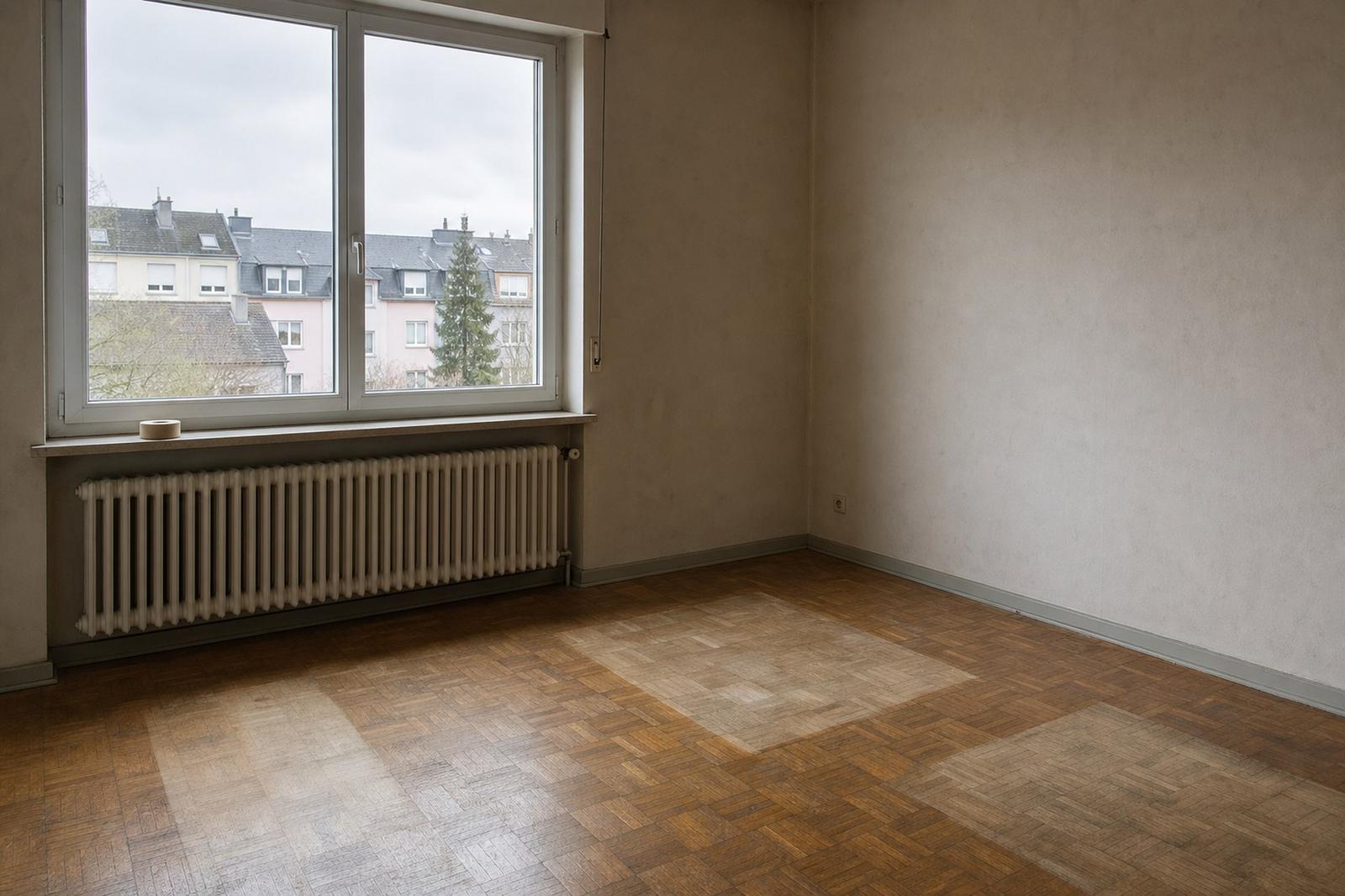
If you sell the home you actually live in, Luxembourg taxes the gain at nothing at all. If you sell any other property within five years of buying it, the entire gain is added to your income and taxed at ordinary progressive rates, up to 42% before the solidarity surcharge. Hold it beyond five years and the maximum rate falls to 21%, and a €50,000 allowance may remove most of what is left.
Between those outcomes lies the single largest tax decision most Luxembourg households will ever make, and it turns on a date rather than on a strategy.
The main-residence exemption comes first
The sale of a taxpayer's principal residence is exempt from income tax where the statutory conditions are met. This is not a relief that scales or tapers — it either applies or it does not, and it is the reason the great majority of Luxembourg property sales generate no tax. The question is always whether the property genuinely served as the main home, not whether it was owned for long enough.
Inside five years: a speculative gain
A sale within five years of acquisition produces a bénéfice de spéculation under article 99bis of the income tax law. The computation is blunt: sale price less acquisition cost, with no revaluation for inflation. The result is added to your other income and taxed at the ordinary scale, so it reaches a marginal 42% at the top.
Two points regularly catch sellers out:
- The period is five years, not two. Older guidance and neighbouring countries' rules describe a two-year speculative window. Luxembourg's is five, and using the shorter figure is the most common and most expensive error in this area.
- There is a narrow 2025 exception. Property acquired between 1 January and 30 June 2025 is treated as recently purchased where it is sold within two years, which shortens the speculative window for that specific acquisition cohort.
Beyond five years: the half-rate, and inflation relief
A sale after five years produces a bénéfice de cession under article 99ter, and the treatment changes in two ways that both favour the seller.
First, the acquisition price is revalued. Rather than comparing today's sale price with the nominal price paid decades ago, the original cost is uprated by official coefficients — published on page 3 of form 700 — so that the purely monetary element of the gain is stripped out. On a property bought in the 1990s this adjustment alone can eliminate a large share of the apparent profit.
Second, the revalued gain is taxed at the demi-taux global, half your global rate, producing a maximum of 21% rather than 42%.
The quarter-rate windows that have now closed
Governments have periodically halved the half-rate to a quart du taux global — a maximum of 10.5% — to shake property loose onto the market. Those windows ran from 1 July 2016 to 31 December 2018 and again from 1 January 2024 to 30 June 2025. Both have closed. A sale completing in 2026 is taxed at the ordinary half-rate, and anyone working from advice written during the 2024–2025 window is reading a rate that no longer exists.
The allowances that follow
Two deductions apply to long-term gains, and they are generous enough to extinguish many of them entirely:
- The decennial allowance: €50,000 for a single person and €100,000 for jointly taxed spouses, reduced by any allowance already claimed in the preceding ten years. It renews on a rolling ten-year basis, which makes the spacing of disposals a genuine planning lever.
- The single allowance of €75,000 where the property was inherited in the direct line and served as the seller's parents' main residence. This sits on top of the decennial allowance and is often decisive on an inherited family home.
A worked example
Take a couple, jointly taxed, selling a flat in 2026 that they bought in 2008 and have always let out:
- Sale price €700,000; original acquisition cost €340,000.
- The acquisition cost is revalued using the official coefficient, lifting it to, say, €430,000. The gain becomes €270,000 rather than €360,000.
- The decennial allowance of €100,000, assuming none has been used in the past decade, reduces the taxable gain to €170,000.
- That €170,000 is taxed at half the global rate, so at most 21% — a ceiling of roughly €35,700, and less if their global rate is below the top of the scale.
Had the same couple sold within five years, the whole €360,000 nominal gain would have entered their income at up to 42%.
What it costs to buy in the first place
The gain is only one side of the ledger. Acquiring Luxembourg property attracts registration and transcription duties of 7%, plus a communal surcharge of 3% in Luxembourg City — so ten per cent in the capital. Those duties form part of the acquisition cost for a future gain calculation, which is why keeping the notarial deed and every invoice for structural work matters: improvement expenditure raises the base and shrinks the eventual gain.
First-time and owner-occupier buyers should read this alongside our guide to the Bëllegen Akt buyer's tax credit, which offsets a substantial part of the registration duty.
What goes into the acquisition price
The gain is the difference between two figures, and most sellers concentrate on the wrong one. The sale price is fixed by the market; the acquisition price is where record-keeping pays. It is not simply what you handed over at the notary:
- The purchase price itself, as stated in the notarial deed.
- The registration and transcription duties paid on acquisition, and the notary's fees — real money that is easy to forget a decade later.
- Improvement expenditure, meaning work that adds to the property rather than merely maintaining it: an extension, a converted attic, a new heating system. Routine repainting and repairs are maintenance, not improvement.
- Costs of the sale itself, such as estate agency commission, which reduce the gain from the other direction.
All of it feeds the revaluation, so an invoice from 2011 is uprated by the coefficient for 2011. Keeping a single folder of deeds and builders' invoices for the life of a property is, in cash terms, one of the better-paid administrative habits available to a Luxembourg owner.
Declaring the sale
A taxable property gain is declared on form 700, the same document whose third page carries the revaluation coefficients, and it flows into the annual income tax return for the year of the sale. Two practical consequences follow. Because the gain is added to your other income for the year, a large disposal can push the rest of your income up the scale even when the gain itself enjoys the half-rate. And because the tax is not withheld at the notary, the liability arrives with the assessment — often many months after the proceeds have been spent. Setting the estimated tax aside on completion is the only reliable protection against that gap.
Non-residents, and where the tax is due
A gain on Luxembourg land or buildings is taxable in Luxembourg whoever owns it. Double tax treaties almost universally allocate taxing rights over immovable property to the country where the property sits, so a French, Belgian or German resident selling a Luxembourg flat is assessed here, with relief handled at home. Ownership through a company changes the analysis entirely and should never be assumed to work the same way.
What to check before you sign
Find the exact acquisition date on the notarial deed and count five years from it, not from the date you moved in or the date the building was completed. Establish whether the decennial allowance has been used in the previous ten years, including by a spouse. Assemble the invoices for structural improvements, because they lift the acquisition base. And if the property was ever your main residence, examine the exemption before assuming any gain is taxable at all.
Our coverage of the Luxembourg property market and the housing tax measures sets the wider context.
Frequently asked
- Do I pay capital gains tax when selling my home in Luxembourg?
- No. The sale of your principal residence is exempt from income tax where the statutory conditions are met. The exemption does not taper with the holding period — the question is whether the property genuinely served as your main home.
- How long must I hold a property in Luxembourg to avoid the speculative rate?
- Five years. A sale within five years of acquisition is a speculative gain under article 99bis, taxed at ordinary progressive rates up to 42%. Beyond five years the gain falls under article 99ter and is taxed at half the global rate, a maximum of 21%. Property acquired between 1 January and 30 June 2025 is subject to a narrower two-year rule.
- What is the capital gains tax rate on a second property in Luxembourg?
- If sold more than five years after acquisition, the revalued gain is taxed at the demi-taux global — half your global rate, capped at 21%. If sold within five years, the whole nominal gain is added to your income and taxed at the ordinary scale, reaching 42% at the top.
- Is the 10.5% reduced rate on property gains still available?
- No. The quarter-rate of 10.5% applied only during two windows: from 1 July 2016 to 31 December 2018, and from 1 January 2024 to 30 June 2025. Both have closed, and a sale completing in 2026 is taxed at the ordinary half-rate of up to 21%.
- How much is the ten-year allowance on Luxembourg property gains?
- €50,000 for a single person and €100,000 for jointly taxed spouses, reduced by any allowance already claimed in the preceding ten years. A separate single allowance of €75,000 applies where the property was inherited in the direct line and was the seller's parents' main residence.
- How is the acquisition price revalued for a long-term property gain?
- The original acquisition cost is uprated by official monetary revaluation coefficients published on page 3 of form 700, so that purely inflationary gain is removed from the taxable amount. On a property held for several decades this adjustment can eliminate a substantial share of the apparent profit.
- Do non-residents pay Luxembourg tax on a property gain?
- Yes. A gain on Luxembourg land or buildings is taxable in Luxembourg regardless of the owner's residence, because double tax treaties allocate taxing rights over immovable property to the country where the property is situated. Relief for any double taxation is handled in the seller's country of residence.
Sources
Around Finance
A look at recent reporting on finance from the Étude newsroom.
Related by topic
Other Étude stories tagged with the same topics as this article.
More in Finance

Kyiv Holds the Line, and the West's Economic Weapons Start to Bite



How to buy a property in Luxembourg: the process, costs and notary
Trending at Étude
Personal finance How the Luxembourg state pension works: retirement age, contributions and how it's calculated
Demography Japan Records a 10th Consecutive Record-Low Birth Year as South Korea's Fertility Rate Rises
Critical minerals Washington Backs a Kazakh Tungsten Mine. The President's Sons Are Inside the Deal.
Financial regulation Luxembourg regulator will let Israeli bond prospectus expire on 31 August