Housing intervention
Luxembourg launches tax breaks and €300m buying plan to restart homebuilding
A higher Bëllegen Akt, cheaper off-plan purchases and a new public bond form the government’s latest answer to a market where permits too often fail to become homes.
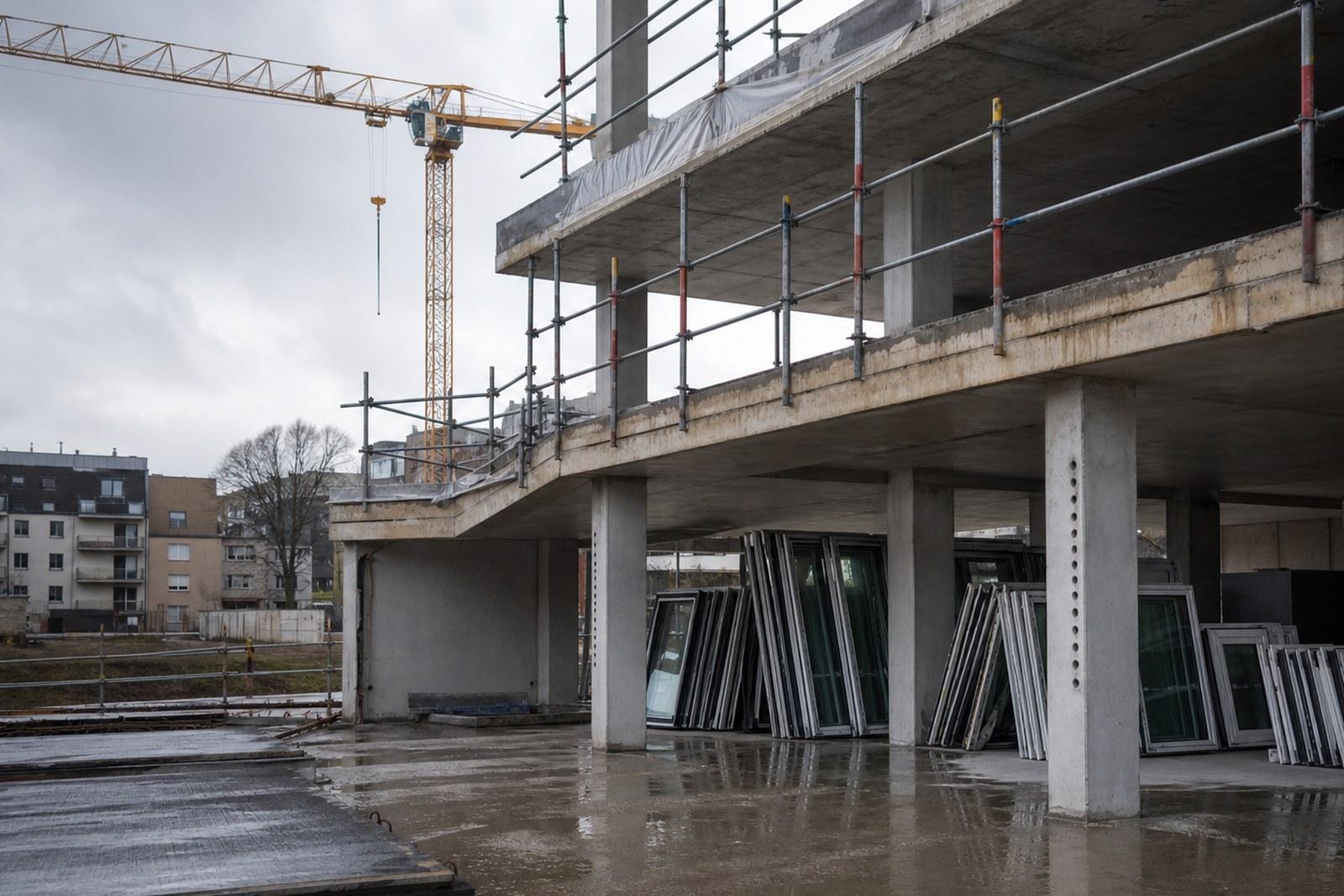
Luxembourg’s government has unveiled a seven-part housing package that combines tax relief for buyers, incentives for private landlords and another €300 million of state purchases from developers. The objective is to solve the problem that now defines the country’s construction slowdown: projects can obtain permission and still fail to secure enough buyers or bank finance to break ground.
Finance Minister Gilles Roth and Housing Minister Claude Meisch presented the package on Thursday, 16 July, first to parliamentary committees and then to the public. Some benefits are intended to apply to qualifying transactions concluded from that date, although most provisions must still pass through the legislative process.
The political stakes are unusually high. Housing costs remain a central concern for households, while weak construction has weighed on companies and employment. STATEC said in February that activity was stagnating at a low level despite improving business sentiment. Residential floor area authorised by permits had also remained weak and volatile.
Housing is citizens’ foremost concern. It is also an absolute priority for the government and for me personally, Gilles Roth said.
More help at the notary’s office
The most immediately visible change is an increase in the Bëllegen Akt tax credit from €40,000 to €45,000 per person for a principal residence. The government calculates that this would eliminate registration duty on a home worth about €640,000 for one buyer. A couple could combine the individual allowances.
For homes bought off-plan, or through a VEFA contract, buyers intending to live in the property would pay registration and transcription duties only on the land value when construction is no more than 80% complete. The temporary exemption is planned for three years. It is designed to make purchases early enough to count towards the presales demanded by banks before they finance a development.
Interest subsidies will also be broadened. The loan amount used in the calculation rises from €200,000 to €250,000 under the general scheme. It can reach €300,000 when at least one first-time buyer is 35 or younger, with the allowance for each dependent child increasing from €20,000 to €30,000. Young buyers of publicly supported affordable homes would also gain access to purchase and savings premiums previously associated with the private market.
Tax incentives come with conditions
Investors will again be offered accelerated depreciation, but under a capped system. They may deduct 6% annually for six years when the depreciable construction value does not exceed €600,000 per dwelling. Above that threshold, a 2% rate would apply to the entire base. Purchases made in 2026 can opt between the existing and new regimes; the new rules are meant to become standard for acquisitions from 2027.
A separate 8% VAT rate is planned for new rental housing meeting social conditions. Eligible homes must be no larger than 120 square metres, remain below a regional median-price ceiling, limit the rental yield to 4% of net invested capital and be rented for at least ten years to a tenant certified as eligible by the housing ministry.
Those restrictions matter because earlier Luxembourg housing subsidies were repeatedly criticised for strengthening purchasing power without adding enough supply. Opposition deputies raised the same concern in committee: if sellers absorb the benefit through higher prices, the state spends money without improving affordability. The government says the measures will be evaluated and can be adjusted if abuses or inflationary effects appear.
The state becomes an anchor buyer
The largest direct commitment is €300 million for further state acquisitions of affordable homes sold off-plan. An earlier €480 million envelope secured or reserved 830 homes. Under the revised system, the state may buy only part of a development at the start of marketing, becoming an anchor purchaser whose reservation helps the entire project reach its bank-mandated presales threshold.
The package also confirms a €250 million housing bond for early 2027, with a planned maturity of three to five years. Interest would be exempt from Luxembourg’s 20% final withholding tax. The proceeds are intended to help finance affordable housing, turning private savings into public borrowing for construction.
The new measures arrive as the market offers mixed signals. After housing prices fell 9.1% in 2023 and 5.2% in 2024, the overall index rose 1.6% in 2025. Yet prices for apartments under construction were still 2.8% lower year on year in the final quarter. Construction employment edged up by 0.1% quarter on quarter at the end of 2025, its first such increase in almost three years, but STATEC cautioned that activity remained depressed.
The test is whether building actually starts
The package does not recreate the proposal negotiated during the tripartite talks to double the maximum benefit from Luxembourg’s 3% super-reduced housing VAT rate from €50,000 to €100,000. The government said European authorities would not accept that increase, prompting ministers to pursue other instruments.
Nor can tax policy alone release every project. Municipal planning choices, land prices, construction costs, bank lending requirements and developers’ asking prices still determine what gets built. Roth has explicitly rejected presenting the package as compensation for developers who paid too much for land, and ministers have called on the industry to moderate prices.
For buyers, the practical details will depend on the final laws and their eligibility rules. For the country, the measure of success is simpler: not the value of tax relief announced, but the number of stalled plans that become occupied homes without another surge in prices.
Frequently asked
- Does the package apply immediately?
- The government intends some buyer measures to cover qualifying deeds concluded from 16 July 2026, but the relevant legislation must still enter into force.
- How does the Bëllegen Akt change?
- The credit against registration and transcription duties for a principal residence rises from €40,000 to €45,000 per person.
- What is the €300 million VEFA programme?
- It allows the state to acquire affordable homes from developments before completion, including part of a project, so schemes can reach the presales required for financing.
Sources
Around Luxembourg
A look at recent reporting on luxembourg from the Étude newsroom.
Related by topic
Other Étude stories tagged with the same topics as this article.
More in Luxembourg


Atari Relocates Its Legal Home to Luxembourg After Shareholders Back France Exit


Trending at Étude
Homeownership explained How to buy a property in Luxembourg: the process, costs and notary
Russia's war economy Kyiv Holds the Line, and the West's Economic Weapons Start to Bite
Intelligence Japan launches its first central spy agency since 1945 to counter Russia and China
Cross-border rail CFL to halt all trains between Luxembourg and Thionville for five weeks this summer