Defence & space
Austria to buy capacity on Luxembourg's GovSat-2 military satellite in new defence deal
Vienna plans to take up to a tenth of the capacity on the €301 million spacecraft, the first foreign buy-in since Luxembourg's parliament approved the project in January.
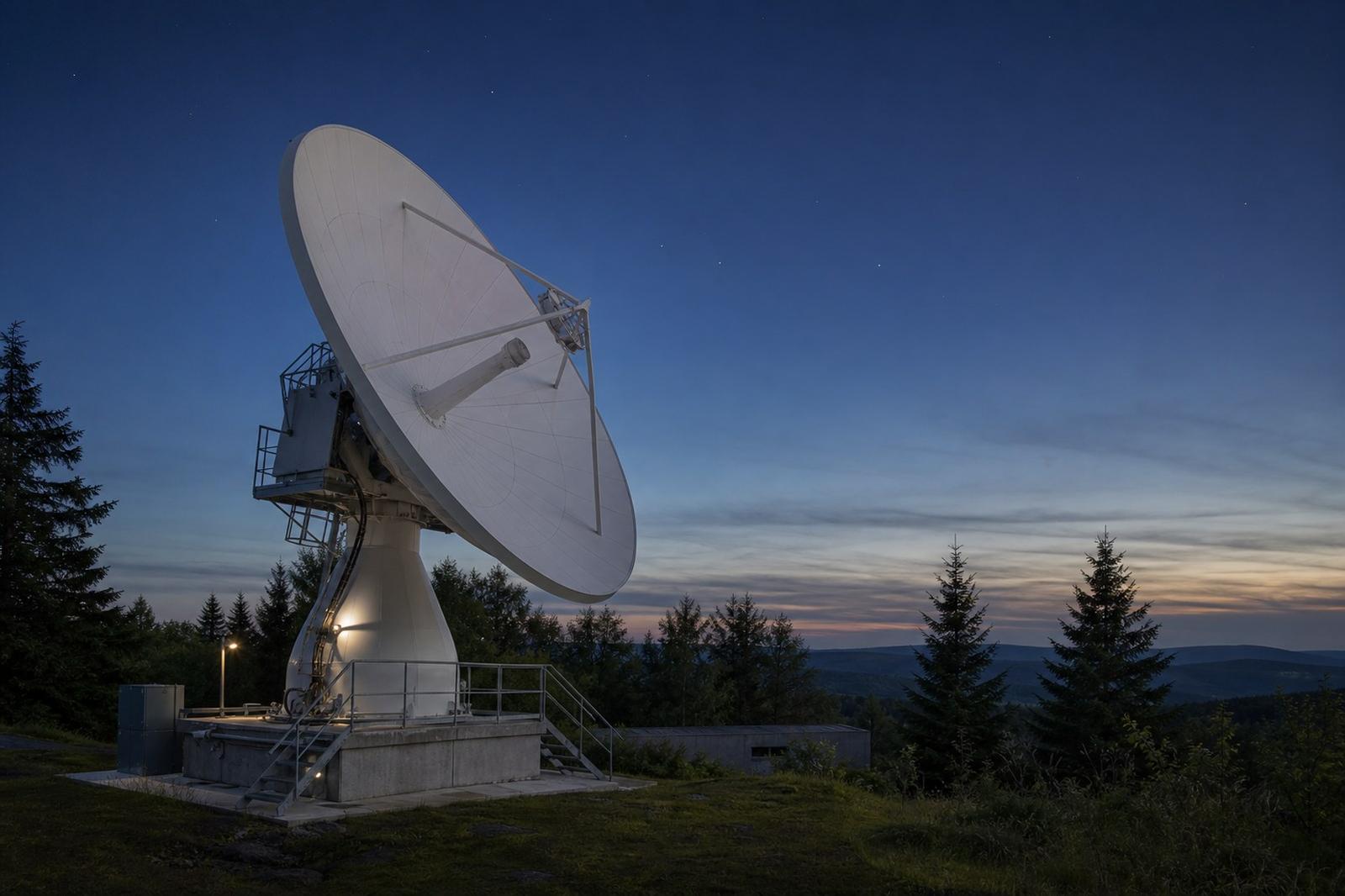
Luxembourg has found the first foreign customer for its next military satellite. On Monday, Austria's defence minister, Klaudia Tanner, travelled to Luxembourg and announced at a joint news conference that Vienna intends to buy secure communications capacity on GovSat-2 — the €301 million spacecraft the Grand Duchy is building to serve its own armed forces, the European Union, NATO and partner nations.
Tanner and her Luxembourg counterpart, Yuriko Backes, signed a letter of intent that reaches well beyond the satellite, committing the two countries to explore joint work on cyber defence, space, military training, medical services and international peacekeeping. Yet the satellite was the headline. Austria wants to reserve between 5 and 10 percent of GovSat-2's capacity, Tanner said, and the two governments now intend to turn Monday's political understanding into a legally binding contract.
A first taker for a €301 million bet
Luxembourg's parliament approved GovSat-2 only in January, by 57 votes, clearing a budget of €301 million spread across roughly two decades. The package includes a €101 million capital increase in LuxGovSat — the 50/50 joint venture between the Luxembourg State and the satellite operator SES — and some €200 million to buy the satellite's capacity over twelve years. Crucially for Monday's announcement, lawmakers also authorised a €500 million "strategic partnerships" envelope: a budget-neutral mechanism designed to let allied states pay their way onto the spacecraft.
Austria is the first to walk through that door, and Backes made clear it is unlikely to be the last.
"Demand for the project is very high; many states want to take part," Backes told reporters after the bilateral talks.
For Luxembourg, that demand is the point. A country with no army to speak of has spent years turning its home-grown satellite champion, SES, into an instrument of defence policy — offering allies something scarce and expensive, namely sovereign, hardened satellite communications, and recouping part of the cost. Every partner that signs up spreads the bill and deepens Luxembourg's usefulness to the alliances it depends on.
Neutral, but not indifferent
For Austria, the calculation is more delicate. The republic is constitutionally neutral, and Tanner was at pains to reconcile that status with a defence deal signed abroad.
"Being neutral does not mean being indifferent," she said, adding that "defence capability must first be enabled and maintained." A secure communications backbone such as GovSat-2, she argued, contributes directly to national resilience and strategic autonomy — language that has become common currency across a Europe rattled by war on its eastern flank and unsure of Washington's reliability.
Vienna is not rushing to sign. Tanner said Austria still has to examine the "legal, financial and organisational components" of participation, but wants to put a legally binding basis in place "very quickly." Austria is also building its own space capacity: a constellation of five small satellites is due to reach orbit in early 2027. GovSat-2 would give it something those cannot — protected, military-grade capacity over a vast footprint.
What GovSat-2 will do
Due for launch in 2029, GovSat-2 will succeed GovSat-1, which has operated since 2018 and already carries traffic for NATO, the EU, the US Department of Defense and Luxembourg's own forces. The new satellite is being built by Thales Alenia Space and is to be lofted by Arianespace into geostationary orbit, where it will cover Europe, the Middle East, Africa and the surrounding seas.
It is designed for a harder environment than its predecessor. According to SES and the Luxembourg government, GovSat-2 will carry:
- ultra-high-frequency, X-band and military Ka-band channels;
- an advanced anti-jamming system and dedicated hardening, including against the effects of high-altitude nuclear detonations;
- embedded geolocation to pinpoint sources of interference.
Backes has called the programme "a strategic project" that also promises "significant economic return for Luxembourg," while SES chief executive Adel Al-Saleh has said the satellite gives the venture "additional MILSATCOM capacity" to meet rising European demand for defence communications.
A widening relationship
The ministers continued their talks with a joint visit to SES and LuxGovSat in Betzdorf, the wooded site north-east of the capital from which Luxembourg's satellite fleet is flown. Backes used the occasion to point to the rest of the country's space-defence roster, including LUXEOSys, an Earth-observation satellite she said should be commissioned this autumn.
Beyond the hardware, the letter of intent sketches a fuller partnership between two small European states that see their security in collective terms. Its listed fields run from cyber defence and military medicine to training, peacekeeping and even the environmental damage caused by military activity. For Backes, the logic is straightforward: close, trust-based cooperation between countries that defend the international order, she said, matters more than ever.
Frequently asked
- What is GovSat-2?
- It is Luxembourg's next military communications satellite, operated by LuxGovSat, a 50/50 joint venture between the Luxembourg State and the operator SES. Due to launch in 2029, it will serve Luxembourg's armed forces, the EU, NATO and partner nations.
- What exactly did Austria agree to?
- Vienna announced its intention to acquire between 5 and 10 percent of GovSat-2's capacity and signed a broader letter of intent on defence cooperation. A legally binding agreement still has to be negotiated.
- How can a neutral country join a defence-satellite project?
- Austrian minister Klaudia Tanner argued that neutrality "does not mean being indifferent" and that secure communications support national resilience and strategic autonomy.
- How much does GovSat-2 cost and who pays?
- Luxembourg approved a €301 million budget over about two decades, including a €500 million budget-neutral envelope that lets partner states such as Austria contribute.
Sources
Around Luxembourg
A look at recent reporting on luxembourg from the Étude newsroom.
Related by topic
Other Étude stories tagged with the same topics as this article.
More in Luxembourg


Kyiv Holds the Line, and the West's Economic Weapons Start to Bite

How to buy a property in Luxembourg: the process, costs and notary
Trending at Étude
Somalia Somalia Prepares First Offshore Oil Drilling After Decades of Delays
Cross-border rail CFL to halt all trains between Luxembourg and Thionville for five weeks this summer
Pay and employment Luxembourg minimum wage in 2026: current amounts and the next indexation forecast
Demography Japan Records a 10th Consecutive Record-Low Birth Year as South Korea's Fertility Rate Rises