Housing reform
Luxembourg unveils single national building code to replace about 100 communal rulebooks and speed up permits
One country-wide regulation, set for 2028, is meant to end the patchwork of communal rules and shorten the road from plan to permit.
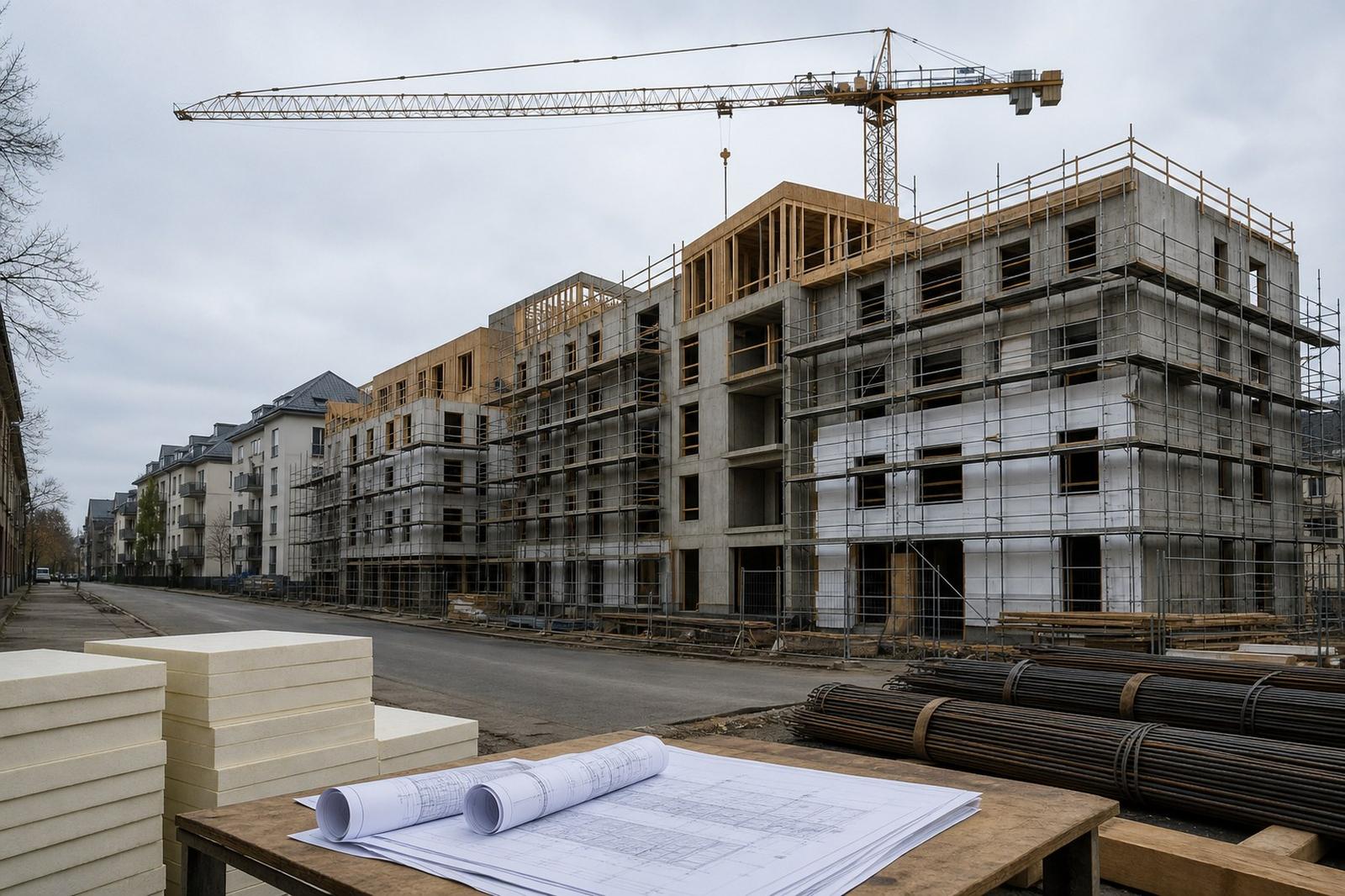
Luxembourg is moving to sweep away one of the quieter obstacles to building homes: the fact that almost every commune writes its own construction rules. On Friday, Home Affairs Minister Léon Gloden presented a single national building regulation, the Règlement national des bâtisses, that would replace the roughly one hundred separate codes municipalities maintain and impose one common standard across the entire country.
The reform is aimed squarely at a housing market that ranks among the most expensive in Europe, where construction has slowed and buyers and renters alike have felt the squeeze. Ministers have framed the fragmented rulebook — where a bedroom's minimum size or a car park's requirements can differ from one commune to the next — as an administrative drag that slows projects and raises costs. The new text is meant to give developers, architects and mayors a single reference.
One code for a hundred communes
The regulation gathers some 89 measures into one instrument set to take effect on 1 January 2028, alongside reformed procedures for the local development plans known as the PAG and PAP. It is designed as a floor rather than a ceiling: projects may exceed the national standards but cannot fall below them, while mayors keep the power to grant justified exceptions, for instance on heritage sites with particular constraints.
"Every measure is designed to make it possible to build more, and to build faster," Gloden said, describing the project's guiding idea in Luxembourgish as "Méi mat manner" — more with less.
Officials say uniform rules should also make it easier for professionals who work across communal borders, and remove the need to relearn local quirks for every project.
Shorter road from plan to permit
Beyond the technical standards, the government is promising faster procedures. Approval of a general development plan (PAG) would fall from around twelve months to seven, and of a particular plan (PAP) from about eight and a half to six and a half; a simplified track for small plans under 25 ares would be cut to roughly four months. The changes sit within the broader "Méi, a méi séier bauen" — build more, and faster — reform launched in early 2025, which also moves toward a "silence means approval" principle and full digitalisation of permit applications.
The measure was presented with the support of the housing and spatial-planning ministry under Claude Meisch and the environment ministry, and prepared by senior civil servants including Frank Goeders, a first government counsellor responsible for municipal planning.
What builders will have to do
The national rulebook combines simplification with a clear environmental and quality-of-life agenda. Among the requirements reported from the presentation:
- a minimum bedroom size of nine square metres;
- one tree planted per 250 square metres, and shading over at least a third of public squares;
- solar panels made mandatory on car parks larger than 2,500 square metres;
- electric-vehicle charging points and dedicated bicycle parking in new buildings;
- permeable parking surfaces and rainwater cisterns to manage water and reduce runoff.
Whether the reform delivers the promised acceleration will depend on the details still to be finalised before 2028 and on how communes, which lose a measure of local discretion, adapt in practice. For now, the government is betting that a single, predictable rulebook is one of the surest ways to get more homes out of the ground — and to answer a housing shortage that has become the country's defining domestic issue.
Frequently asked
- What is changing for construction in Luxembourg?
- The roughly 100 different communal building codes would be replaced by one national building regulation applying to every commune, with uniform standards and faster planning procedures.
- When would the new rules take effect?
- The government is targeting 1 January 2028, in step with reformed procedures for the local development plans known as the PAG and PAP.
- Why is the government doing this?
- To make it quicker and simpler to build in one of Europe's most expensive housing markets, cutting administrative delays that ministers say slow projects and raise costs.
Sources
Around Luxembourg
A look at recent reporting on luxembourg from the Étude newsroom.
Related by topic
Other Étude stories tagged with the same topics as this article.
More in Luxembourg




Trending at Étude
Semiconductors Apple Raises Mac and iPad Prices, Blaming the AI Memory Crunch
Your rights at work Paid Holiday and Working Hours in Luxembourg: What the Law Guarantees
Russia's war economy Kyiv Holds the Line, and the West's Economic Weapons Start to Bite
Wages and purchasing power Luxembourg's next wage-indexation tranche forecast for June 2026, pending official index data