Public order
Luxembourg's parliament expands police powers to clear public spaces, 42 to 18
The reinforced "Platzverweis" lets officers bar a person from an area for 48 hours and municipalities for up to 30 days — passed over unusually broad warnings from the human rights commission, the Council of State and the judiciary.
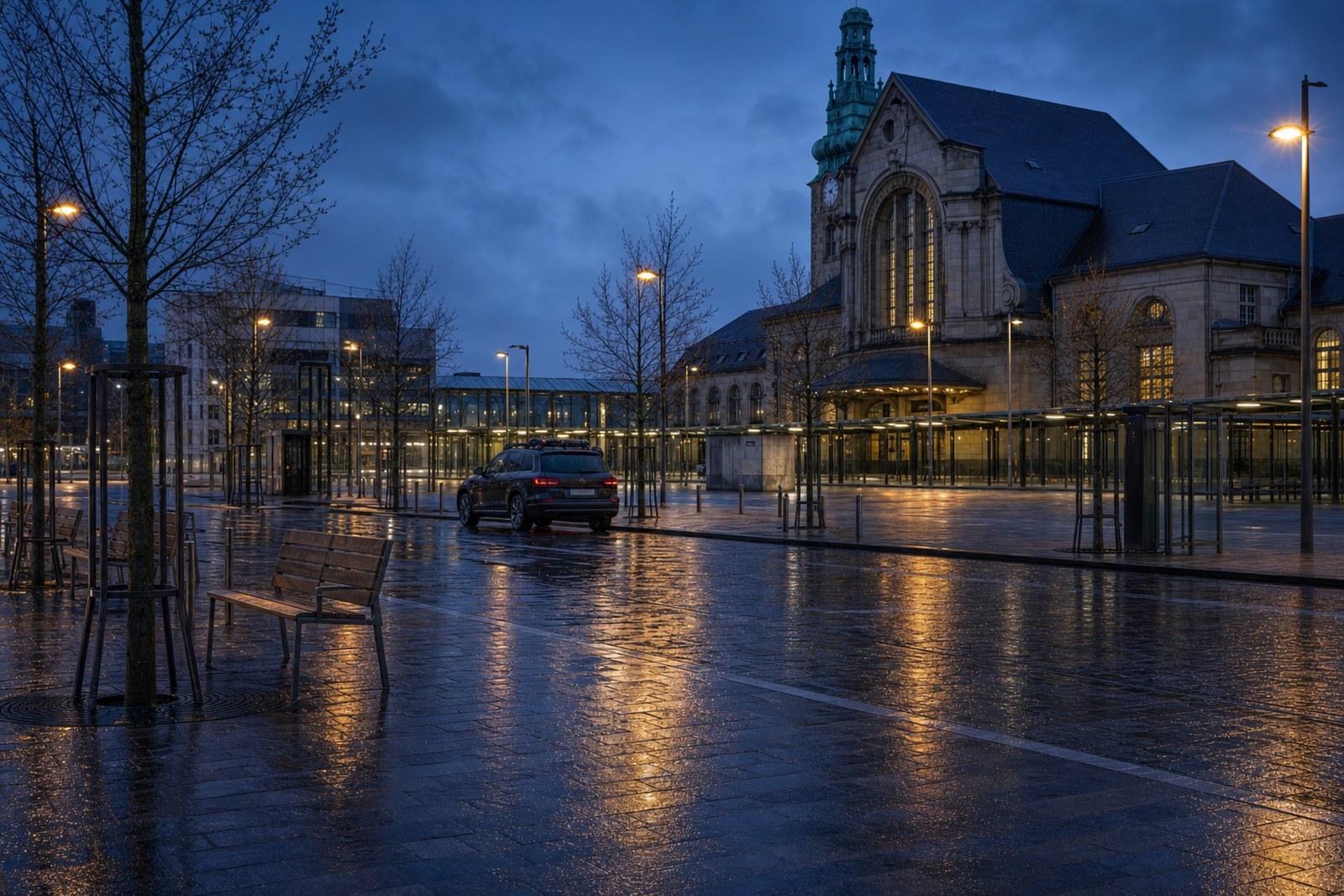
The Chamber of Deputies voted on Wednesday to broaden the powers of Luxembourg's police to order people out of public spaces, adopting a reinforced version of the measure known as the Platzverweis by 42 votes to 18.
The law, tabled by Interior Minister Léon Gloden, allows an officer to require a person who is disturbing public order to leave a location and stay away for up to 48 hours within a radius of one kilometre. Where the behaviour is repeated, a municipality can extend that ban to 30 days over a wider perimeter. Police may use force to make someone comply.
What actually changes
An eviction order already existed, but it was narrow. Until now it applied chiefly to people physically blocking the entrances to shops, homes, stations or other buildings. The reinforced text stretches the trigger far beyond that, to conduct that:
- disturbs public tranquillity, health or safety;
- obstructs the free movement of people or traffic;
- or harasses passers-by.
It also strengthens the hand of mayors, who gain the power to impose the longer, wider bans on people deemed to have reoffended. Supporters presented the reform as a pragmatic answer to complaints from residents and shopkeepers about drug scenes and aggressive begging, particularly in the capital's station district. The rapporteur, Laurent Mosar of the governing Christian Social People's Party, argued that officers needed to be able to keep troublemakers away for a meaningful period rather than for a matter of minutes.
A rare chorus of warnings
What set the vote apart was the breadth of the institutional criticism it overrode. The Consultative Commission on Human Rights (CCDH), the Council of State, judicial authorities and the Chamber of Employees had all raised objections during the legislative process — an unusually wide front against a single bill.
The CCDH's central charge was that the law rests on perception rather than proof. It warned that the vague wording invites “arbitrary and discriminatory decisions” by police and mayors, and that people risk being moved on because of how they look or where they are presumed to come from.
A feeling of insecurity, often purely subjective, should not be the driving force behind measures that restrict people's fundamental rights, the human rights commission warned.
The commission also flagged the absence of a clear appeal mechanism against a ban, and cautioned that provisions penalising the obstruction of traffic could chill the right to demonstrate unless protests were explicitly carved out. The Chamber of Employees went further still, warning that an expansive reading could catch legitimate trade-union action, such as a picket, in the same net as public-order offences.
The political divide
The 18 votes against came from the left of the opposition. Dan Biancalana of the Socialist Workers' Party argued that the measure would simply push a visible problem out of sight without addressing its causes — addiction, mental illness and a shortage of social support — leaving the same vulnerable people to reappear a kilometre away, or a month later. Left-wing deputies said the state was reaching for repression where it should be reaching for care.
The government rejected the framing, insisting the police need enforceable tools and that the safeguards written into the text — time limits, geographic limits and the possibility of judicial review — are sufficient. Ministers have repeatedly pointed to residents' fatigue in neighbourhoods where public order has frayed.
With Wednesday's vote, the reinforced Platzverweis clears its principal parliamentary hurdle and moves toward entry into force. Its real test will come on the ground: how officers and mayors interpret elastic phrases such as disturbing “tranquillity,” and whether the courts and the CCDH's warnings translate into limits on how the new powers are used.
Frequently asked
- What is the Platzverweis?
- It is a police eviction order that requires a person to leave a specified place and stay away for a set period; the reinforced version widens both the reasons for issuing one and how long it can last.
- How long can a ban last?
- Police can impose a ban of up to 48 hours within a one-kilometre radius; if the behaviour is repeated, a municipality can extend it to 30 days over a wider perimeter.
- Why is the law controversial?
- Bodies including the human rights commission and the Council of State warned that its vague wording could lead to arbitrary or discriminatory enforcement and lacks an adequate right of appeal.
Sources
Around Luxembourg
A look at recent reporting on luxembourg from the Étude newsroom.
Related by topic
Other Étude stories tagged with the same topics as this article.
More in Luxembourg




Trending at Étude
Wages and purchasing power Luxembourg's next wage-indexation tranche forecast for June 2026, pending official index data
Somalia Somalia Prepares First Offshore Oil Drilling After Decades of Delays
Living in Luxembourg How to register with your commune when you move to Luxembourg (déclaration d'arrivée)
Family finance Child Benefit in Luxembourg: Amounts and How to Claim the Allocations Familiales