Big Tech and a small grid
Luxembourg nears permit decision on Google's Bissen data centre as environmental group threatens court appeal
Eight years after Google bought the land, the government must decide whether the project can be built — and the Mouvement écologique says it is ready to go to court.
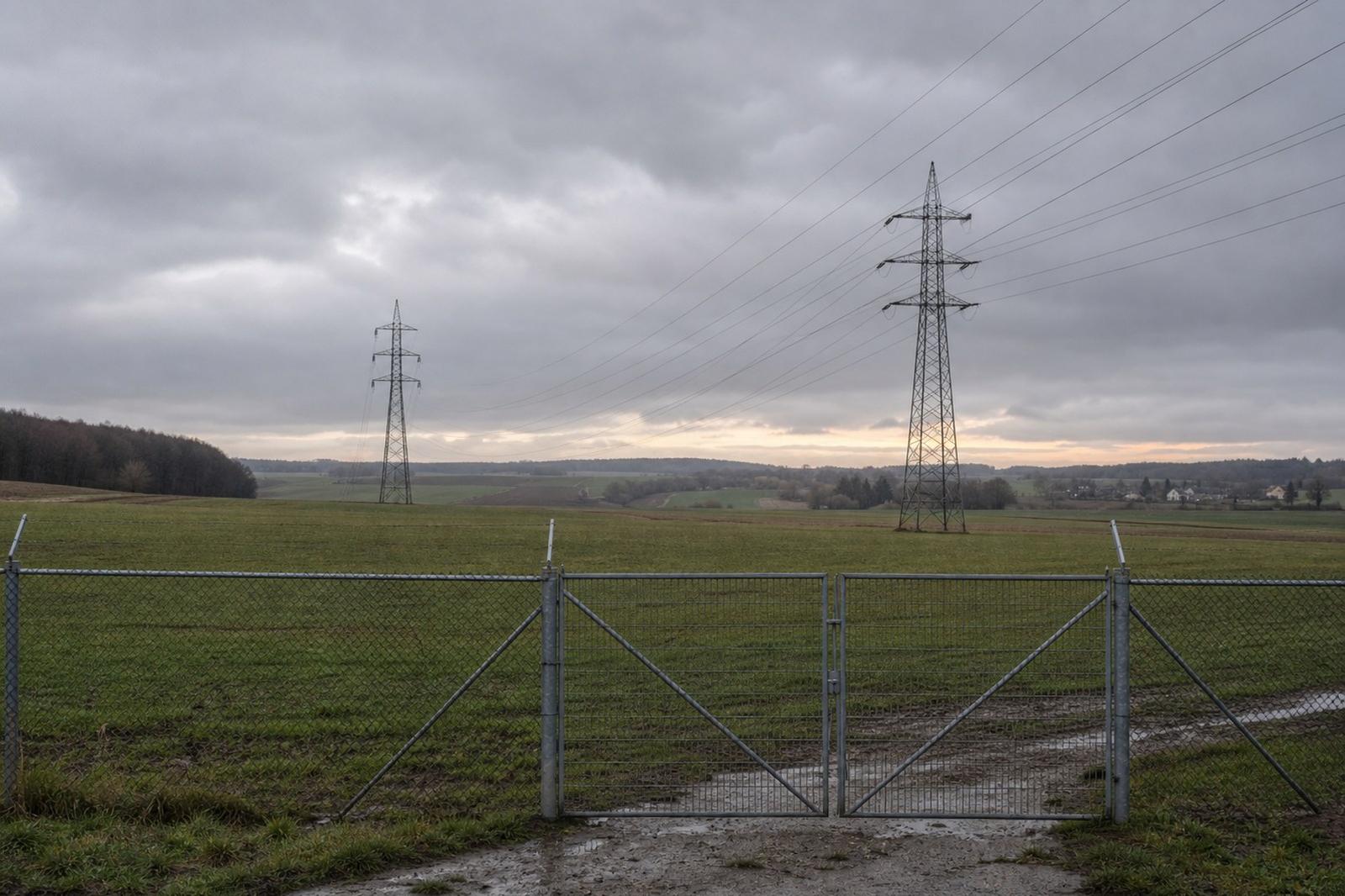
Google has owned a stretch of farmland on the edge of Bissen since 2017, bought for a data-centre project once valued at around one billion euros. Nearly a decade on, not a single server hall stands on the roughly 34-hectare plot. Now, with Luxembourg's environment ministry preparing to rule on the facility's permit, the country's largest environmental association says it will take the project to court if it is waved through.
The Mouvement écologique — known locally as the Méco — used the public-consultation phase of the environmental impact assessment, which closed on 27 March, to file an objection running to some thirty pages, backed by an outside legal opinion. Its core charge is that the assessment is too opaque to justify approval, and that Google has shielded critical figures behind commercial-secrecy clauses.
"We demand that the government act in the national interest and reject Google's confidentiality clause," the association argues, warning that if the permit is granted without addressing its objections, it will lodge an appeal before the administrative court.
What a hyperscale data centre would draw
The numbers at the heart of the dispute are large for a country of Luxembourg's size. According to the Méco's analysis, the plant would consume the equivalent of around 15 percent of national electricity demand — more than all of the country's households combined. Its projected energy-efficiency rating, or power usage effectiveness, would be about 1.3, well short of the 1.09 Google reports across its global fleet and of the roughly 1.15 benchmark the European Commission has floated for a data-centre energy label.
The association's other objections cluster around waste and water:
- Roughly 1,000 gigawatt-hours a year of usable waste heat that, under current plans, would be released into the air rather than piped into district-heating networks in towns such as Ettelbruck and Diekirch.
- An original water-cooling design that, by green campaigners' estimates, would have required 10 to 15 percent of the country's current water use — on the order of 7,500 cubic metres a day.
- Diesel back-up generators rather than batteries, and what the Méco calls minimal on-site solar generation.
Google has previously said its agreements and designs evolve, and the company points to efficiency and sustainability commitments across its operations. But the specific figures for Bissen have been the sticking point, precisely because much of the underlying data has not been made public.
An empty field and a question of sovereignty
For the government, the plot is also a symbol. Economy Minister Lex Delles has been among the project's champions, framing it as a chance the country cannot afford to miss.
"The goal is that we in Luxembourg do not miss the opportunity of big data."
That case — jobs, prestige and a foothold in the infrastructure of the digital economy — runs up against a harder question the Méco has pressed: whether one of the country's best-connected industrial sites, wired into high-voltage infrastructure, should be handed to an American group at all, rather than reserved for Luxembourgish or European operators. The association casts it as a matter of digital sovereignty, not just kilowatts.
The decision now sits with the environment ministry, whose ruling on the permit had been expected in early July. Approval would not end the fight: the Méco has made clear it would move to the courts, a step that could tie the project up for months more. A refusal, or heavy new conditions on cooling, waste heat and transparency, would force Google back to a design it has been reluctant to change.
Either way, the choice facing Luxembourg has grown larger than one plot outside Bissen. As artificial intelligence drives a global scramble for computing capacity, small, wealthy, grid-constrained countries are being asked to host the machinery — and to reckon with what it costs in power and water. The field on the edge of Bissen has become the place where Luxembourg answers that question.
Frequently asked
- Where is the data centre planned?
- On roughly 34 hectares of former farmland on the edge of Bissen, in central Luxembourg, which Google bought in 2017.
- Why does the Mouvement écologique oppose it?
- It cites the plant's projected electricity and water use, unused waste heat, diesel back-up and minimal solar, and above all a lack of transparency, with key data withheld under commercial-secrecy clauses.
- What happens next?
- The environment ministry must rule on the permit. If it approves the project without meeting the association's concerns, the Méco says it will file an appeal before the administrative court.
Sources
Around Luxembourg
A look at recent reporting on luxembourg from the Étude newsroom.
Related by topic
Other Étude stories tagged with the same topics as this article.
More in Luxembourg



Trending at Étude
Wages and purchasing power Luxembourg's next wage-indexation tranche forecast for June 2026, pending official index data
Somalia Somalia Prepares First Offshore Oil Drilling After Decades of Delays
NATO Summit NATO opens Ankara summit hours after deadly Russian strike on Kyiv
Living in Luxembourg How to register with your commune when you move to Luxembourg (déclaration d'arrivée)