Intelligence
Japan launches its first central spy agency since 1945 to counter Russia and China
With about 700 staff and the FBI's public blessing, the National Intelligence Agency starts work just as an investigation exposes a Russian military-intelligence unit buying war components from a Tokyo high-rise.
Japan's new National Intelligence Agency begins work this month — the first time since the Second World War that the world's fourth-largest economy has had a single service to collect, weigh and guard its secrets. The launch, pushed through parliament this spring by Prime Minister Sanae Takaichi, is a deliberate break with the postwar settlement that kept Japanese intelligence small, scattered across ministries and heavily dependent on the United States.
The agency starts with about 700 staff, a number the government expects to grow quickly. It is built around the Cabinet Intelligence and Research Office, until now a modest analysis shop attached to the prime minister's office, and it absorbs streams of information that were previously collected separately by the foreign ministry, the Public Security Intelligence Agency, the foreign-affairs and public-security divisions of the National Police Agency and the defence ministry's intelligence headquarters. Above it sits a new National Intelligence Council, chaired by the prime minister, to turn what the analysts produce into policy.
Ms Takaichi, Japan's first female prime minister, made the agency a pledge of her February election campaign and moved at unusual speed: cabinet approval on 13 March, the lower house in late April, the upper house on 27 May.
“To maintain peace and prosperity, and pre-empt serious crises, it is of the utmost importance to establish a system in which the intelligence community provides robust support” for policymakers, Ms Takaichi told parliament as the legislation passed.
A procurement hub ten minutes from police headquarters
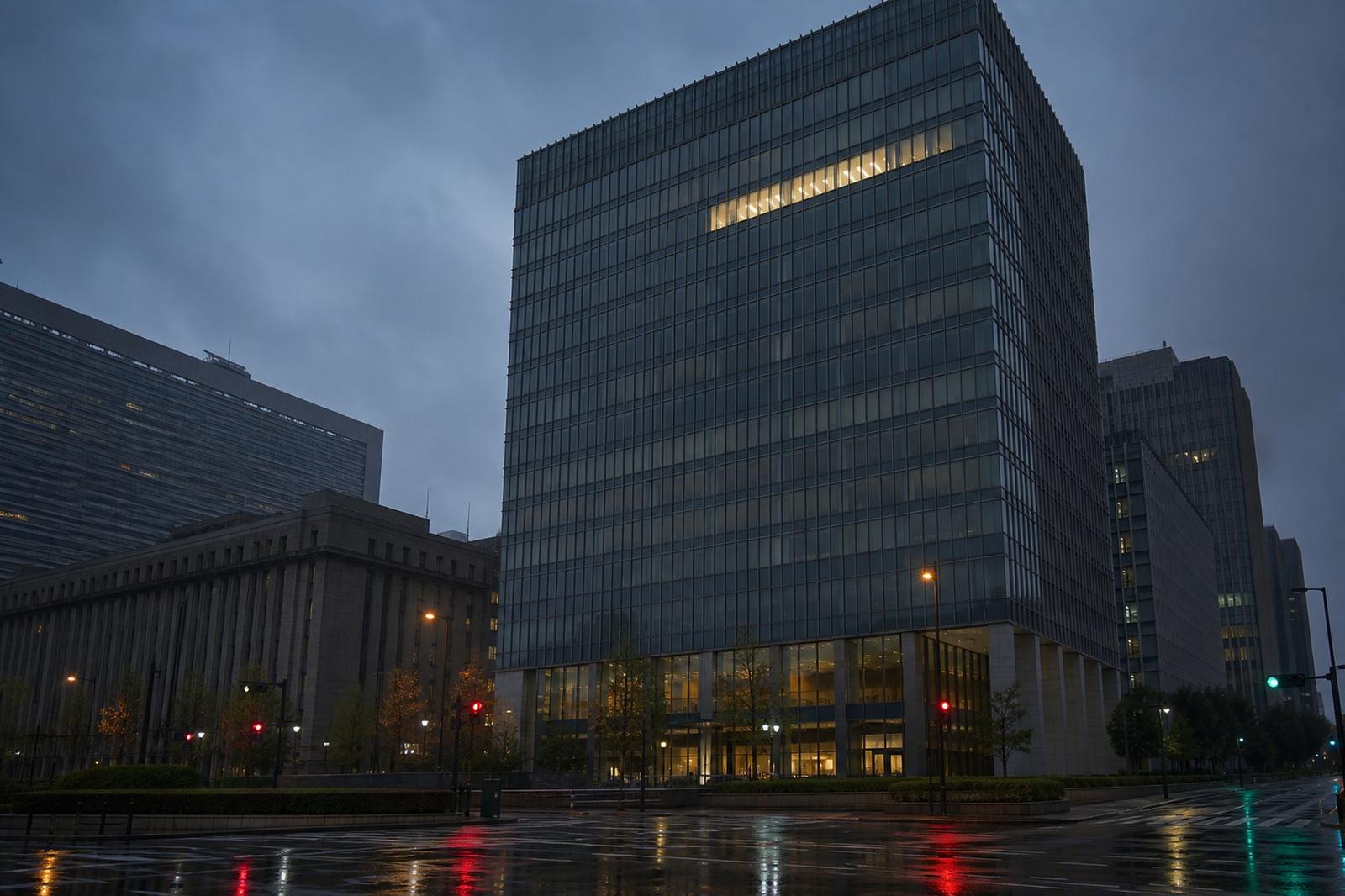
The urgency has an address. On Sunday The New York Times published an investigation describing how a secretive unit of Russian military intelligence, the GRU's 20th Directorate, has turned Tokyo into one of Moscow's most productive shopping centres for war technology. Citing current and former officials at five Western intelligence agencies, the newspaper reported that the unit operates from the 22nd floor of Aeroflot's Tokyo office — a ten-minute walk from the headquarters of the National Police Agency.
The station is overseen by Maksim Filchenkov, a 49-year-old veteran GRU officer who arrived in February 2024 and is, on paper, an employee of the Russian state airline. His officers, posing as diplomats and businesspeople, buy or steal circuit boards, transmitters, semiconductors and machine tools, the report said, then move them towards Russia through front companies and falsified shipping paperwork routed via third countries including Vietnam, Sri Lanka and Uzbekistan.
The scale is what stings in Tokyo. By the Ukrainian government's estimate, some 90 per cent of the Russian missiles and drones recovered in Ukraine contain Japanese-made components, including parts found in Kh-101 cruise missiles fired at Ukrainian cities. “We have a sense of crisis about this situation,” Akihisa Shiozaki, a lawmaker from the governing Liberal Democratic Party, told the Times.
Seven hundred staff, and the FBI's blessing
The agency is being assembled, as the Times put it, with help from the West. Kazuya Hara, who heads the cabinet intelligence office at the core of the new service, travelled to Washington for talks with FBI director Kash Patel, who welcomed the plans publicly: the new body, he said, would “greatly enhance our shared partnership” and help “centralise fragmented intelligence”. The FBI has promised cooperation on cybersecurity, counter-intelligence, espionage and counterterrorism.
For Japan's partners the logic is straightforward. A Japan that can gather secrets — and, above all, protect them — is a Japan they can share more with. Tokyo has circled the Anglophone “Five Eyes” alliance for years without ever being structurally able to join the conversation; a professional central agency is the clearest signal yet that it wants in.
Closing the “spy paradise”
What Japan still lacks is a law. It remains the only G7 country where espionage as such is not a crime: the one serious attempt to criminalise it collapsed in parliament in 1985, and the gap earned the country a reputation among Western services as a “spy paradise”. The government now plans the second half of its overhaul, with an expert panel due this summer and anti-espionage bills in the autumn session of parliament. Proposals floated by the governing party in recent days include:
- a system allowing security agencies to intercept communications without a court warrant;
- a “foreign interference prevention” law aimed at detecting spies;
- a register of individuals and organisations lobbying on behalf of foreign governments.
That is where the consensus ends. Civil-liberties groups and opposition parties warn that a state which spent eight decades doing almost no spying is about to acquire sweeping powers while oversight is still under construction, and demonstrators have rallied against Ms Takaichi's broader security build-up. The history is loaded: it was the excesses of the wartime security apparatus that made “intelligence” a poisoned word in Japanese politics in the first place.
For Europe, the Tokyo story is anything but exotic. The components moving through the GRU's Japanese pipeline end up in the missiles and drones striking Ukraine, and the network exists precisely to defeat the export controls Japan enforces alongside the European Union and the rest of the G7. Every channel closed in Tokyo tightens the same net Europe has been trying to knot shut since 2022.
The harder question is whether an agency can outrun its history. Intelligence cultures take decades to build, and 700 analysts with a council above them are a beginning, not a capability. Japan's allies have applauded the ambition. The lit windows of a Tokyo high-rise are a reminder of how far there is to go.
Frequently asked
- What is Japan's new National Intelligence Agency?
- A centralised service of about 700 staff launching in July 2026, built around the cabinet's intelligence office; it pools information previously scattered across the foreign ministry, police and defence ministry, under a council chaired by the prime minister.
- Why is Japan creating it now?
- Espionage pressure from Russia and China has grown sharply — including a GRU unit in Tokyo that, according to The New York Times, procures components for Russian missiles and drones used against Ukraine.
- Is spying illegal in Japan?
- Espionage as such is not a crime; a 1985 bill failed in parliament. The government plans anti-espionage legislation for the autumn 2026 parliamentary session.
Sources
Around World
A look at recent reporting on world from the Étude newsroom.
Related by topic
Other Étude stories tagged with the same topics as this article.
More in World




Trending at Étude
Money & Work Unemployment benefits in Luxembourg: who qualifies and how much is paid
Your rights at work Paid Holiday and Working Hours in Luxembourg: What the Law Guarantees
Somalia Somalia Prepares First Offshore Oil Drilling After Decades of Delays
NATO Summit NATO opens Ankara summit hours after deadly Russian strike on Kyiv