Manila showdown
Philippine Senate opens Sara Duterte's impeachment trial, with her 2028 presidential bid at stake
The vice-president denies four articles ranging from the misuse of confidential funds to a public threat against President Marcos; a two-thirds vote could bar her from office for life.
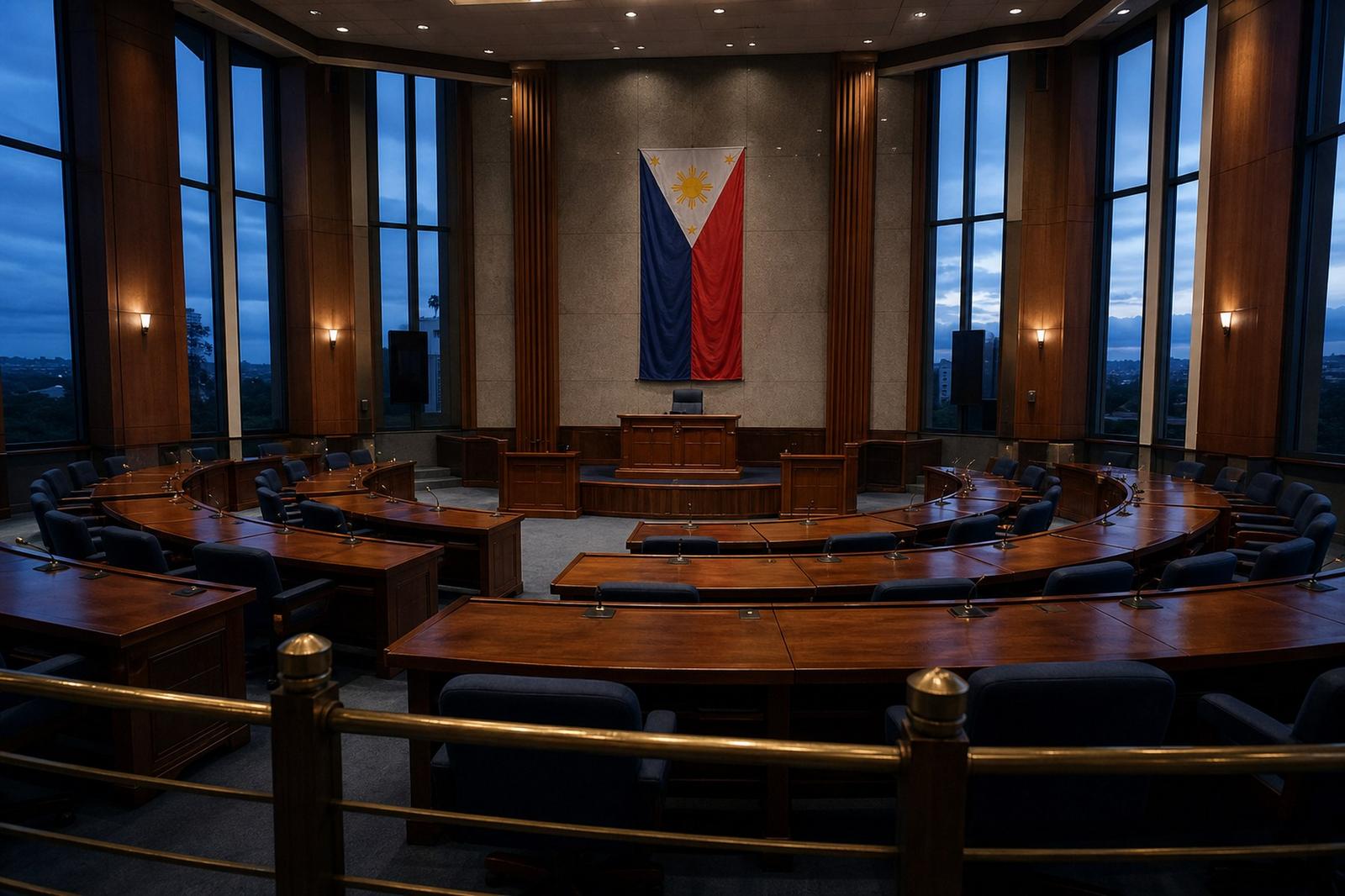
The Philippine Senate convened as an impeachment court on Monday afternoon to open the trial of Vice-President Sara Duterte, beginning a constitutional confrontation that could remove the country's second-highest official and end her ambition to succeed President Ferdinand Marcos Jr. in 2028.
The session opened in Metro Manila under exceptional security, with more than 6,000 police officers, including anti-riot units, ringing the Senate as rival crowds of Duterte loyalists and opponents massed outside. The first day was given over to procedure — the appearance of counsel for both sides, preliminary motions and arguments over evidence — before witnesses are called in the weeks ahead. The senators sitting as judges have set aside 92 trial days.
Ms Duterte, 47, is the only official in Philippine history to have been impeached twice by the House of Representatives. She has denied every allegation and, until now, declined to answer the charges in detail in public, casting the case as a politically driven attempt to destroy her before the next presidential race.
Four articles, and a two-thirds wall
The House sent the Senate four articles of impeachment. To convict on any of them, prosecutors must win the votes of two-thirds of the 24-member chamber — at least 16 senators. A guilty verdict would strip Ms Duterte of the vice-presidency and could disqualify her from holding public office for the rest of her life.
The core accusations are financial and criminal:
- the alleged misuse of some 612.5 million pesos (about €9 million) in confidential funds drawn from her offices as vice-president and as former education secretary;
- unexplained wealth and inaccurate statements of assets;
- a public threat against the lives of the president, First Lady Liza Araneta-Marcos and former House Speaker Martin Romualdez.
The last charge stems from a 2024 remark in which Ms Duterte said she had arranged for an assassin to kill the three if she herself were killed — words she later said had been taken out of context.
A feud that split two dynasties
The trial is the culmination of a bitter rupture between the Philippines' two most powerful political families. Mr Marcos and Ms Duterte ran together in 2022 as the “UniTeam,” a landslide alliance of the country's northern and southern dynasties. Within two years it had collapsed into open hostility, with the vice-president resigning from the cabinet.
“I think that it is a witch hunt because they want to remove her from public service,” said Senator Juan Miguel Zubiri, one of the lawmakers sympathetic to the vice-president.
The prosecution rejects that framing. House prosecutors called such comments “very unbecoming of a senator-judge,” and Leila de Lima, a former senator now among those pressing the case, insisted that “impeachment is not political persecution.”
The proceedings unfold in the shadow of the family's wider legal troubles. The vice-president's father, former president Rodrigo Duterte, is detained in The Hague on an International Criminal Court warrant and is scheduled to go on trial on 30 November over the thousands of killings in the anti-drug campaign that defined his presidency.
How the case reached this point
The road to Monday's session has been long and contested. The House first impeached Ms Duterte in February 2025, but in July that year the Supreme Court unanimously struck the complaint down, ruling that lawmakers had violated a constitutional bar on more than one impeachment proceeding in a single year. Undeterred, the House impeached her a second time on 11 May 2026, with 257 members voting in favour, and the Senate constituted itself as an impeachment court a week later.
Senate President Sherwin Gatchalian is expected to preside over the trial, which is being broadcast live and followed intensely across a country long shaped by dynastic rivalry. The outcome carries weight beyond Manila: the Philippines is a treaty ally of the United States and a front-line state in the contest with China over the South China Sea, and a drawn-out crisis at the top of its government would be watched closely in Washington and Beijing alike.
If two-thirds of the senators vote to convict, Ms Duterte would become the first Philippine vice-president removed by impeachment. If fewer than 16 do, she is acquitted and emerges strengthened for 2028 — the year Mr Marcos, barred by the constitution from a second term, must step aside.
Frequently asked
- What happens if Sara Duterte is convicted?
- She would be removed as vice-president and could be permanently barred from holding public office, ending her expected 2028 presidential bid.
- How many senators must vote to convict?
- At least 16 of the 24 senators — a two-thirds majority — must vote guilty on an article for conviction.
- Why is Duterte on trial?
- The House impeached her over alleged misuse of confidential funds, unexplained wealth and a public threat to have President Marcos, the first lady and a former House speaker killed.
Sources
Around World
A look at recent reporting on world from the Étude newsroom.
Related by topic
Other Étude stories tagged with the same topics as this article.
More in World



Luxembourg's next wage-indexation tranche forecast for June 2026, pending official index data
Trending at Étude
Pay and employment Luxembourg minimum wage in 2026: current amounts and the next indexation forecast
Living in Luxembourg Pharmacies in Luxembourg: opening hours, the pharmacie de garde and how to get medicines after dark
Somalia Somalia Prepares First Offshore Oil Drilling After Decades of Delays
Cross-Border Work Two ceilings, one commute: the telework rules for Luxembourg's frontaliers in 2026