Iran after the war
Iran begins seven days of funeral rites for Ayatollah Khamenei, four months after his killing
Delegations from some 100 countries arrive in Tehran for a week of mourning that ends with burial in Mashhad on 9 July — while Mojtaba Khamenei, the new supreme leader, stays out of sight for fear of assassination.
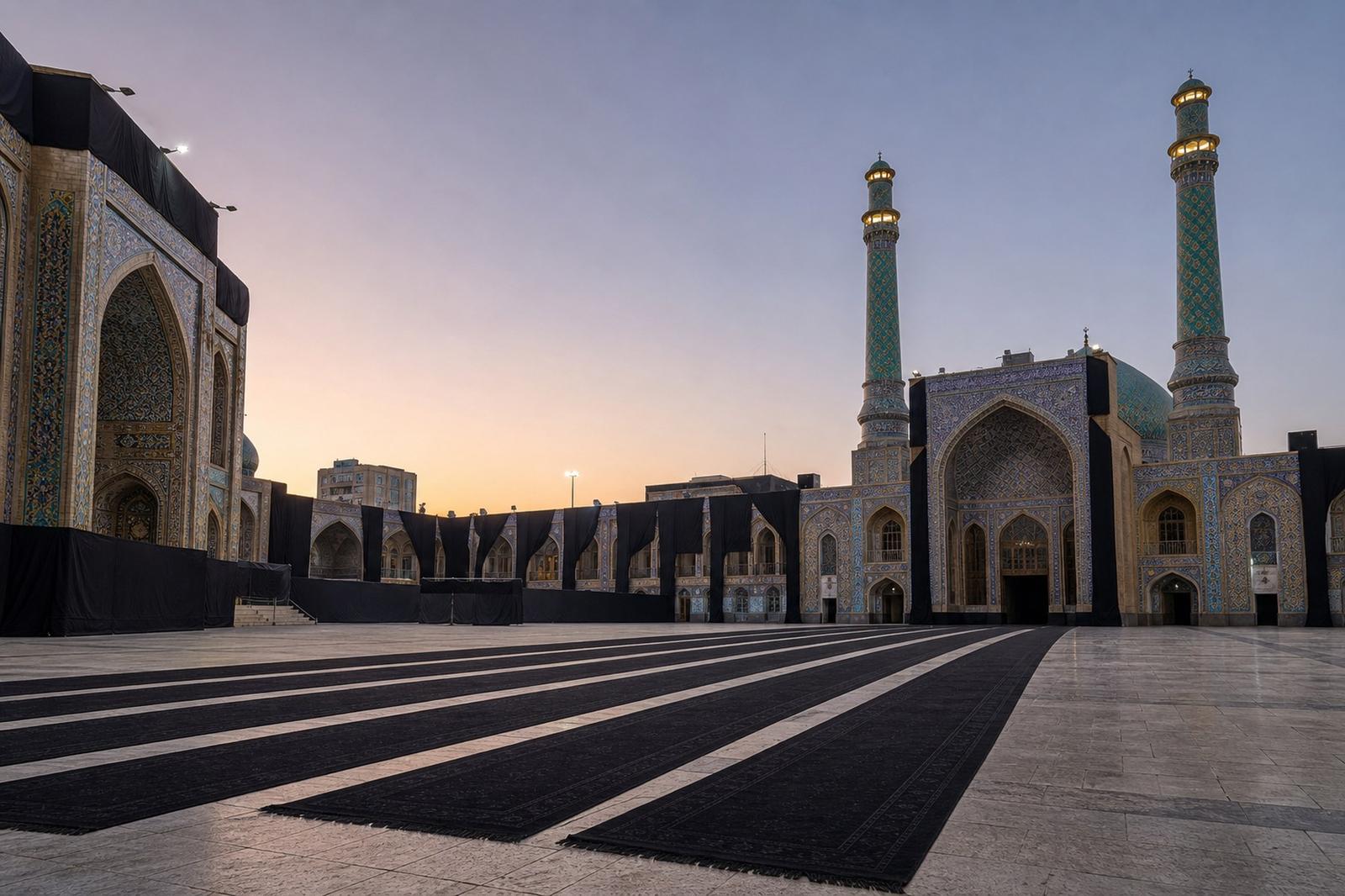
Iran on Friday opened seven days of funeral ceremonies for Ayatollah Ali Khamenei, more than four months after the supreme leader was killed in a joint American-Israeli airstrike on his Tehran compound — the start of a week of national mourning that the Islamic Republic has designed as proof that it survived the gravest war in its history.
Khamenei, who was 86 and had held Iran's most powerful office since 1989, died alongside several members of his family on 28 February, the first day of the conflict. His burial, initially planned for March, was repeatedly postponed as the fighting dragged on; in early March the authorities called off a first farewell ceremony as Israel openly threatened to kill his successor as well. Only now, with a ceasefire holding and negotiations with Washington inching forward, has the leadership judged the moment right to bring his coffin into public view.
On the opening day, foreign delegations, senior officials and religious scholars paid their respects in Tehran, where residents dressed in black gathered on the streets, holding portraits of the late leader and singing ceremonial hymns. Foreign ministry spokesman Esmaeil Baghaei said Iran expects “guests from around 100 countries, including heads of government, parliamentary speakers, foreign ministers, special government envoys, other political figures, and numerous public delegations”. Pakistan's prime minister Shehbaz Sharif, He Wei, a vice-chairman of the standing committee of China's National People's Congress, and the acting foreign minister of Afghanistan's Taliban administration are among those attending.
Seven days, five cities, two countries
The programme runs until 9 July and is unusually elaborate even by the standards of the Islamic Republic:
- On 4 and 5 July, Khamenei's coffin — together with those of the family members killed beside him — lies in state at Tehran's Grand Mosalla, one of the country's largest prayer complexes.
- On 6 and 7 July, processions move through Tehran and on to Qom, the centre of Shia scholarship 120 kilometres south of the capital.
- On 8 July, an official reception at Najaf airport in Iraq is followed by public processions in Najaf and Karbala, Shia Islam's holiest cities.
- On 9 July, the burial takes place at the shrine of Imam Reza in Mashhad.
The final stop closes a circle: Khamenei was born in Mashhad in 1939 and spent much of his early life there. A grave beside Imam Reza is considered a signal honour, reflecting the dead man's dual role as Iran's political ruler and its highest religious authority.
A choreography of endurance
For the leadership, the week is about far more than piety. After a war it experienced as existential, the regime hopes to put millions of people on the streets of Iran's cities — and the size of the crowds will inevitably be read, at home and abroad, as a referendum on the system itself.
President Masoud Pezeshkian, in a message published on the semi-official Tasnim news agency, called on all Iranians, “regardless of ethnicity, religion, political views, or background”, to take part.
“This martyrdom is not the end of the journey, but the beginning of a new chapter of national unity, resilience, and progress,” Pezeshkian wrote, arguing that Khamenei's death had shown the system “rests on the firm foundations of faith, ideals, and the will of a great nation”.
The military struck a blunter note. Major General Ali Abdollahi warned “the enemies of a strong Iran” to “avoid any miscalculation and to consider the harsh and regret-inducing responses”.
The successor who cannot show himself
The most conspicuous absence will be that of the man now holding Khamenei's office. Mojtaba Khamenei, the late leader's son, was named supreme leader by the Assembly of Experts in early March — and has not been seen in public since the war began. He will stay away from his father's funeral for security reasons, according to Ayatollah Hakim Elahi, his representative in India, after Israel's defence minister, Israel Katz, described him as “marked for death”.
It is an image that captures the Islamic Republic's position four months after the strike: a state able to organise mass mourning across two countries, but unable to guarantee that its own head of state can appear at it.
Diplomacy waits at the graveside
The funeral has also imposed a pause on the delicate diplomacy that followed the ceasefire. On 1 July, Qatar and Pakistan concluded separate meetings with American and Iranian negotiators in Doha, reporting “positive progress” on a 14-point memorandum of understanding between the two sides; the next round is to be scheduled only once the processions end.
By the evening of 9 July, when the coffin is lowered beside the shrine of Imam Reza, Iran's new leadership will know whether the week has read as the demonstration of endurance it intends — or as a reminder of how much the war has cost it.
Frequently asked
- Why was Khamenei's funeral delayed for four months?
- He was killed on the first day of the US-Israeli war with Iran, and the burial planned for March was repeatedly postponed as fighting continued and Israel threatened to kill his successor. It is going ahead now that a ceasefire is holding.
- Who leads Iran now?
- His son Mojtaba Khamenei, named supreme leader by the Assembly of Experts in early March 2026. He has not appeared in public since the war began and will not attend the funeral, citing security threats.
- Where will Ali Khamenei be buried?
- At the shrine of Imam Reza in Mashhad on 9 July — the city where he was born in 1939. Burial beside the shrine is considered one of the highest honours in Shia Islam.
- What happens to the US-Iran talks during the funeral?
- The Doha negotiations, mediated by Qatar and Pakistan and covering a 14-point memorandum of understanding, are on hold; the next round will be scheduled after the processions end.
Sources
Around World
A look at recent reporting on world from the Étude newsroom.
Related by topic
Other Étude stories tagged with the same topics as this article.
More in World

Luxembourg public holidays 2026: the full list and what's open or closed

Luxembourg regulator will let Israeli bond prospectus expire on 31 August

Trending at Étude
Money & Work Unemployment benefits in Luxembourg: who qualifies and how much is paid
Culture Luxembourg's cuisine: the national dish and traditional classics
Mobility Alzingen bypass: why Luxembourg is moving a EUR 390 million road bill now
Explainer The Grand Duchy of Luxembourg: Its Monarchy and How the Country Is Governed