A widening proxy war
Saudi Arabia intercepts drones from Iraq as Houthis threaten its oil route
Riyadh says several drones aimed at petroleum facilities were launched by Iran-backed Iraqi groups, while Yemen’s Houthis claim a parallel attack on the kingdom’s route to the Red Sea.
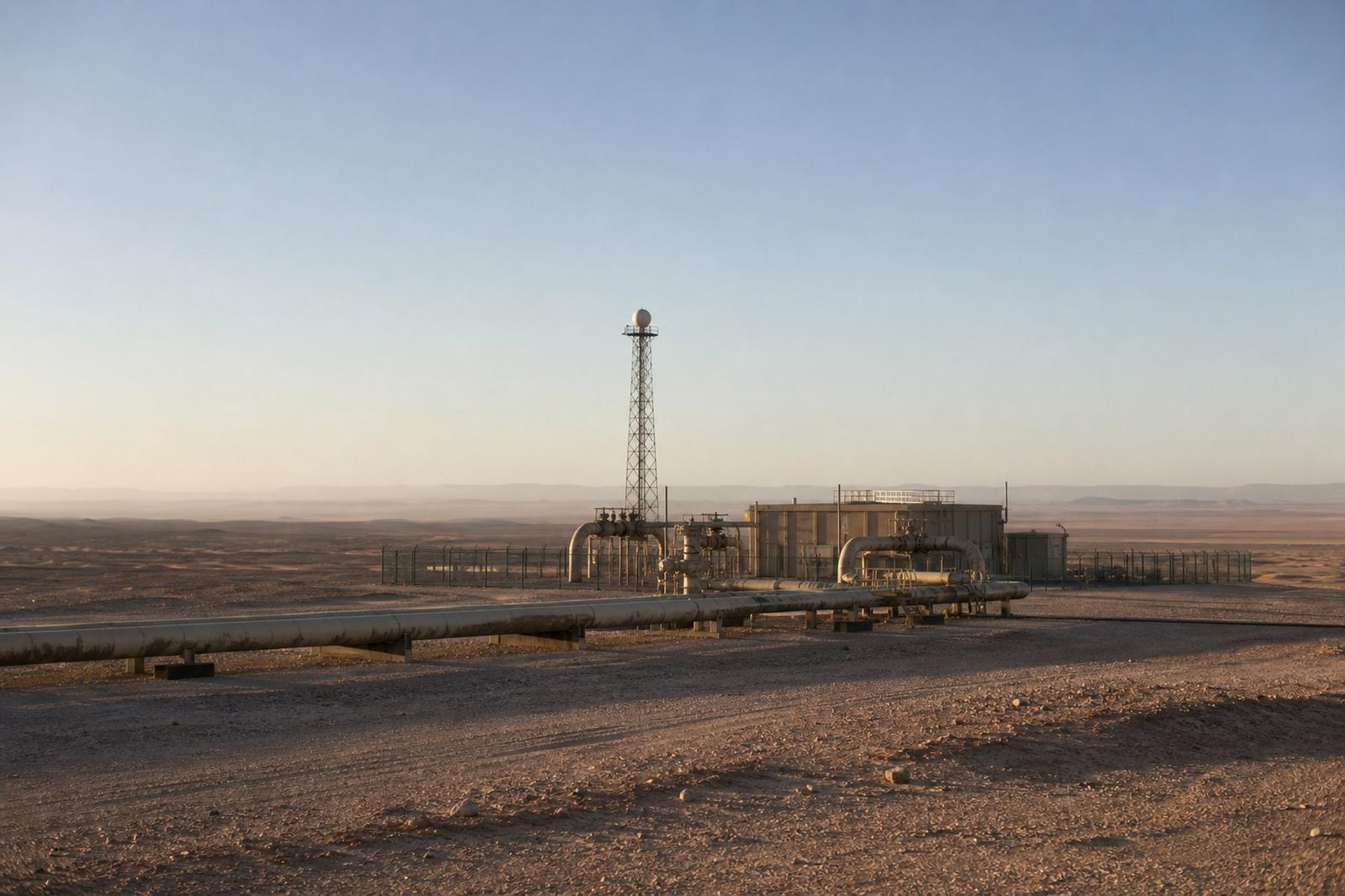
The pause between the United States and Iran has not produced a pause everywhere else. Saudi Arabia said on Monday that its air defences had intercepted and destroyed several one-way attack drones heading towards petroleum facilities in the Eastern Province and the Riyadh region, opening a new test of whether the conflict can be contained while Washington and Tehran hold their fire.
The Saudi Defence Ministry said the drones had come from Iraqi territory and attributed them to Iran-backed armed groups. That attribution has not been independently established, and no Iraqi group immediately claimed responsibility. The official account did not identify the facilities involved or give a precise number of drones beyond saying that several had been destroyed. It reported no casualties or damage.
The kingdom retains the right to respond “at the appropriate time and place”, Saudi Defence Ministry spokesman Maj Gen Turki Al-Malki said.
Saudi Arabia’s Foreign Ministry also urged Baghdad to prevent Iraqi territory from being used as a launch point. Iraqi Prime Minister Ali al-Zaidi ordered an investigation, while his office said Iraq would not permit attacks on neighbouring countries to be launched from its soil. That response leaves Riyadh’s accusation formally under examination rather than settled as fact.
Two claims converge on one vulnerable oil system
Yemen’s Houthis made a separate announcement on Monday, saying that their drones had targeted sensitive points used to supply and transport crude oil from eastern Saudi Arabia to Yanbu on the Red Sea. The movement did not provide independently verifiable evidence. It remains unclear whether its claim referred to the same barrage reported by Riyadh, to another operation or to attacks coordinated with Iraqi factions.
The uncertainty matters because both accounts concern the same strategic system. Saudi Arabia’s East–West Pipeline carries oil from fields near the Gulf across the country to Yanbu, allowing exports to avoid the Strait of Hormuz. Iran said on Monday that the strait remained closed despite contacts with Oman over shipping arrangements. The western outlet is therefore more valuable to Riyadh than under normal conditions.
Yet the Red Sea route is also under pressure. On 20 July, the Houthis announced what they called a maritime embargo on Saudi-linked shipping through Bab-el-Mandeb. In the following days, they claimed missile and drone attacks against Aramco facilities in Yanbu and Jizan after Saudi strikes on Hodeida. The latest claim shifts attention to the overland link feeding Yanbu itself: the bypass around one contested chokepoint leads towards another.
A truce that never became a settlement
The Saudi-Houthi confrontation predates the present US-Iran war. The Houthis seized Sanaa and much of northern Yemen in 2014. Saudi Arabia intervened the following year at the head of a coalition supporting Yemen’s internationally recognised government and imposed an air and sea blockade. A UN-brokered truce in 2022 sharply reduced cross-border fighting, but it did not produce a comprehensive peace agreement or resolve the rival claims over Yemen’s political order.
That fragile arrangement began to unravel again after an attack on Sanaa airport on 13 July that the Houthis blamed on Riyadh. The internationally recognised Yemeni authorities said the action was intended to prevent an Iranian aircraft from landing without approval. The Houthis retaliated against Abha airport, then escalated their threats to shipping and energy infrastructure. Each side presents its actions as a response to the other, a pattern that narrows the room for a controlled climbdown.
Saudi Arabia faces a difficult choice. A direct military reply could reopen the costly Yemeni front it has spent four years trying to quiet. Restraint, however, could encourage further attempts against the infrastructure that underpins the kingdom’s exports and its economic plans. Iraq, meanwhile, must demonstrate whether it can identify and constrain armed groups operating beyond effective state control.
Why the regional lull remains brittle
As of Monday, neither the United States nor Iran had reported direct attacks for three days. Regional officials said mediators led by Qatar and Pakistan were trying to restore negotiations, although Tehran denied that direct talks were under way. The Saudi incidents illustrate the central weakness of that opening: a pause between two governments does not automatically bind the armed groups aligned with Iran or end the separate conflict in Yemen.
The next phase will depend on evidence and observable action rather than competing communiqués. Four developments are especially important:
- whether Baghdad identifies a launch site or organisation responsible for the drones;
- whether Saudi Arabia reports disruption at any petroleum facility or along the East–West Pipeline;
- whether Riyadh acts on its warning that it may respond;
- whether the Houthis turn their declared embargo into sustained attacks on shipping through Bab-el-Mandeb.
For now, Saudi Arabia says the incoming drones were defeated. The larger warning was not. The kingdom’s principal Gulf export route remains constrained, its Red Sea alternative is being threatened, and two unresolved wars are now pressing on the same oil network.
Frequently asked
- What did Saudi Arabia say happened?
- Its Defence Ministry said air defences destroyed several drones launched from Iraqi territory towards petroleum facilities in the Eastern Province and the Riyadh region.
- Who launched the drones?
- Saudi Arabia blamed Iran-backed armed groups in Iraq. No Iraqi group immediately claimed responsibility, and Iraq’s government ordered an investigation.
- Why is the route to Yanbu important?
- The East–West Pipeline lets Saudi Arabia send crude to the Red Sea without using the Strait of Hormuz, but Houthi threats around Bab-el-Mandeb now place pressure on that alternative route.
Sources
Around World
A look at recent reporting on world from the Étude newsroom.
Related by topic
Other Étude stories tagged with the same topics as this article.
More in World

Kyiv Holds the Line, and the West's Economic Weapons Start to Bite

The Scarcest Thing in Tech Is Now a Computer

Trending at Étude
Business transfer Luxembourg family businesses face a succession gap as thousands approach handover
Critical minerals Washington Backs a Kazakh Tungsten Mine. The President's Sons Are Inside the Deal.
Crime Luxembourg Police Handle 41,489 Cases as Violent Robberies Rise 30.8%
Connectivity Mobile and internet providers in Luxembourg compared