The Hormuz confrontation widens
US strikes Iran’s Revolutionary Guard after two troops are killed in Jordan
Washington says the operation will punish the force behind Friday’s attack and weaken Iran’s ability to restrict tanker traffic through the strategic strait.
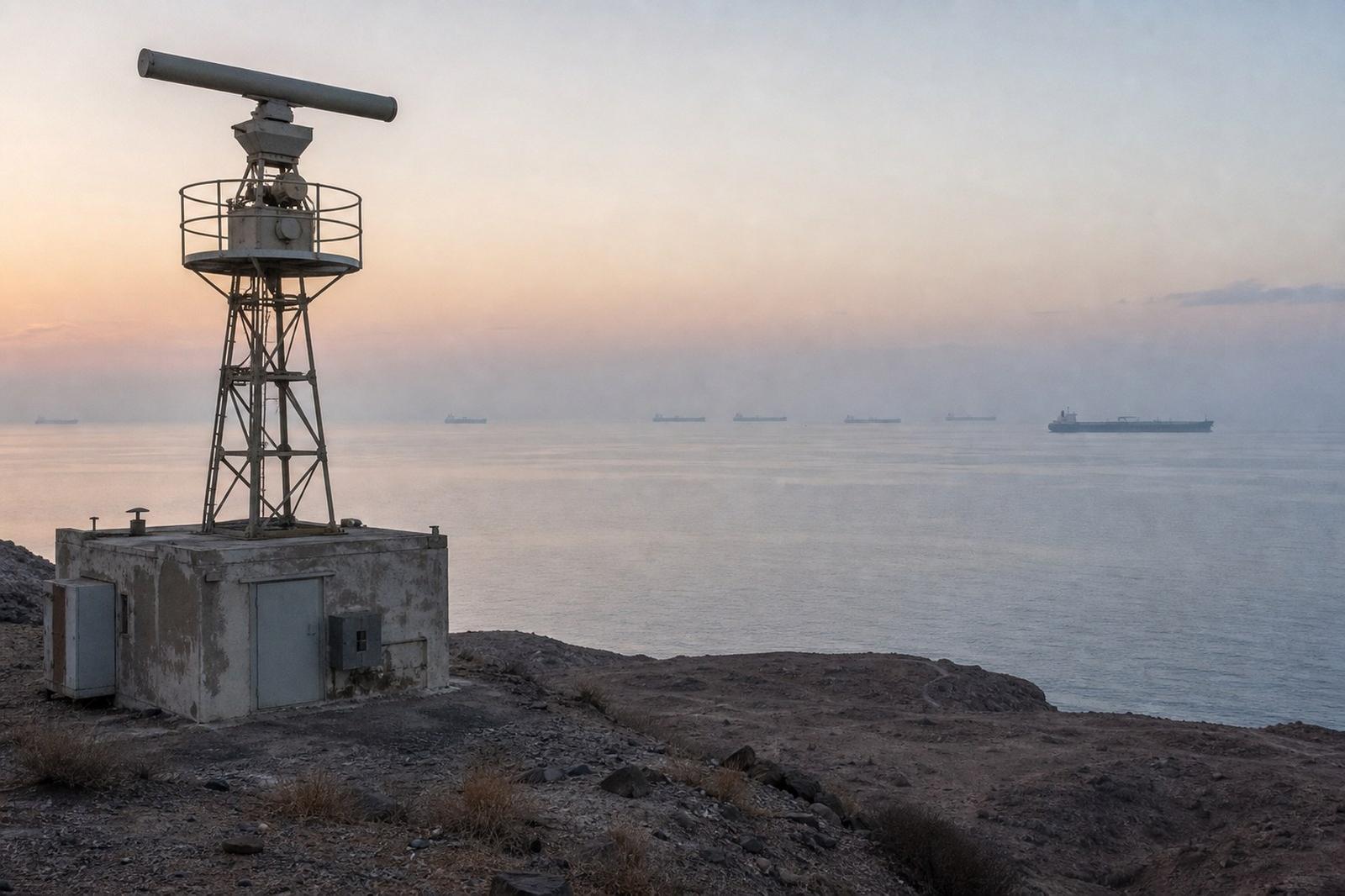
The United States launched a new wave of air strikes against Iran on Sunday, directly targeting the Islamic Revolutionary Guard Corps after two American service members were killed during an Iranian missile-and-drone attack in Jordan.
The immediate retaliation turns the deaths reported on Saturday into a new escalation in a war increasingly centred on control of the Strait of Hormuz. US Central Command said the operation struck coastal surveillance and air-defence facilities, maritime capabilities, and sites used to store missiles and drones.
The American military described the strikes as both punishment for the attack in Jordan and an attempt to reduce Iran’s ability to restrict oil-tanker traffic through the strait. Before the war, roughly one-fifth of global oil supplies passed through the narrow waterway linking the Persian Gulf with the Gulf of Oman.
The strikes were intended to “swiftly punish” Revolutionary Guard forces responsible for attacks on American service members, US Central Command said.
Two killed and one missing in Jordan
The chain of retaliation began on Friday, when Iranian ballistic missiles and drones attacked targets in Jordan. Central Command said two US service members were killed while American and partner forces were defending against the barrage. A third service member was listed as missing in action.
Four other Americans were medically evacuated to Jordanian hospitals and later discharged. Other personnel treated for minor injuries returned to duty. The military withheld the identities of the dead while their relatives were being notified.
The casualties were the first US troop deaths caused by direct Iranian fire since the opening days of the conflict. They also demonstrated that the expanding American campaign inside Iran has not insulated US bases and personnel elsewhere in the region from retaliation.
Jordan is a close American security partner and hosts US forces and aircraft. It has repeatedly found itself beneath Iranian missile and drone routes during the fighting, even though Amman is not a formal participant in Washington’s offensive. Jordanian air defences have intercepted projectiles crossing the kingdom, while debris and impacts have exposed its territory to the consequences of a confrontation largely shaped elsewhere.
Washington targets the Revolutionary Guard
The decision to name the Revolutionary Guard as a direct target is significant. The organisation is not only a military force: it controls Iran’s ballistic-missile arsenal, holds extensive political and economic influence, and oversees important parts of Tehran’s regional security strategy.
American strikes were reported around Hormozgan province, including areas near Sirik, Hajiabad, Qeshm Island and Bandar Abbas. Iran’s state media reported explosions and attacks close to the strait. The latest operation followed strikes that damaged bridges, tunnels and infrastructure on a principal route towards Bandar Abbas, home to Iran’s main commercial port.
The military campaign is therefore moving beyond isolated weapons sites. Roads, coastal monitoring systems, power facilities and infrastructure connected to maritime operations have all entered the contest. That broadening target set increases the danger to civilians and to services on which communities in southern Iran depend.
Iranian authorities said on Saturday that US attacks over the preceding three weeks had killed at least 50 people and wounded more than 500. Those figures could not be independently verified. Tehran has promised further retaliation and says Washington is attempting to seize control of an international waterway.
A collapsed deal and an emptying strait
The renewed fighting follows the collapse of an interim agreement signed about a month ago. That arrangement was intended to contain hostilities while the two sides sought a more durable settlement. Disagreement over navigation rights and authority in the Strait of Hormuz helped bring the pause apart.
Iran says vessels must follow its rules to cross the strait. The United States has promoted navigation closer to the Omani coast and reimposed a blockade on Iranian ports. Commercial traffic has fallen dramatically as shipowners weigh the risk of attack, seizure, delay and rapidly rising insurance costs.
The consequences extend far beyond the two combatants. Gulf states hosting American forces have faced Iranian attacks or alerts, while energy markets remain vulnerable to any sustained interruption. Kuwait has reported attacks on energy infrastructure, and warning systems have been activated elsewhere in the region.
Alternative pipelines and Red Sea ports can move some Gulf exports, but they cannot fully replace the enormous volumes normally carried through Hormuz. Any prolonged disruption therefore threatens higher transport and energy costs, feeding inflation well beyond the Middle East.
The next move carries greater risk
Washington’s stated logic is deterrence: impose a direct price on the Revolutionary Guard and degrade the systems Iran uses to threaten troops and shipping. Yet the deaths in Jordan underline the central difficulty with that approach. Each attempt to compel restraint can give Tehran another reason to widen the geographic scope of its response.
The status of the missing American service member remains unknown. There was also no sign on Sunday of renewed mediation capable of restoring the interim agreement.
The latest strikes do not by themselves settle control of the Strait of Hormuz. They do, however, make the conflict more personal and politically difficult for Washington. American personnel have now been killed, Iran’s most powerful military institution is being singled out, and US-allied states are increasingly exposed. The distance between a coercive campaign and a wider regional war has narrowed again.
Frequently asked
- Why did the United States launch the latest strikes?
- Washington said it was retaliating for an Iranian missile-and-drone attack in Jordan that killed two US service members and left another missing.
- What did the US military target?
- Central Command listed Revolutionary Guard coastal surveillance and air-defence facilities, maritime capabilities, and missile and drone storage sites.
- Why is the Strait of Hormuz central to the conflict?
- It is a critical energy corridor that handled roughly one-fifth of global oil supplies before the war, and both sides are contesting control of shipping through it.
Sources
Around World
A look at recent reporting on world from the Étude newsroom.
Related by topic
Other Étude stories tagged with the same topics as this article.
More in World


Atari Relocates Its Legal Home to Luxembourg After Shareholders Back France Exit


How to buy a property in Luxembourg: the process, costs and notary
Trending at Étude
Intelligence Japan launches its first central spy agency since 1945 to counter Russia and China
Cross-border rail CFL to halt all trains between Luxembourg and Thionville for five weeks this summer
Family finance Child Benefit in Luxembourg: Amounts and How to Claim the Allocations Familiales
Parent guide The Luxembourg school system explained: public, European and international schools