Gulf crisis
Iran declares the Strait of Hormuz closed and the US launches its third wave of strikes in a week
Hours after Tehran and Muscat discussed safe passage for shipping, the Revolutionary Guard fired on a container ship and shut the world's most important oil chokepoint — and Washington answered overnight.
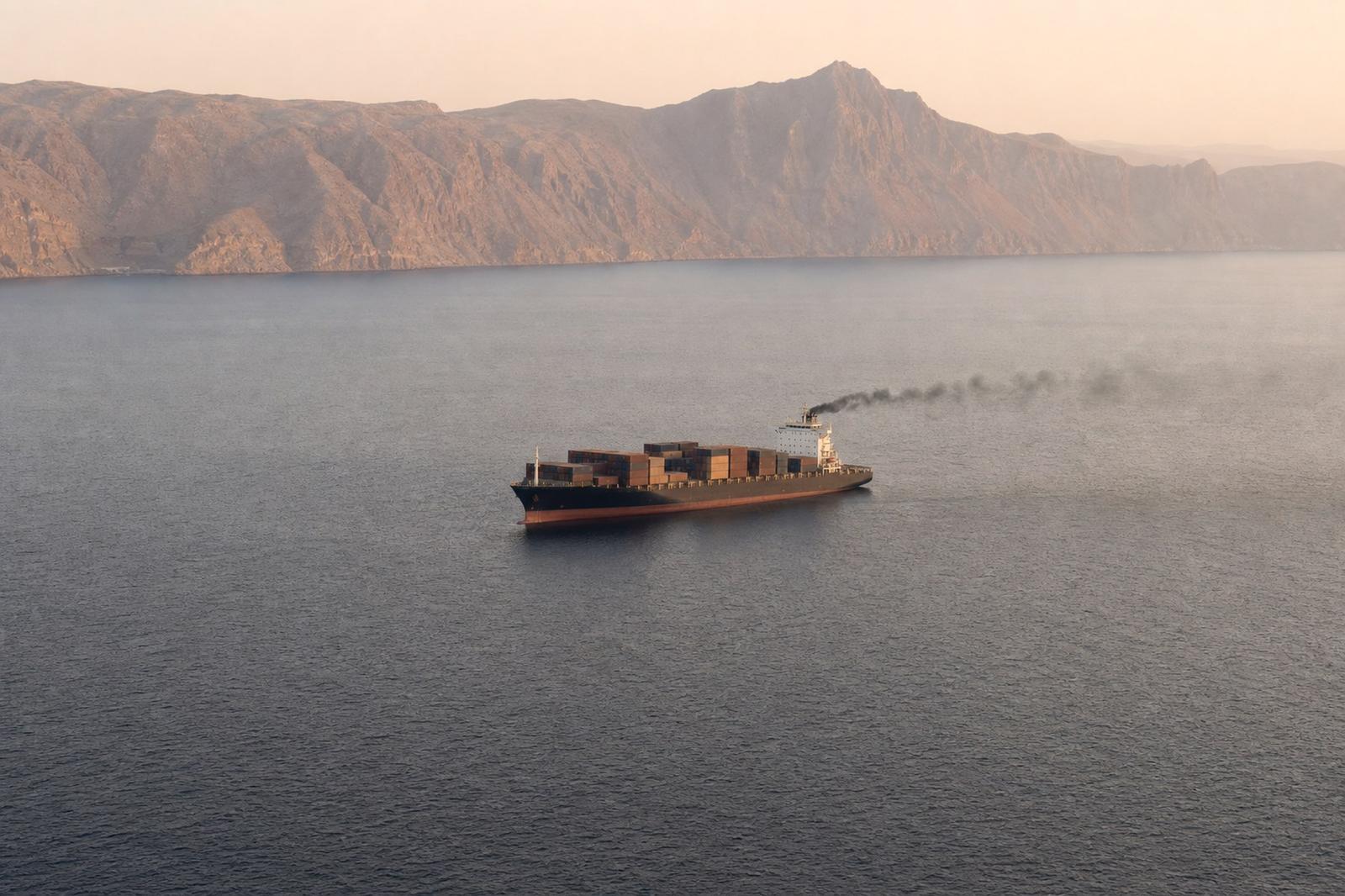
The Strait of Hormuz, the narrow channel that carries about a fifth of the world's oil, is formally closed again. Iran's Islamic Revolutionary Guard Corps declared the waterway shut “until further notice” on Saturday, hours after its forces fired on a container ship transiting the strait — and the United States answered with its third round of airstrikes on Iran in a week, burying what remained of the ceasefire the two countries reached in June.
US Central Command said IRGC forces attacked the M/V GFS Galaxy, a Cyprus-flagged container vessel, leaving it on fire, with significant engine-room damage and unable to continue its voyage. One civilian crew member is missing. At 7:15pm Eastern time — the early hours of Sunday in Europe — American forces began striking Iranian military targets, a campaign Centcom says is designed to “degrade Iran's ability to attack civilian mariners and commercial vessels freely transiting the strait”. Tallies reported by US media put the number of targets hit across the week's three waves at more than 300.
Tehran tells the story differently. Iranian state media, citing the Revolutionary Guard's navy, said its units fired a warning shot at a vessel that had switched off its tracking transponder and strayed from the approved corridor — an “unauthorised route”, in the Guard's wording. The closure, the IRGC said, will last until “the end of US interference in this region”.
Three weeks from handshake to gunfire
The memorandum of understanding signed by Donald Trump and Iran's president, Masoud Pezeshkian, on 17 June was meant to wind down the war that began on 28 February, when American and Israeli aircraft struck military and nuclear sites across Iran and killed the country's supreme leader, Ali Khamenei. Tehran undertook to allow safe, toll-free passage through Hormuz for 60 days while negotiators worked on the harder questions of Iran's nuclear programme and sanctions relief.
The arrangement held for barely three weeks. At the start of this week Iranian forces attacked three commercial vessels, among them the Qatari liquefied-gas carrier Al Rekayat, evacuated after a fire on board, and the Saudi tanker Wedyan. The United States hit back on Tuesday night with a first wave of strikes on about 80 targets. On Wednesday, at the NATO summit in Ankara, Trump pronounced the truce dead: “I think it's over. I don't want to deal with them any more; they're scum.” A second American wave followed, striking some 90 targets tied, in Washington's account, to Iran's ability to threaten shipping.
Iran's retaliation came on Thursday: missiles and drones aimed at American bases in Kuwait and Bahrain, and ten ballistic missiles — eight of them intercepted — fired at Jordan's Al Azraq air base. Kuwait said it downed three ballistic missiles, a cruise missile and ten drones; one person was wounded by falling debris. The Revolutionary Guard described the barrage as the “first phase” of a “punitive response”.
“If you strike, you'll get hit.”
The warning came from Mohammad Bagher Ghalibaf, the speaker of Iran's parliament, who paired it with a sentence that now reads like a policy: the strait, he said, “will only be open under Iranian arrangements”.
Diplomacy overtaken at sea
What makes Saturday's escalation the more remarkable is that it cut across a live diplomatic track. Hours before the GFS Galaxy was hit, Iran's foreign minister, Abbas Araghchi, met his Omani counterpart, Badr al-Busaidi, to discuss “appropriate mechanisms for the safe passage of ships” through the strait, with further talks planned at technical and political level. Araghchi's public formula — “There can only be mutual compliance” — sums up Tehran's position that Washington, not Iran, broke the June understanding by continuing to strike.
Nor has either side formally torn up the memorandum, whose 60-day window runs to mid-August. Trump has left the door open, saying his negotiators, special envoy Steve Witkoff and Jared Kushner, want to keep talking; Oman and Qatar are still shuttling between the parties. But every round of strikes narrows the space in which they can work.
Oil markets brace for Monday
The first closure, imposed when the war began in late February, drove Brent crude to a peak of about $126 a barrel in March — the sharpest disruption to global energy supply since the 1970s. As the truce took hold, prices slid back into the mid-$70s. Brent finished Friday around $75.5, already up almost 5% on the week as the attacks on shipping multiplied, and a formally declared closure, if it holds, points to a sharp repricing when trading resumes on Monday.
Europe feels the shock through fuel prices and imported inflation, and Luxembourg has just organised its public finances around it: the energy-relief package parliament approved on Thursday — five cents off a litre at the pump since 1 July, rebates on gas and heating oil from 1 August, €432.5m in all — was designed precisely to cushion the price surge a blocked Hormuz produces. Whether that cushion is thick enough now depends on decisions taken in Tehran and Washington.
The next fixed point is the memorandum's expiry in mid-August. Between now and then, the question that hung over the spring returns in harder form: whether the world's most important oil corridor stays a shipping lane, or becomes a front line again.
Frequently asked
- Why does the Strait of Hormuz matter so much?
- About a fifth of the world's oil and a large share of its liquefied natural gas pass through the strait, and Gulf producers have no maritime alternative — any closure feeds straight into global fuel and energy prices.
- Is the US–Iran ceasefire officially dead?
- Trump has declared it “over”, but neither side has formally terminated the 17 June memorandum, whose 60-day window runs to mid-August; Oman and Qatar are still mediating and Trump's negotiators say they want to keep talking.
- What happened to the GFS Galaxy?
- According to US Central Command, the Cyprus-flagged container ship caught fire and suffered severe engine-room damage after the IRGC fired on it; one civilian crew member is missing. Iran speaks of a warning shot at a vessel that had switched off its transponder and left the approved corridor.
- What does the escalation mean for fuel prices in Europe?
- Brent rose almost 5% last week and a confirmed closure points to further increases when markets reopen; in Luxembourg, the rebates on fuel, gas and heating oil voted on 9 July were designed to cushion exactly this shock.
Sources
Around World
A look at recent reporting on world from the Étude newsroom.
Related by topic
Other Étude stories tagged with the same topics as this article.
More in World




Trending at Étude
Semiconductors Apple Raises Mac and iPad Prices, Blaming the AI Memory Crunch
Russia's war economy Kyiv Holds the Line, and the West's Economic Weapons Start to Bite
Your rights at work Paid Holiday and Working Hours in Luxembourg: What the Law Guarantees
Wages and purchasing power Luxembourg's next wage-indexation tranche forecast for June 2026, pending official index data