Persian Gulf
A fatal blast at Ras Laffan, and Qatar's vow that the gas keeps flowing
Thirteen workers were killed and 66 injured at a facility restarted only two days earlier — but Doha insists the world's gas supply is untouched.
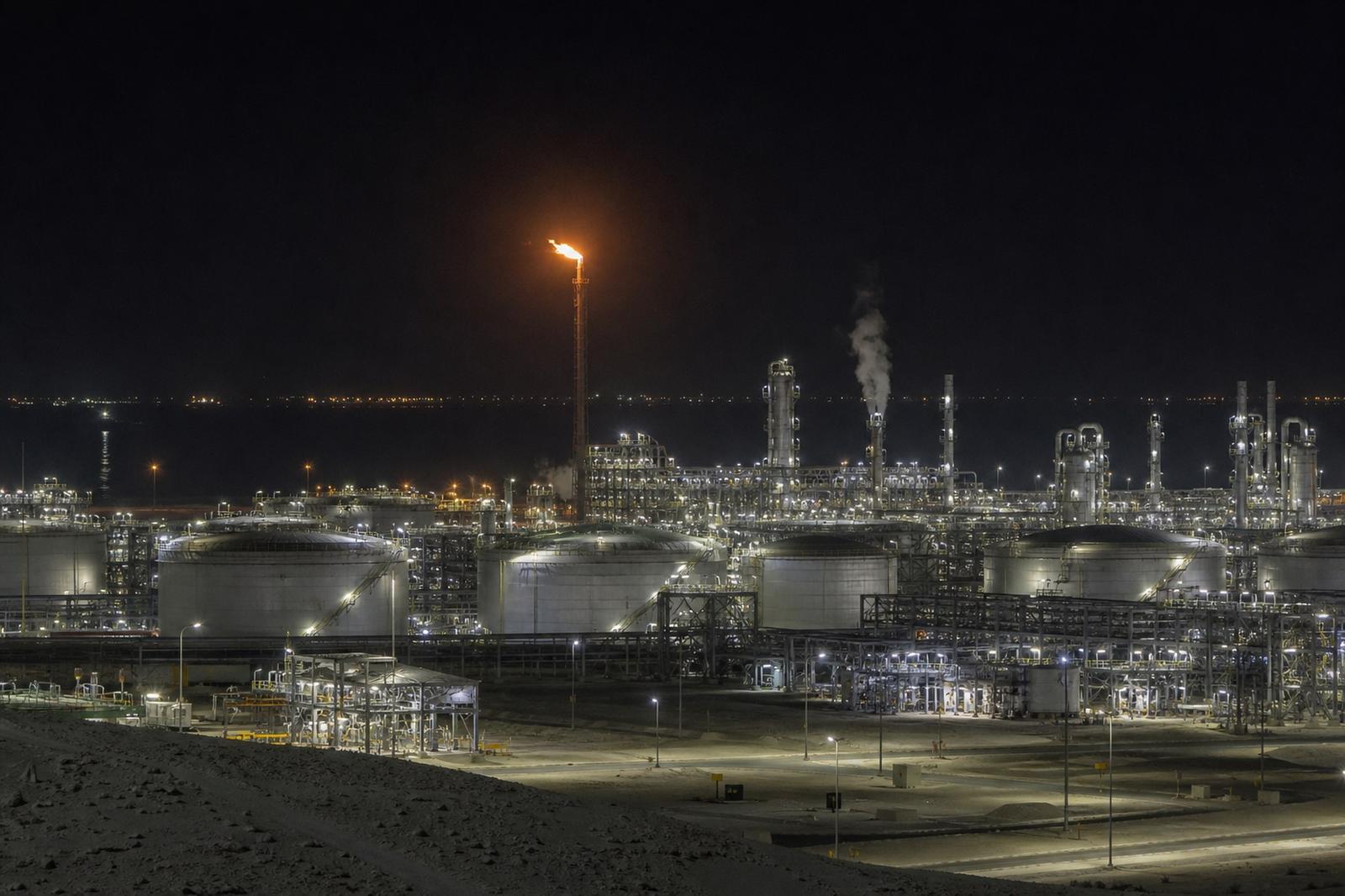
The fireball that lit the desert sky north of Doha on Monday came from one of the most strategically important pieces of industrial plant on the planet — and from one that had been switched back on only two days earlier. At least 13 workers were killed and 66 injured in an explosion at the Barzan gas facility inside Ras Laffan Industrial City, Qatari authorities confirmed, in the deadliest accident to strike the Gulf state's energy sector in years.
All of the dead were nationals of India and Pakistan, the migrant workforce that keeps Qatar's hydrocarbons economy running. None of the injured were in a life-threatening condition, the interior ministry said, after an earlier and more chaotic tally that had spoken of dozens hurt and 18 people unaccounted for.
Thirteen workers, one restart
Energy Minister Saad al-Kaabi moved quickly to define what the blast was — and what it was not. "This was an accident and not sabotage or hostile in nature," he told reporters, ruling out the possibility that the explosion was a fresh chapter in the region's long season of conflict.
The timing, he explained, was almost cruelly precise. The Barzan plant had been shut down since December 2025 for urgent maintenance and had been restarted, in his words, "only two days ago." Industrial restarts, when pressure and temperature surge back through dormant systems, are among the most hazardous moments in any gas operation. The minister attributed the disaster to a technical malfunction during that process; a full technical analysis is expected to follow.
Barzan is not a glamorous export terminal but a workhorse of Qatar's domestic supply, delivering around 1.4 billion standard cubic feet of gas a day for power generation, water desalination and industry, alongside ethane, condensate, liquefied petroleum gas and sulphur. It is majority-owned by the state company QatarEnergy, with ExxonMobil holding a minority stake.
A plant the war had already wounded
Ras Laffan did not come to Monday unscarred. In March 2026, during the brief but violent confrontation that drew in Iran, the complex was struck by missiles and drones — damage severe enough to force Qatar to halt some production and trim its LNG export capacity by roughly 17 percent. The December shutdown and this week's restart were part of the long, delicate work of bringing the site fully back to life.
That history is why a domestic accident at Ras Laffan reverberates far beyond Qatar. The complex is the beating heart of the world's largest exporter of liquefied natural gas, and any sign of fragility there is read instantly on trading screens from Singapore to Rotterdam.
Why Europe was listening
Mr al-Kaabi's second message was aimed squarely at those screens. "This will not affect in any way our exports to the world," he said, drawing a firm line between the damaged domestic facility and the export trains that load tankers bound for Asia and Europe.
For European buyers, the reassurance mattered. Since the continent weaned itself off Russian pipeline gas, Qatar has become one of the suppliers Europe can least afford to lose, locked in through long-term contracts that feed terminals in the Netherlands, France, Italy and Belgium. A serious interruption at Ras Laffan would land, eventually, as higher bills on the European mainland — including in energy-importing Luxembourg, which buys its gas through its larger neighbours.
"This was an accident and not sabotage or hostile in nature."
For now, the market took Doha at its word: gas prices did not lurch, and loading schedules out of Ras Laffan were reported intact. The reassurance, however, sits uneasily beside the human arithmetic of the day — thirteen men who had returned to a plant that was itself only just returning to work.
A workforce in the shadows
The accident also turned a brief spotlight on the labourers who make the Gulf's gas economy possible. Qatar's energy sector is built on migrant workers from South Asia, and it was their countrymen — Indian and Pakistani nationals — who paid Monday's price. New Delhi and Islamabad both sought information on their citizens as Qatari hospitals treated the injured.
Investigators now face the task of explaining why a routine, if risky, restart ended in catastrophe. Until that technical analysis is complete, the official account rests on a single, careful distinction: this was an accident of machinery, not of war — and the gas, Qatar insists, will keep flowing.
Frequently asked
- Did the explosion affect Qatar's gas exports?
- Qatar's energy minister said it would not affect exports; Barzan mainly supplies the domestic market, and loading schedules were reported unchanged.
- Was the blast linked to the conflict with Iran?
- Officials ruled out sabotage or hostile action and blamed a technical malfunction during the plant's restart, though Ras Laffan had been struck by Iran in March 2026.
- Why does this matter for Europe?
- Qatar is a leading LNG supplier to Europe under long-term contracts, so any serious disruption at Ras Laffan could feed through into higher energy prices on the continent.
Sources
Around World
A look at recent reporting on world from the Étude newsroom.
Related by topic
Other Étude stories tagged with the same topics as this article.
More in World


Trending at Étude
Financial regulation Luxembourg regulator will let Israeli bond prospectus expire on 31 August
Startup Guide How to Start and Fund a Startup in Luxembourg: A 2026 Founder's Guide
Culture Luxembourg's cuisine: the national dish and traditional classics
Languages Luxembourg's three official languages — Luxembourgish, French and German — and where each is used