War and energy
Brent closes above $100 as Trump weighs larger US attack on Iran
A thirteenth night of American strikes, threats to two maritime chokepoints and a faltering diplomatic effort have returned an oil shock to the centre of the world economy.
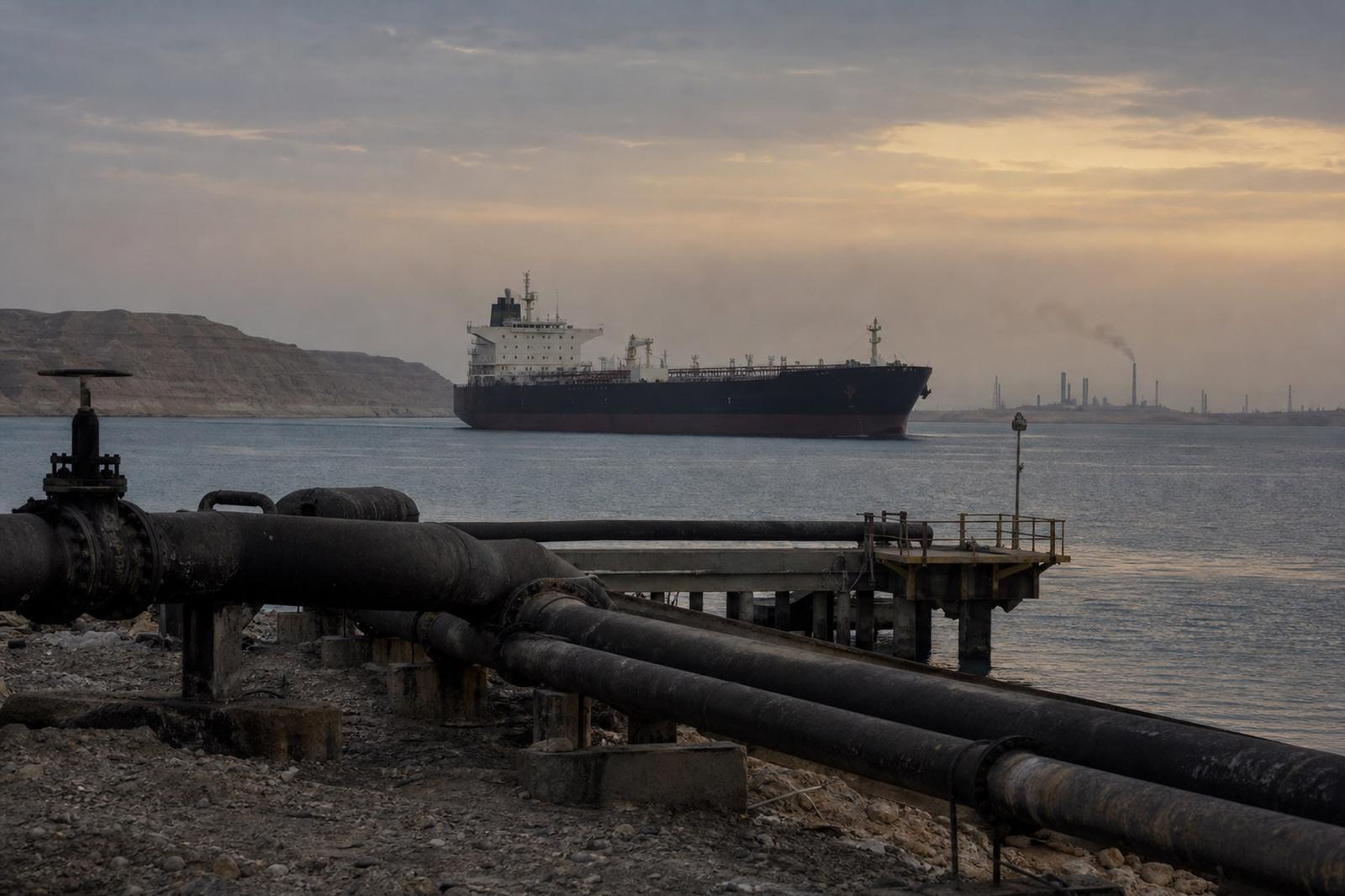
The price of the world’s most important oil benchmark has crossed a threshold with consequences far beyond the Gulf. Brent crude settled at $100.69 a barrel on Thursday, a gain of 7%, after touching $102 during the session. The rise came as the United States completed a thirteenth consecutive night of strikes on Iran and President Donald Trump said he was close to deciding whether to order a substantially larger attack.
The market is reacting to more than the destruction caused by individual strikes. It is pricing the possibility that insecurity around the Strait of Hormuz could be joined by sustained disruption in the Red Sea, placing two routes used by tankers under pressure at the same time. Yemen’s Iran-backed Houthi movement said it had attacked two Saudi oil tankers. The claim heightened fears around the Bab el-Mandeb passage, while several vessels have already altered their routes and war-risk insurance has become more expensive.
Trump keeps the larger military option open
Trump told Axios that no final order had been given, but described preparations for an operation larger than the earlier American campaign. Two US officials also told the publication that a decision had not yet been made and that the military had received no new orders. That distinction matters: the threat is immediate, but a wider attack is not yet inevitable.
“I am considering a massive attack. Bigger than ever before. I am close to making a decision. We are all set for it,” Trump said.
US Central Command said its latest strikes were intended to reduce Iran’s ability to threaten civilian sailors and commercial vessels in regional waters. Explosions were reported at Bandar Abbas and on Qeshm Island, both closely connected to Iranian naval activity and commerce around Hormuz. The command said the overnight operation ended shortly before 5am local time on Friday.
Iran has continued to retaliate against US-linked targets around the Gulf. Jordan said its forces had engaged four Iranian missiles and six drones during a 24-hour period, intercepting all but one missile, which fell in an uninhabited area. Iran also claimed attacks on American military positions in Kuwait. Neither Washington nor Kuwait reported casualties from the alleged strike on the Al-Adiri base.
An Iraqi channel fails to produce a pause
Diplomacy has moved in parallel with the bombardment, but with contradictory public and private accounts. The New York Times reported, citing Iranian and Iraqi officials, that Tehran had rejected a temporary US ceasefire proposal carried by Iraqi Prime Minister Ali al-Zaidi. According to those officials, the offer left unresolved the future control of the Strait of Hormuz.
Al-Zaidi visited Tehran after meeting Trump at the White House earlier in July. He met Iranian President Masoud Pezeshkian and other senior officials while calling for dialogue and promising that Iraqi territory would not be used for attacks against Iran. Iranian Foreign Minister Abbas Araghchi publicly denied that the Iraqi leader was carrying a US message, saying the obstacle was Washington’s approach rather than a shortage of mediators. The discrepancy leaves the precise content and status of the proposal uncertain, but there is no sign of an agreed pause.
Two vulnerable sea lanes move the oil market
The Strait of Hormuz is the principal concern because roughly one-fifth of the world’s oil and gas passed through it in peacetime. The Houthi threat adds another layer: Bab el-Mandeb controls access between the Red Sea and the Indian Ocean. A tanker unable to use the usual Red Sea route may have to make a longer journey around Africa, increasing fuel, insurance and freight costs even when no cargo is physically lost.
That combination helps explain why Brent moved so sharply. The benchmark had fallen below $72 only weeks earlier on expectations that a preliminary peace arrangement would ease the disruption. At $100.69, the market is instead transmitting the cost of military risk to airlines, road transport, industry and households. Higher energy costs can also slow the retreat of inflation and make interest-rate decisions harder for the European Central Bank and other monetary authorities.
Luxembourg feels the rise at the pump
Luxembourg’s regulated maximum prices do not move in a perfect daily line with Brent, because exchange rates, refined-product prices, taxes and earlier wholesale purchases also matter. Even so, Friday brought a visible increase. Diesel rose by 3.6 cents to €1.889 per litre, while heating oil gained 3.8 cents to €1.380. Super 98 moved in the opposite direction, falling by 3.5 cents to €1.903.
The figures already include the broader policy context of the government’s resilience package. Since 1 July, the state has absorbed five cents per litre on petrol and diesel. Parliament has also approved a 15-cent reduction for heating oil and agricultural diesel from 1 August. Those measures cushion the transmission of the oil shock; they do not remove Luxembourg’s exposure to a prolonged rise in crude and refined-product costs.
The next decisive move will therefore come from politics rather than the trading screen. A limited military posture or a credible ceasefire could take some risk out of the barrel price. A larger American attack, Iranian retaliation and durable disruption around both Hormuz and the Red Sea would do the opposite. At more than $100, the oil market is signalling that it no longer treats that second path as remote.
Frequently asked
- Why did Brent crude rise above $100?
- Traders are pricing the risk of prolonged US-Iran fighting and simultaneous disruption around the Strait of Hormuz and the Red Sea.
- Has Donald Trump ordered the larger attack?
- No. Trump said he was close to a decision, but two US officials said no final decision or new military order had been issued.
- What changed at Luxembourg filling stations?
- Diesel increased by 3.6 cents to €1.889 per litre, while Super 98 fell by 3.5 cents to €1.903.
- Does Luxembourg subsidise current fuel prices?
- Yes. The state has covered five cents per litre on petrol and diesel since 1 July, and a 15-cent reduction for heating oil and agricultural diesel begins on 1 August.
Sources
Around World
A look at recent reporting on world from the Étude newsroom.
More in World




Trending at Étude
Banking Luxembourg bank interest rates in 2026: savings and mortgage figures published by Spuerkeess, BGL, Raiffeisen and BIL
Circular economy EU bans large companies from destroying unsold clothes and shoes
Public finances Luxembourg inherits about €400 million from an heirless estate — enough to pay for the tripartite package
Cross-border rail CFL to halt all trains between Luxembourg and Thionville for five weeks this summer