Nuclear diplomacy
US and Saudi Arabia sign nuclear deal that opens path to uranium enrichment
A 30-year cooperation framework gives American suppliers access to the Saudi market while leaving Riyadh’s most sensitive nuclear ambition on the table.
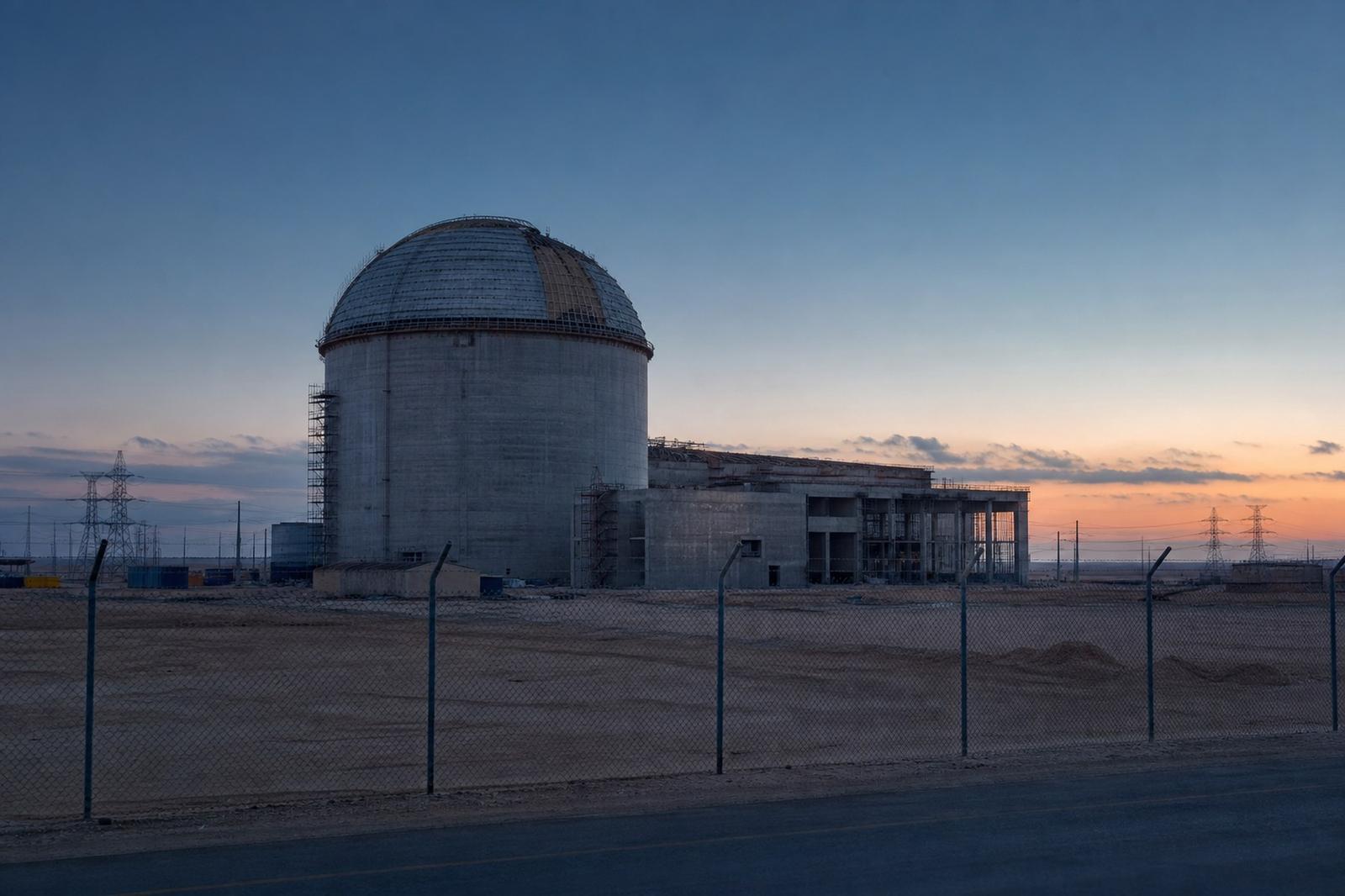
WASHINGTON — The United States and Saudi Arabia have signed a civilian nuclear cooperation agreement that could eventually permit the kingdom to enrich uranium on its own territory, a strategic concession that may alter the nuclear balance of the Middle East. The agreement arrives while the United States and Israel are at war with Iran, a campaign Washington has justified in part as an effort to prevent Tehran from obtaining a nuclear weapon.
US Energy Secretary Chris Wright and Saudi Energy Minister Prince Abdulaziz bin Salman signed the accord on Wednesday, 22 July, alongside a separate bilateral safeguards agreement. Known as a 123 agreement after the relevant section of the US Atomic Energy Act, it provides the legal basis for American companies and government bodies to transfer civilian nuclear technology, equipment and expertise to Saudi partners.
What Washington has authorised
The framework is expected to run for 30 years and underpin a multi-billion-dollar partnership. It clears a path for US-designed power reactors in Saudi Arabia and gives American suppliers a chance to compete for a programme pursued by Riyadh for years. Westinghouse is widely viewed as a likely contender, although neither a reactor order nor a construction site was announced with the agreement.
The most consequential provision concerns the nuclear fuel cycle. According to reporting by the Associated Press and Reuters, the agreement leaves open the construction of a Saudi uranium-enrichment facility if a joint US-Saudi study finds one justified. It does not require Washington to transfer enrichment machinery or know-how, and no such facility has been approved for construction. It nevertheless creates a legal route that previous negotiations had struggled to reconcile with US nonproliferation policy.
Why enrichment changes the stakes
Uranium enrichment has legitimate civilian uses: reactor fuel requires a higher concentration of the fissile isotope uranium-235 than is found in natural uranium. The same centrifuge technology, however, can produce progressively more concentrated material. Enrichment alone does not make a bomb; weaponisation also requires specialised design, explosives and delivery capabilities. But control of the fuel cycle shortens an important technical and political part of that journey.
Saudi Arabia is a party to the Nuclear Non-Proliferation Treaty and is already subject to baseline International Atomic Energy Agency safeguards. The new US deal, however, does not include the IAEA’s Additional Protocol, according to multiple reports. That protocol gives inspectors wider access to information and locations, including the ability to investigate undeclared nuclear activity. The text of the separate bilateral safeguards arrangement has not been published.
“The U.S. is not going to reach any agreement with any country in the world that leads to the risk of proliferation,” Secretary of State Marco Rubio said.
The contrast with the United Arab Emirates is central to the criticism. The UAE’s 2009 agreement with Washington included a binding renunciation of domestic enrichment and spent-fuel reprocessing, provisions often called the gold standard of US nuclear cooperation. Riyadh accepted neither that renunciation nor the Additional Protocol. Crown Prince Mohammed bin Salman said in 2018 that Saudi Arabia would pursue a nuclear weapon if Iran obtained one, a statement that continues to shape how the kingdom’s civilian plans are judged.
Congress receives the agreement, but the hurdle is high
The Trump administration says it will send the package to Congress for review. A conventional 123 agreement is examined for roughly 90 days of continuous congressional session. It does not require a simple affirmative vote to survive: lawmakers would generally have to pass a joint resolution of disapproval to stop it, then assemble a two-thirds majority in both chambers if the president vetoed that resolution.
That design gives the administration a strong procedural advantage. Democrats and some Republicans have previously demanded stricter conditions for Saudi cooperation, including a ban on enrichment and adoption of the Additional Protocol. Rubio supported such guardrails when he served in the Senate. The political question is now whether lawmakers who distrust the concessions can build a veto-proof coalition rather than merely register their opposition.
A commercial deal made in wartime
For Riyadh, nuclear power is part of an effort to diversify energy production, acquire advanced technology and preserve more oil and gas for export or industrial use. For Washington, the programme offers large contracts to American industry and a way to prevent Russian, Chinese, South Korean or French suppliers from defining Saudi nuclear infrastructure. Those commercial and strategic interests explain why both the Trump and Biden administrations pursued versions of an agreement.
The timing gives the accord a more dangerous meaning. Iran maintains that its own enrichment programme is peaceful, while Washington has treated that capability as an unacceptable weapons risk. Allowing a US ally to seek enrichment under a less intrusive international inspection regime will therefore be read across the region as a new precedent. The agreement does not give Saudi Arabia a bomb, or even an operating enrichment plant. It does give Riyadh something it has sought for years: recognition that domestic enrichment can remain within the scope of its civilian nuclear future.
Frequently asked
- Does the agreement give Saudi Arabia a nuclear weapon?
- No. It concerns civilian nuclear cooperation and does not transfer a weapon, although critics say domestic enrichment could reduce the technical distance to a weapons programme.
- Can Saudi Arabia begin enriching uranium immediately?
- No enrichment facility was approved or announced. The agreement creates a possible legal route after a joint US-Saudi study.
- What is missing from the safeguards?
- The agreement does not include the IAEA’s Additional Protocol, which grants inspectors wider access to information and suspected undeclared nuclear sites.
Sources
Around World
A look at recent reporting on world from the Étude newsroom.
Related by topic
Other Étude stories tagged with the same topics as this article.
More in World



Trending at Étude
Public finances Luxembourg inherits about €400 million from an heirless estate — enough to pay for the tripartite package
Banking Luxembourg bank interest rates in 2026: savings and mortgage figures published by Spuerkeess, BGL, Raiffeisen and BIL
Circular economy EU bans large companies from destroying unsold clothes and shoes
Cross-border rail CFL to halt all trains between Luxembourg and Thionville for five weeks this summer