A ceasefire under immediate strain
Israeli strikes kill at least two in Gaza as Hamas disarmament plan stalls
The attacks underline the unresolved question at the heart of Washington’s roadmap: whether Hamas must surrender its weapons before Israeli forces withdraw, or whether both steps can proceed together.
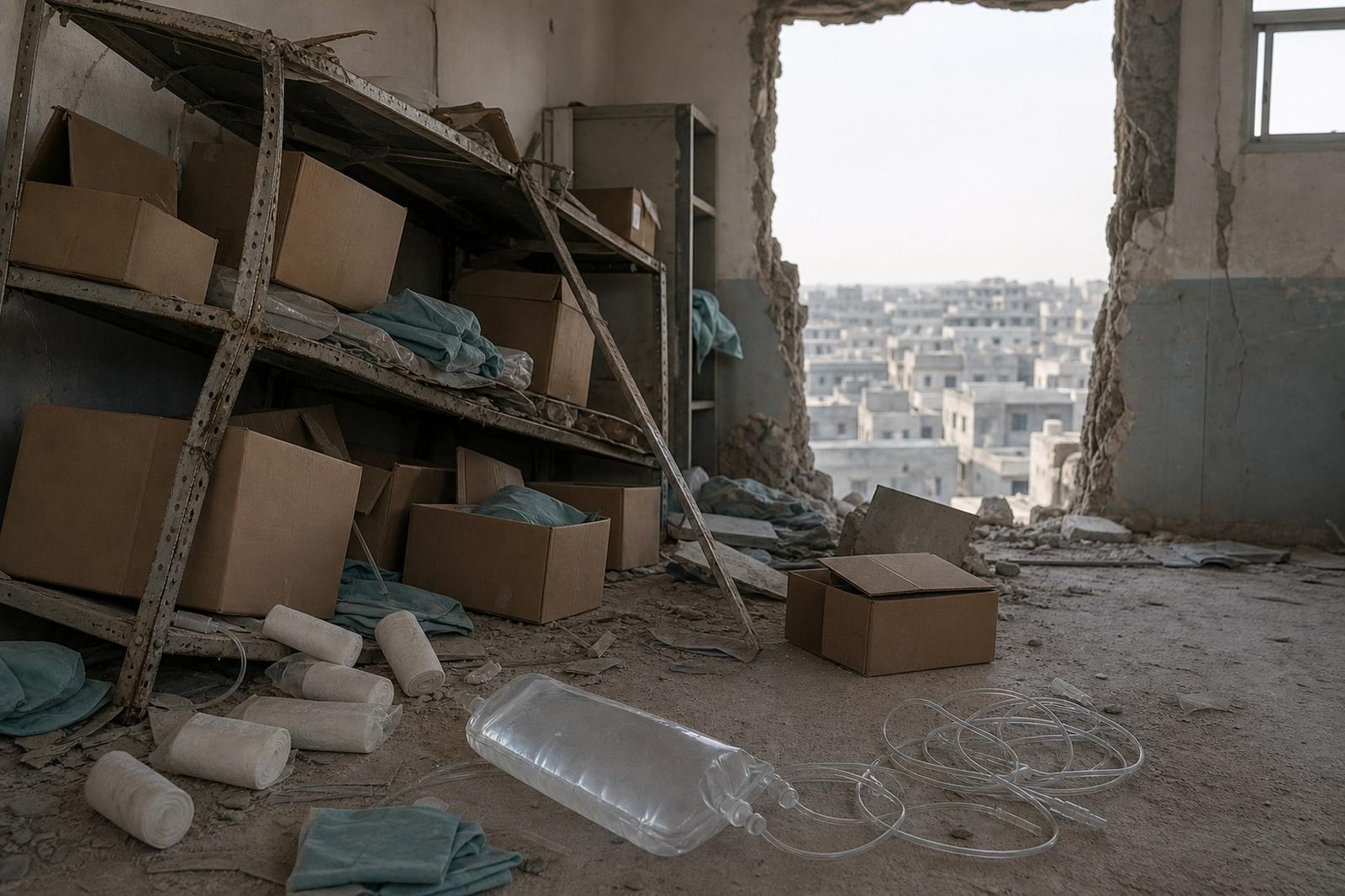
Israeli forces struck central and northern Gaza through Friday night and Saturday, killing several Palestinians and wounding dozens, according to local health officials, only days after US President Donald Trump announced a new roadmap intended to advance the enclave’s faltering ceasefire.
At least two people were killed in a strike in the Sheikh Radwan neighbourhood of Gaza City. Another attack hit a warehouse holding medical supplies near Al-Aqsa Martyrs Hospital in Deir al-Balah, damaging stocks in a territory where hospitals and displaced families already face severe shortages. The Israeli military had not provided a public explanation for those particular attacks at the time of reporting.
The violence does not by itself prove that the latest diplomatic initiative has failed. It does, however, expose the gap between the agreement described in Washington and the conditions on the ground. Trump said his Board of Peace had secured Hamas’s acceptance of a process for disarming armed groups, transferring authority to a Palestinian technocratic administration and enabling the gradual withdrawal of Israeli forces.
The sequence remains the central dispute
The roadmap is designed as a series of reciprocal steps. Hamas’s heavy weapons would be decommissioned and placed in secure storage under Palestinian control, while tunnels and weapons-production sites would be dismantled. A new Palestinian police force and an international stabilisation mission would take over security functions as Israeli troops withdrew in phases.
Yet the order of those steps remains contested. Hamas official Ghazi Hamad has said the organisation will not begin disarming before Israel withdraws. Israeli officials, speaking without being named, have maintained that forces will not pull back from the current Yellow Line without genuine disarmament. The timetable for the withdrawal has not been finalised.
That disagreement is more than a negotiating detail. Hamas fears that handing over its arsenal first would leave it without leverage to secure an Israeli departure. Israel argues that withdrawing first could allow Hamas or another armed faction to rebuild its military capacity. The proposed verification system is meant to bridge that distrust, but it can work only if both sides accept the same sequence and suspend attacks while monitors operate.
A ceasefire that reduced war but did not end it
The US-backed ceasefire that took effect in October 2025 ended major combat operations, facilitated the return of Israeli hostages and increased the flow of humanitarian aid. It also envisioned an Israeli withdrawal, an international security presence, Hamas’s disarmament and reconstruction under a new administration.
Implementation subsequently stalled as both sides alleged violations. Hamas retained its weapons, while Israeli forces stayed inside Gaza and expanded the territory under their control. More than 1,200 Palestinians have been killed in Gaza since the October ceasefire, according to the territory’s Health Ministry, while five Israeli soldiers have been killed in militant attacks.
The cumulative cost is far greater. Hamas-led attackers killed about 1,200 people in southern Israel and took 251 hostages on 7 October 2023. Israel’s subsequent offensive has killed more than 73,300 Palestinians, according to Gaza’s Health Ministry. The ministry does not distinguish between civilians and combatants in its total, though it says women and children account for roughly half of the dead.
They can talk about withdrawal and disarmament. I don’t care about any of it as long as there is no food or medicine.
Those words came from Abdel Moneim Aboul-Roos, a 24-year-old Gaza resident who lost a leg in an Israeli strike. His response captures the distance between the institutional language of demilitarisation and the immediate concerns of people living with displacement, hunger, illness and recurrent bombardment.
Political consent has yet to follow the announcement
Israel had not formally endorsed the roadmap by Saturday. Prime Minister Benjamin Netanyahu remained publicly silent, while National Security Minister Itamar Ben-Gvir rejected it and demanded that military operations continue. Trump nevertheless said Israel was pleased with the agreement and argued that Washington had coordinated closely with its government.
The plan would eventually place civilian and security authority in the hands of the National Committee for the Administration of Gaza, rather than Hamas or the Palestinian Authority. International monitors would verify compliance before control passed from one side to another. The broader disarmament process could take many months, even if the first steps begin quickly.
For now, the proposal is an agreed framework with unresolved obligations, not a completed peace settlement. Continued Israeli strikes, Hamas’s conditional language and Israel’s refusal to promise an initial withdrawal all threaten to prevent implementation from starting. The first meaningful test will be whether the parties can stop military activity long enough to agree who moves first—or whether verified, simultaneous steps can replace that demand.
Frequently asked
- What does the new Gaza roadmap propose?
- It proposes verified steps to disarm armed groups, transfer authority to a Palestinian technocratic administration, deploy new security forces and gradually withdraw Israeli troops.
- Why is the roadmap already in difficulty?
- Hamas says it will not disarm before an Israeli withdrawal, while Israeli officials say troops will not withdraw before Hamas genuinely disarms.
- Has Israel formally accepted the plan?
- Israel had not formally endorsed it by Saturday, although Trump said Washington had coordinated with the Israeli government.
Sources
Around World
A look at recent reporting on world from the Étude newsroom.
Related by topic
Other Étude stories tagged with the same topics as this article.
More in World

Kyiv Holds the Line, and the West's Economic Weapons Start to Bite



How to buy a property in Luxembourg: the process, costs and notary
Trending at Étude
Personal finance How the Luxembourg state pension works: retirement age, contributions and how it's calculated
Demography Japan Records a 10th Consecutive Record-Low Birth Year as South Korea's Fertility Rate Rises
Critical minerals Washington Backs a Kazakh Tungsten Mine. The President's Sons Are Inside the Deal.
Financial regulation Luxembourg regulator will let Israeli bond prospectus expire on 31 August