Transatlantic rift
Denmark's Rebild festival marks US 250th anniversary without American officials
The Rebild Festival in Denmark's hills has celebrated the Fourth of July since 1912. This year, under pressure from local government furious over Donald Trump's designs on Greenland, US officials have been cut from the programme.
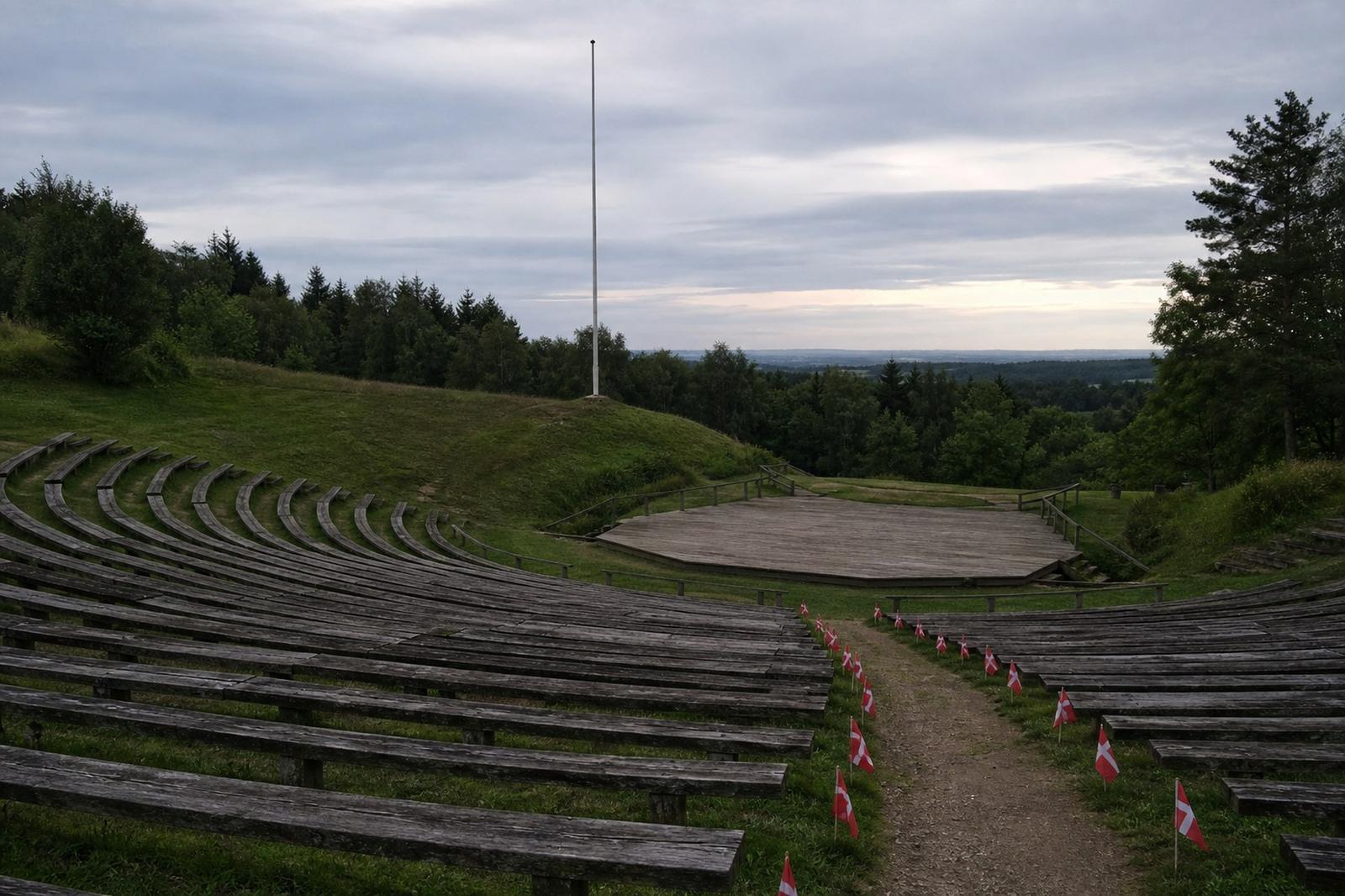
For more than a century, the Rebild hills of northern Jutland have staged one of Europe's stranger rituals: every Fourth of July, thousands of Danes settle into a natural amphitheatre of heather and grass to celebrate the independence of a republic an ocean away. The Rebild Festival bills itself as the largest celebration of American independence outside the United States, and it has survived two world wars and a pandemic. On Saturday, as the United States turns 250, the party will go ahead once more — with one deliberate absence. No representative of the American state will stand on its stage.
Under pressure from the local authority that helps pay for the event, the Rebild National Park Society, which organises the festival, has dropped officials of the US government — diplomats from the embassy in Copenhagen and the American military personnel who have traditionally taken part — from this year's programme. Aalborg Municipality, which supports the festival with about 300,000 kroner (roughly €40,000) a year, had threatened to withdraw the money altogether if they appeared. The New York Times described the official pressure as an unprecedented step, born of Danish fury at President Donald Trump's campaign to take control of Greenland.
“We continue to want to mark our friendship with the United States, but we will not condone the current American government's actions towards the Kingdom of Denmark,” Aalborg's mayor, Lasse Frimand Jensen, told the regional daily Nordjyske. It would hardly be fitting, he added, for a US military orchestra to play at a Danish celebration while Washington openly declares its intention to take over Greenland.
After negotiations, the society accepted the condition; the subsidy, and the festival, will go ahead. For the second consecutive year, organisers have also declined to invite Trump to send the traditional written greeting from the sitting American president, a custom stretching back decades. The US embassy in Copenhagen did not respond to requests for comment, the Associated Press reported.
A friendship written into the landscape
The exclusion cuts deep because Rebild is no ordinary festival. It was created by emigrants. Of the hundreds of thousands of Danes who crossed the Atlantic in the late nineteenth and early twentieth centuries, a group of successful ones bought the hills and gave them to the Danish state, on the condition that American independence be celebrated there. The first festival was held in 1912, and over the decades the amphitheatre has hosted ambassadors, astronauts and Hollywood stars, with Danish royals in the audience and the Stars and Stripes flying beside the Dannebrog.
The organisers insist their quarrel is with a government, not a people. “They're exactly the same fantastic people as they always have been,” Jørgen Bech Madsen, president of the Rebild National Park Society, said of the Americans. The society says the festival will now lean more heavily on what it was founded for — culture, history and the ties between two peoples — and less on official representation.
The shadow of Greenland
Behind the empty chairs lies the gravest crisis in Danish-American relations in living memory. Trump has repeatedly declared that the United States will take Greenland, the vast autonomous territory of the Danish kingdom, for reasons of national security. In January he refused to rule out military force and threatened tariffs on Denmark and fellow NATO members, before partially reversing course at Davos, where he spoke of the “framework of a future deal” discussed with NATO's secretary-general, Mark Rutte.
Copenhagen has not been reassured. Denmark has committed more than 88 billion kroner (about €11.8 billion) to Arctic defence, from F-35 jets to air-defence systems, and allied NATO forces have deployed personnel to Greenland. The island's own government refuses to discuss sovereignty: “nobody else than Greenland and the Kingdom of Denmark have the mandate to make deals,” Prime Minister Jens-Frederik Nielsen has said. The European Union suspended work on a trade agreement with Washington as the crisis escalated, with Commission President Ursula von der Leyen promising an “unflinching, united and proportional” European response. On the streets, the mood is plainer still: tens of thousands protested in Copenhagen in January, and demonstrators greeted the opening of a new US consulate in Nuuk in May.
What a birthday party can measure
Rebild has always been a barometer of transatlantic feeling, and this weekend it will measure a low. The speeches on Saturday will still praise friendship; the picnic blankets will still come out; American music will still drift over the heather. But the gap in the programme where the embassy and the military band used to be will say more than any address.
For Europe, the scene in a Danish hillside amphitheatre poses in miniature the question every capital now faces: how to keep faith with America while defending itself from America's government. Denmark's answer, this Fourth of July, is to separate the two — to toast a people it still loves, 250 years on, while pointedly leaving its state off the guest list.
Frequently asked
- What is the Rebild Festival?
- An annual Fourth of July celebration held since 1912 in the Rebild hills of northern Jutland, founded by Danish emigrants to America who bought the hills and gave them to the Danish state on condition that American independence be celebrated there. It is billed as the largest such celebration outside the United States.
- Why were US officials excluded in 2026?
- Aalborg Municipality, which co-funds the festival, made its roughly 300,000-kroner subsidy conditional on removing representatives of the US state — embassy diplomats and military personnel — in protest at the Trump administration's campaign to take control of Greenland. The organising society accepted the condition.
- Is the festival still taking place?
- Yes. The 2026 festival goes ahead on 4 July with municipal funding, focused on culture, history and people-to-people ties rather than official US representation.
- What is the dispute over Greenland?
- President Trump has repeatedly said the US will take Greenland, an autonomous territory of the Danish kingdom, for national security reasons, at one point refusing to rule out military force and threatening tariffs. Denmark has massively increased Arctic defence spending, NATO allies have deployed to Greenland, and the EU has backed Copenhagen.
Sources
Around Europe
A look at recent reporting on europe from the Étude newsroom.
Related by topic
Other Étude stories tagged with the same topics as this article.
More in Europe

Luxembourg public holidays 2026: the full list and what's open or closed
Luxembourg regulator will let Israeli bond prospectus expire on 31 August

Trending at Étude
Money & Work Unemployment benefits in Luxembourg: who qualifies and how much is paid
Travel & Climate Weather and Climate in Luxembourg: What to Expect, Month by Month
Culture Luxembourg's cuisine: the national dish and traditional classics
Mobility Alzingen bypass: why Luxembourg is moving a EUR 390 million road bill now