Europe’s southern border
Spain deploys troops after up to 60,000 people cross into Ceuta
The influx from Morocco has overwhelmed a city of 83,600 people, left dozens dead and confronted the EU’s new migration rules with an extraordinary first crisis.
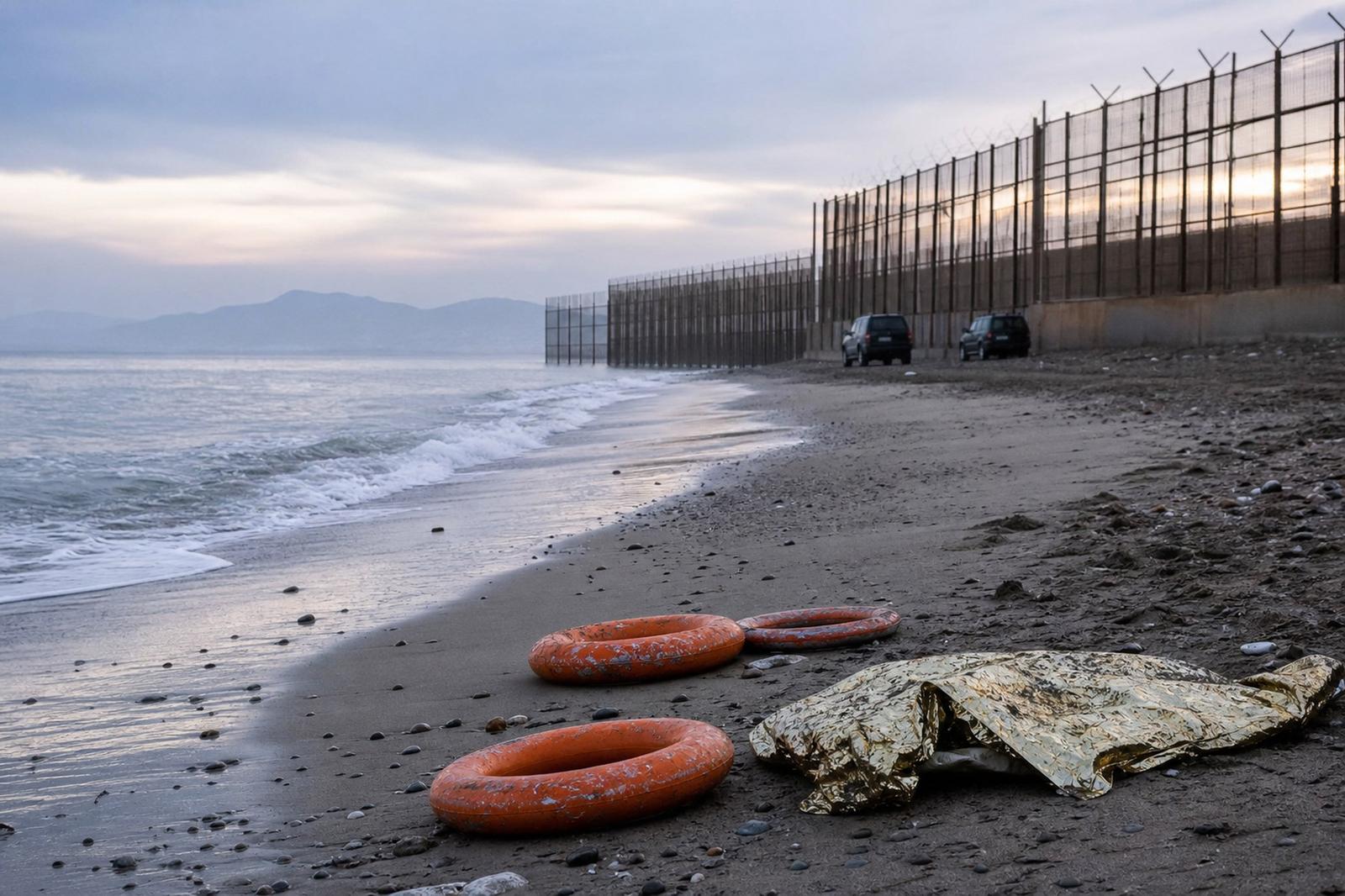
Spain deployed soldiers and additional police to Ceuta after an estimated 50,000 to 60,000 people entered the North African city from Morocco in little more than a day, producing a humanitarian emergency on a scale without precedent in the enclave.
The two estimates came from different levels of government. Spain’s Interior Ministry put the number at about 50,000, while Juan Jesús Vivas, the president of Ceuta, said as many as 60,000 had crossed. The latter figure is equivalent to roughly 70 per cent of the city’s normal population. Madrid said around half of those who entered had subsequently returned to Morocco voluntarily.
The rapid movement began on Thursday and continued through the night. People reached Spanish territory around the border fence, along the beach and by swimming around the El Tarajal breakwater. Reports from the city indicated that most were Moroccan, including young men and teenagers. The concentration of so many arrivals in a territory with about 83,600 residents immediately exceeded its accommodation, registration and medical capacity.
A frontier city overwhelmed in hours
Spain called in the armed forces alongside reinforcements from the National Police and Guardia Civil. Their immediate tasks included restoring control at the frontier, protecting public facilities and helping emergency services manage thousands of people without shelter, food or a clear route onward.
The human cost was still being revised upwards on Friday. The Associated Press reported at least 41 deaths during the crossing. El País later reported, citing Spanish authorities, that 57 bodies had been recovered from waters around Ceuta. Many of the victims were believed to have drowned while attempting to swim around the barrier extending from the coast. Search teams, including Guardia Civil divers, remained in the area.
“The situation that Ceuta is going through is absolutely unsustainable.”
Juan Jesús Vivas, president of Ceuta
Even before this week, Ceuta’s reception system was under sustained pressure, particularly in caring for unaccompanied children. The latest influx dwarfs the border crisis of May 2021, when Morocco relaxed controls and thousands entered the city in two days. This time, the number arriving in roughly 24 hours approached the size of the resident population itself.
Madrid turns its attention to the Moroccan side
Prime Minister Pedro Sánchez travelled to Ceuta on Friday. He described the breach as a violation of Spain’s territorial integrity and blamed trafficking networks for exploiting people’s desperation. The government rejected claims that its broader migration policy or plans to regularise undocumented residents had caused the sudden movement.
The scale and speed of the crossings nevertheless place Spain’s relationship with Morocco under renewed scrutiny. Madrid relies heavily on Moroccan police cooperation to regulate the EU’s only land frontiers on the African continent. When that cooperation weakens, the effect in Ceuta can be almost immediate. Moroccan forces tightened control again after the initial surge, and thousands of people returned across the border, but questions remained about how such a large movement had been able to develop.
Ceuta is Spanish territory, while Morocco maintains a longstanding claim to the city. The political dispute is distinct from the legal status and protection needs of individuals who crossed. Spanish and EU authorities must still identify minors and potential asylum applicants, provide urgent care and ensure that any returns comply with applicable law.
The EU pact faces an early emergency
The European Commission offered Spain operational and financial assistance, including the possibility of reinforcing Frontex, the European Border and Coast Guard Agency. Commission officials also opened contacts with Morocco to seek an end to further crossings.
The timing matters. The EU Pact on Migration and Asylum became applicable on 12 June, only seven weeks before the Ceuta emergency. Its rules include faster procedures at external borders, a system for distributing responsibility among member states and a framework for sudden mass arrivals, force majeure or the instrumentalisation of migrants by a third country.
No decision to trigger all of those mechanisms had been announced by Friday. Nor does the pact make the immediate work in Ceuta automatic: Spain must first register those who remain, distinguish asylum claims from other cases and determine how many unaccompanied children require protection. The offer of Frontex support is therefore an initial operational response, not a final allocation of responsibility.
For Luxembourg, the connection is institutional rather than geographical. As a member of the EU and the Schengen area, it participates in the common system governing solidarity, asylum responsibility and external-border emergencies. Any formal request by Spain for wider assistance would be handled through rules that also bind Luxembourg.
For now, the most urgent questions remain in Ceuta: how many people are still in the city, how many died and whether Morocco can prevent another surge. The disparity between official estimates illustrates how rapidly the crisis developed. What is already clear is that a small frontier territory has become the first exceptional test of Europe’s newly operational migration framework.
Frequently asked
- How many people crossed into Ceuta?
- Spain’s Interior Ministry estimated about 50,000, while Ceuta’s president put the figure as high as 60,000.
- How many people died?
- The toll was evolving on Friday. The Associated Press reported at least 41 deaths, while El País later said authorities had recovered 57 bodies.
- What has Spain done?
- Spain deployed soldiers, National Police and Guardia Civil reinforcements, while Prime Minister Pedro Sánchez travelled to Ceuta.
- Why does the crisis concern Luxembourg?
- Ceuta is an EU external border, and Luxembourg participates in the common migration pact governing solidarity and responses to exceptional pressure.
Sources
Around Europe
A look at recent reporting on europe from the Étude newsroom.
Related by topic
Other Étude stories tagged with the same topics as this article.
More in Europe



Trending at Étude
Luxembourg taxes Luxembourg's income-tax classes (1, 1a, 2) explained: who falls into each
Homeownership explained How to buy a property in Luxembourg: the process, costs and notary
Connectivity Mobile and internet providers in Luxembourg compared
Personal finance How the Luxembourg state pension works: retirement age, contributions and how it's calculated