Travel rules
EU adopts new air-passenger rights for flights from Luxembourg from 2027
The reform preserves compensation after three-hour delays while tightening rules on claims, baggage pricing, family seating and cancelled connections.
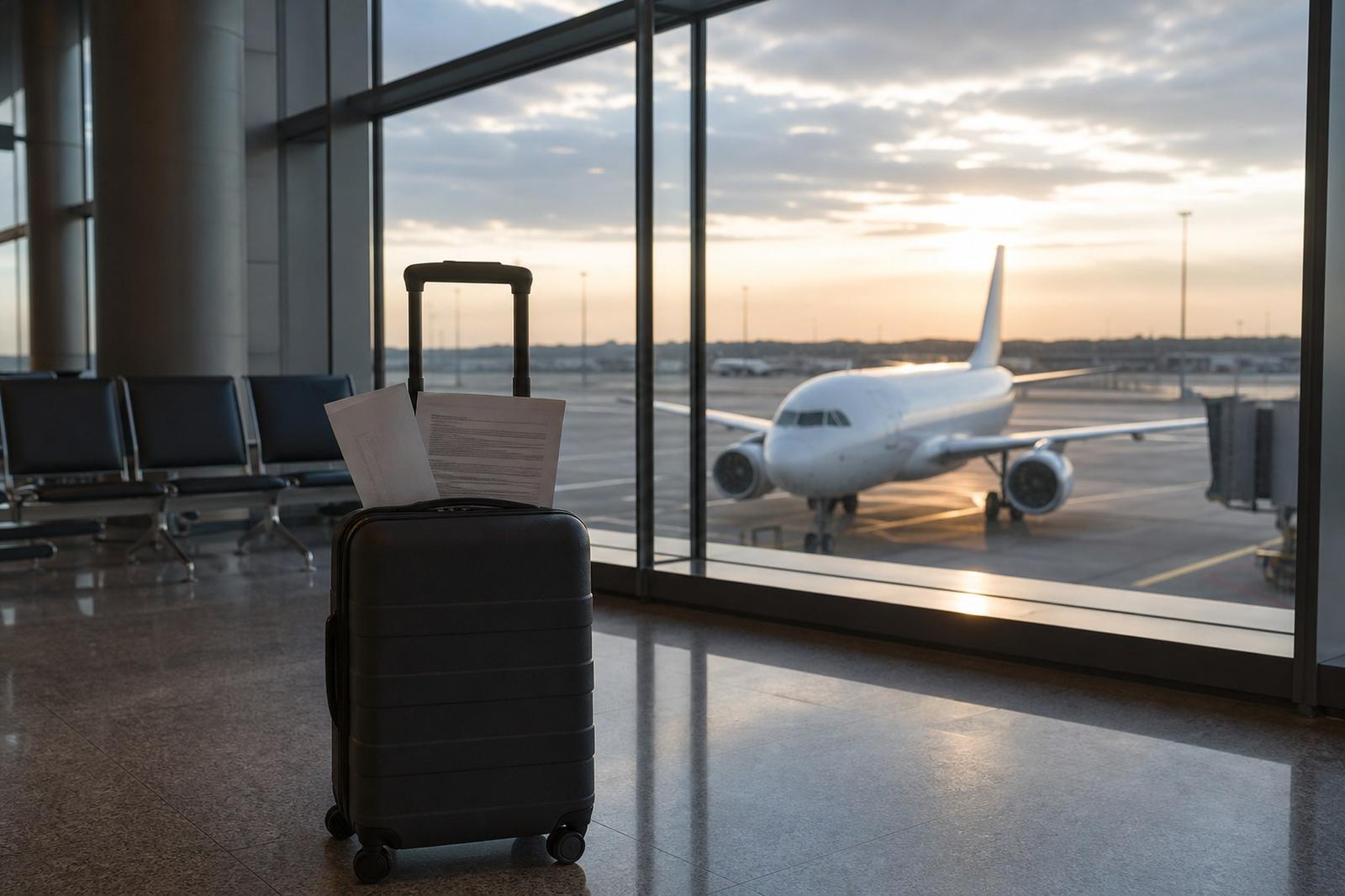
BRUSSELS — The European Union has completed a 13-year effort to rewrite its air-passenger rules, preserving compensation for delays of more than three hours while adding protections covering claims, return tickets, family seating and the way baggage costs are displayed.
The Council of the EU gave its final approval on Monday, following the European Parliament’s endorsement by 646 votes to 12, with three abstentions. The regulation will take effect 12 months and 20 days after its publication in the EU’s Official Journal, putting implementation in the second half of 2027.
For passengers using Luxembourg Airport, this is not a distant piece of Brussels law. The regulation covers every flight departing from the EU, irrespective of the carrier’s nationality. It also covers flights arriving in the bloc when operated by an EU airline. That means journeys sold by Luxair and other European carriers, as well as departures from Findel on non-European airlines, fall within its scope.
The three-hour threshold survives
The most politically contested point was compensation. EU governments had previously sought longer qualifying delays, but the final agreement retains the existing threshold: passengers may claim when they reach their destination more than three hours late, when a flight is cancelled less than 14 days before departure, or when boarding is denied.
The payment remains linked to distance: €250 for flights up to 1,500 kilometres; €400 for intra-EU flights longer than 1,500 kilometres and other flights between 1,500 and 3,500 kilometres; and €600 for longer journeys. On the longest routes, a carrier may cut compensation by half when rerouting limits the arrival delay to no more than four hours.
Airlines remain exempt from compensation when a disruption results from circumstances outside their control. The regulation gives an open list including war, natural disasters, severe weather, unruly passengers and strikes by airport, air-traffic-control or ground-handling staff. Even then, the duty of care remains: refreshments after two hours, a meal after three and, where necessary, accommodation for up to three nights when the cause is beyond the airline’s control.
Claims get deadlines, not automatic forms
After a disrupted journey, airlines will have four days to explain how the passenger can seek compensation. A claim may be submitted for nine months; the carrier then has 30 days to pay or to invoke extraordinary circumstances, explain its refusal and identify the available complaints procedure.
The compromise stops short of the pre-filled claim forms sought by consumer advocates. Euronews reported that Euroconsumers called the outcome real progress but said the missing forms would leave too much work with passengers. Regional airlines, meanwhile, objected that fixed compensation can exceed the original fare and fails to reflect the smaller fleets on which regional networks depend.
“The compromise finally reached can be regarded as pragmatic and measured, delivering concrete progress for passengers while taking account of the realities of the sector,” Luxembourg Mobility Minister Yuriko Backes said after the political agreement.
Luxembourg argued during the negotiations for strong protection alongside operational viability, especially for regional airlines. That balance is material for a country whose connectivity depends heavily on short and medium-haul routes and whose flag carrier operates a regional network.
Fewer traps in the booking process
The law bans the practice of cancelling a return journey merely because the passenger did not use the outbound leg. Airlines may not demand a supplement to restore the return ticket. Minor spelling corrections to a passenger’s name must be free, as must a printed boarding pass after online check-in. A carrier may not oblige travellers to create an account or install its application simply to obtain travel information or use a boarding pass.
Ticket sellers and comparison sites must display, from the start of booking, a fare that includes the applicable cabin-baggage allowance. Passengers will have a right to carry one personal item without an extra charge, while airlines may still offer a cheaper option to customers who choose to travel without other hand luggage. The regulation does not impose a single EU-wide suitcase dimension, so checking each airline’s limits will remain necessary.
Children under 14 must be seated next to an accompanying adult without an additional fee. Equivalent adjacency protections apply to passengers with disabilities or reduced mobility and to pregnant travellers. If airport assistance fails and causes a passenger with reduced mobility to miss a flight, the new framework provides rights to assistance, rerouting and, where applicable, compensation.
The reform does not eliminate disputes at the gate or make every cancellation compensable. Its practical importance lies elsewhere: rights developed over two decades of court judgments are being consolidated into a single, more explicit rulebook. For Luxembourg travellers, the decisive date will be in 2027, when airlines and booking platforms must turn that rulebook into working procedures.
Frequently asked
- When will the revised EU air-passenger rules apply?
- They will apply 12 months and 20 days after publication in the EU’s Official Journal, expected in the second half of 2027.
- Will a three-hour delay still qualify for compensation?
- Yes, provided the legal conditions are met and the airline cannot establish extraordinary circumstances outside its control.
- Do the rules cover departures from Luxembourg Airport?
- Yes. All flights departing from an EU airport are covered, regardless of the airline’s nationality.
Sources
Around Europe
A look at recent reporting on europe from the Étude newsroom.
Related by topic
Other Étude stories tagged with the same topics as this article.
More in Europe

Atari Relocates Its Legal Home to Luxembourg After Shareholders Back France Exit


Kyiv Holds the Line, and the West's Economic Weapons Start to Bite

How to buy a property in Luxembourg: the process, costs and notary
Trending at Étude
Economy How Luxembourg, with the world's highest GDP per capita, built its wealth from steel to funds
Cross-border rail CFL to halt all trains between Luxembourg and Thionville for five weeks this summer
Somalia Somalia Prepares First Offshore Oil Drilling After Decades of Delays
Intelligence Japan launches its first central spy agency since 1945 to counter Russia and China