Historical justice
Two Governments Say Sorry, Decades After the State Took Their Babies
On the same day, Britain and the Netherlands apologised for postwar adoption systems that pressured some 200,000 unmarried mothers into giving up their children.
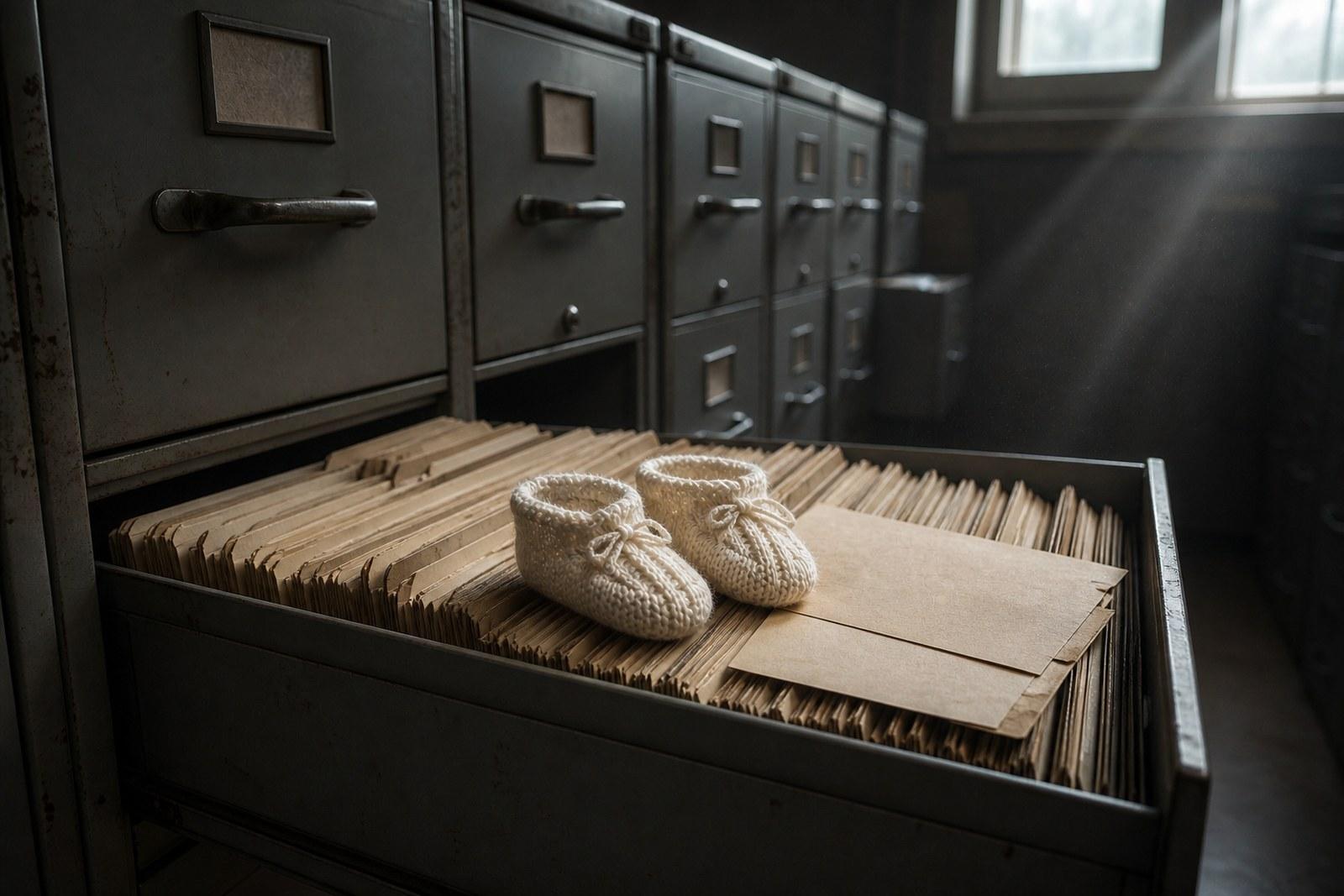
Two governments, one afternoon, the same overdue sentence: it was not the mothers who gave their babies away — it was the state that took them. In London on Thursday, Prime Minister Keir Starmer rose in the House of Commons to apologise for Britain's role in a postwar adoption machine that separated an estimated 185,000 babies from their unmarried mothers in England and Wales between 1949 and 1976. The same day in The Hague, state secretary Claudia van Bruggen delivered the Dutch cabinet's formal apology to the women the Netherlands calls afstandsmoeders — relinquishing mothers — who were pressured into surrendering some 15,000 children between 1956 and 1984.
“We are deeply and profoundly sorry,” Starmer told MPs, describing the practice as a “stain on our history”. The women, he said, had been “coerced, bullied or misled into feeling that they had no choice”.
“The state did not do enough to protect mothers, children and families from harm, and for this systemic failure I am truly sorry.” — Keir Starmer, House of Commons, 2 July 2026
“The shame,” the prime minister added, “is on the state and all those that were responsible.”
A system built on shame
For nearly three decades after the Second World War, an unmarried pregnancy in Britain was treated less as a private matter than as a social emergency. Young women — many of them teenagers — were sent away to mother-and-baby homes, often run by churches and charities with the knowledge and cooperation of the authorities. There, survivors have long testified, they were shamed, isolated and steered inexorably towards the adoption papers.
A 2022 inquiry by Parliament's Joint Committee on Human Rights documented the machinery in detail, including cases in which painkillers were withheld from women in labour, and concluded that Britain owed an apology for “the pain and suffering caused by public institutions and state employees that railroaded mothers into unwanted adoptions”. Westminster resisted for years, even as Scotland and Wales issued their own apologies in 2023 and the Church of England said sorry just two weeks ago.
Among those present on Thursday was Ann Keen, the former health minister whose son was taken from her in 1966, when she was 17. “We need this apology, because we have always been accused of giving up our babies, and we didn't give them up,” she said.
Alongside the words came a modest package: £4 million ($5.3 million) to help people trace and access their adoption records, to fund services that reconnect separated relatives, and to support research into the long-term effects. What it does not contain is compensation — a gap campaigners noted within minutes.
The Hague's own account
The Dutch apology, delivered at the Amare theatre in The Hague, told a story so similar it could have been read from the same file. Between 1956 and 1984, an estimated 14,000 women — most of them young and unmarried — gave up roughly 15,000 babies under intense pressure from family, church and officialdom. An independent commission of inquiry into domestic relinquishment and adoption, which reported in 2025, found that the state's own Child Protection Council had mothers sign relinquishment declarations under duress, suggesting the decision had to be made at once when it did not. Some women were never allowed to hold, or even see, their newborns.
“This should never have happened,” van Bruggen said on behalf of the cabinet, promising a letter to parliament before the summer setting out measures for recognition and redress.
Dutch mothers know how hard that last step can be. In March 2025 an appeals court ruled that the state could not be held legally liable for their suffering, and a promised compensation scheme has already been delayed. Frans Haven, who was given up as a baby, welcomed Thursday's words but called them a comma, not a full stop — what he wants, he said, is unrestricted access to his own file.
Apologies, but the ledger stays open
Thursday's twin apologies extend a reckoning that has been moving through the democracies for more than a decade. Australia's Julia Gillard apologised in 2013 for that country's forced-adoption era; Ireland followed in 2021 over its mother-and-baby homes. Each time the pattern repeats: an inquiry, decades late; an apology, carefully worded; then a longer argument about records, money and who exactly was responsible.
The urgency now is actuarial. The youngest of the mothers are in their sixties; many are in their eighties and nineties. In both countries, the test of Thursday's words will be the same — whether the files open, whether help arrives, and whether it arrives while the women it is meant for are still alive to receive it.
Frequently asked
- How many families were affected by forced adoptions?
- An estimated 185,000 babies of unmarried mothers were adopted in England and Wales between 1949 and 1976, and roughly 15,000 children were relinquished in the Netherlands between 1956 and 1984, most under pressure from family, church and state institutions.
- Will the mothers receive compensation?
- Not yet. Britain announced £4 million for records access, reconnection services and research but no redress scheme; the Netherlands promised recognition measures before the summer, after a 2025 court ruling that the state is not legally liable.
- Why are the apologies coming now?
- A 2022 UK parliamentary inquiry and a 2025 Dutch commission both recommended formal apologies, campaigners kept up decades of pressure, and the surviving mothers — now mostly in their seventies and older — are running out of time.
Sources
Around Europe
A look at recent reporting on europe from the Étude newsroom.
Related by topic
Other Étude stories tagged with the same topics as this article.
More in Europe

Luxembourg public holidays 2026: the full list and what's open or closed


Luxembourg regulator will let Israeli bond prospectus expire on 31 August

Trending at Étude
Money & Work Unemployment benefits in Luxembourg: who qualifies and how much is paid
Culture Luxembourg's cuisine: the national dish and traditional classics
Mobility Alzingen bypass: why Luxembourg is moving a EUR 390 million road bill now
Explainer The Grand Duchy of Luxembourg: Its Monarchy and How the Country Is Governed