Britain's leadership crisis
Starmer weighs his exit as Burnham takes his Commons seat
A by-election win returns Andy Burnham to Parliament and tightens the squeeze on a prime minister whose own party is openly debating his departure.
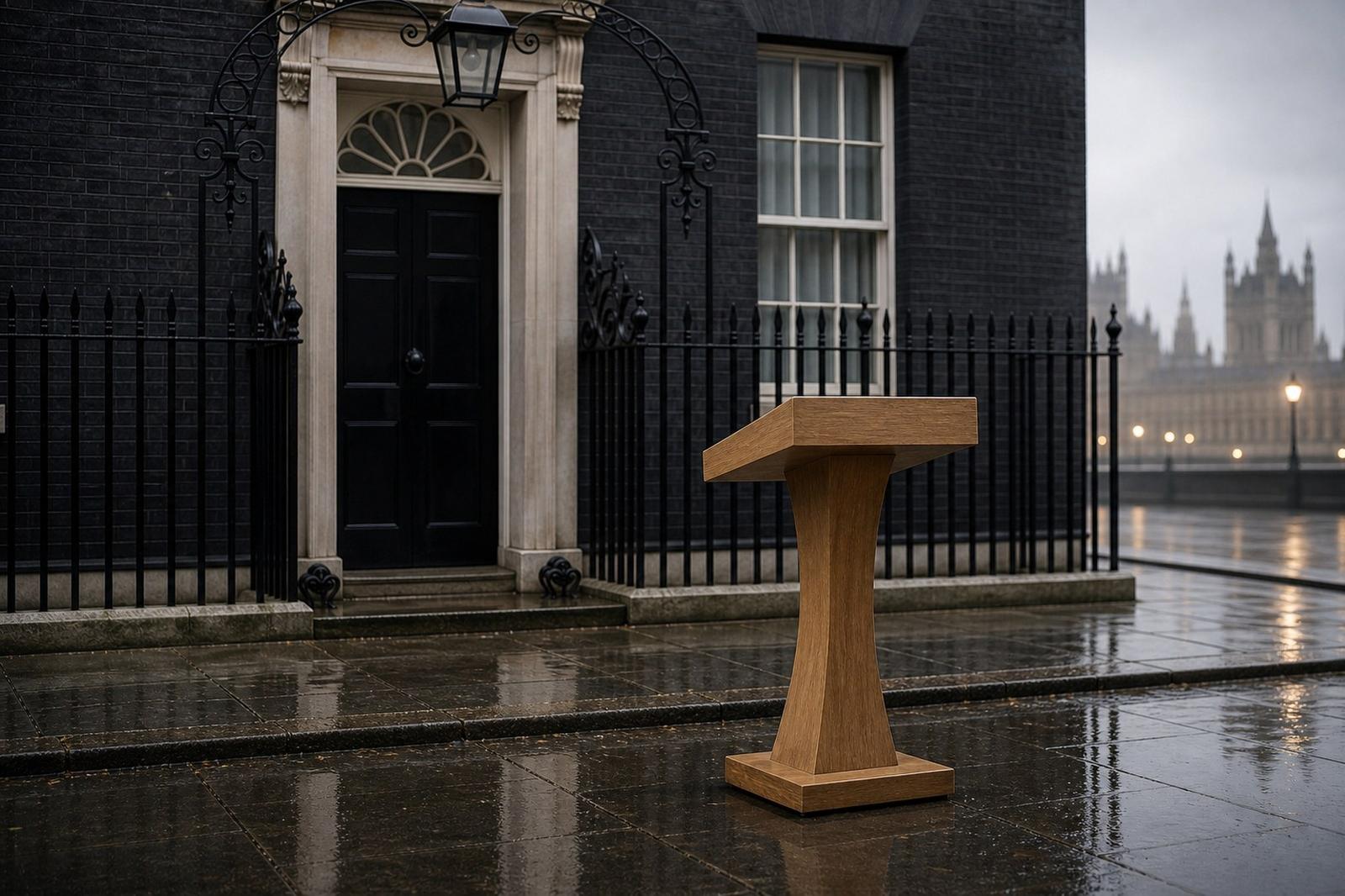
The man widely seen as Keir Starmer's likeliest successor walked into the House of Commons on Monday to be sworn in as a member of Parliament. Whether the prime minister still leads his party by the time the formalities are over is, for the first time, a serious question in Westminster.
Andy Burnham, who gave up a safe political career as mayor of Greater Manchester to fight a by-election, took the seat of Makerfield on 18 June with 54.8 percent of the vote, beating the Reform UK candidate, Robert Kenyon, who polled around 35 percent. The result did more than fill a vacancy. It handed the Labour Party's most prominent internal critic the one thing he lacked: a seat in the chamber from which a leadership challenge can be launched.
A party that has stopped whispering
For months the discontent was muffled. By mid-May, according to the LabourList website, 103 Labour members had publicly called on the prime minister to resign or set out a timetable for his departure. Starmer, whose approval ratings had collapsed by the end of 2025 amid a grinding cost-of-living squeeze, a string of policy reversals and assorted scandals, refused to bend.
“I am not running away from the challenge, nor am I going to change course because the political weather has turned,” he said in May.
The defiance held until defence policy cracked it open. On 11 June the defence secretary, John Healey, resigned, saying Starmer was “unable” and the Treasury “unwilling” to provide the funding Britain's armed forces needed. The armed forces minister, Al Carns, and a parliamentary aide, Pamela Nash, walked out the same day. Three resignations in a single department over money is the kind of event that turns private grumbling into an open contest.
An ambiguous weekend
Over the weekend the prime minister's allies tried to slow the story without quite denying it. The business secretary, Peter Kyle, told the BBC that Starmer was “making time to reflect on the political realities, challenges and opportunities that he finds himself in,” and dismissed reports of an imminent resignation as “speculation.” Others were blunter. Charlie Falconer, a Labour peer and longtime Starmer ally, said the prime minister had “absolutely no authority” left and called for “an agreed transition process in which Andy and Keir cooperate as to when the handover should take place.”
Expectation has since grown that Starmer could announce a timetable for his own departure as early as this week. He has not said so. His team insists he would stand and fight any formal challenge, and the field of possible successors stretches well beyond Burnham to figures such as the health secretary, Wes Streeting, the home secretary, Shabana Mahmood, and the deputy prime minister, Angela Rayner.
An unlikely intervention arrived from Washington. President Donald Trump, with whom Starmer has had a wary relationship, wrote on his social network that the British leader “will resign as Prime Minister of The United Kingdom,” accusing him of having “failed badly” on immigration and energy. Downing Street did not respond, but the post underlined how far the crisis had travelled beyond Britain's borders.
Why Europe is watching
For the rest of the continent, the drama is more than a spectacle. A change of prime minister would land just as Britain and the European Union are still rebuilding a working relationship after years of post-Brexit friction, on questions ranging from trade and defence procurement to financial-services access that matters to hubs such as Luxembourg. Burnham, a northern English figure with a populist edge and a record of clashing with his own party's leadership, is a less familiar quantity to European capitals than the lawyerly Starmer.
- The by-election turned a parliamentary outsider into a credible challenger overnight.
- Labour's divisions are now structural, not personal, spanning defence funding and economic strategy.
- Any handover would test whether Labour can change leaders without triggering an early general election that polls suggest Reform UK would relish.
Britain has removed sitting prime ministers before without going to the country — most recently in the Conservative turmoil of 2022. Labour now faces the same temptation and the same risk: that a leadership reshuffle steadies the ship, or that it merely advertises a government at war with itself.
Frequently asked
- Has Keir Starmer actually resigned?
- No. As of 22 June 2026 he remains prime minister and his team says he would contest any leadership challenge, though speculation about a departure timetable has intensified.
- Why does Burnham's by-election win matter?
- Burnham was mayor of Greater Manchester and could not stand for the party leadership without a seat in Parliament. Winning Makerfield gives him that platform.
- Could this trigger a UK general election?
- Not automatically. Labour could change leaders without a national vote, but doing so carries the risk of pressure for an early election that current polls suggest Reform UK would welcome.
Sources
Around Europe
A look at recent reporting on europe from the Étude newsroom.
Related by topic
Other Étude stories tagged with the same topics as this article.
More in Europe


Trending at Étude
Luxembourg taxes Luxembourg's income-tax classes (1, 1a, 2) explained: who falls into each
Homeownership explained How to buy a property in Luxembourg: the process, costs and notary
Connectivity Mobile and internet providers in Luxembourg compared
Personal finance How the Luxembourg state pension works: retirement age, contributions and how it's calculated