Deadly attack in Tiergarten
Germany calls attack near Berlin Pride Islamist terrorism as suspect remains at large
Police are searching for a 21-year-old man after a vehicle and stabbing attack killed a woman and injured 29 people beside Berlin’s Christopher Street Day celebrations.
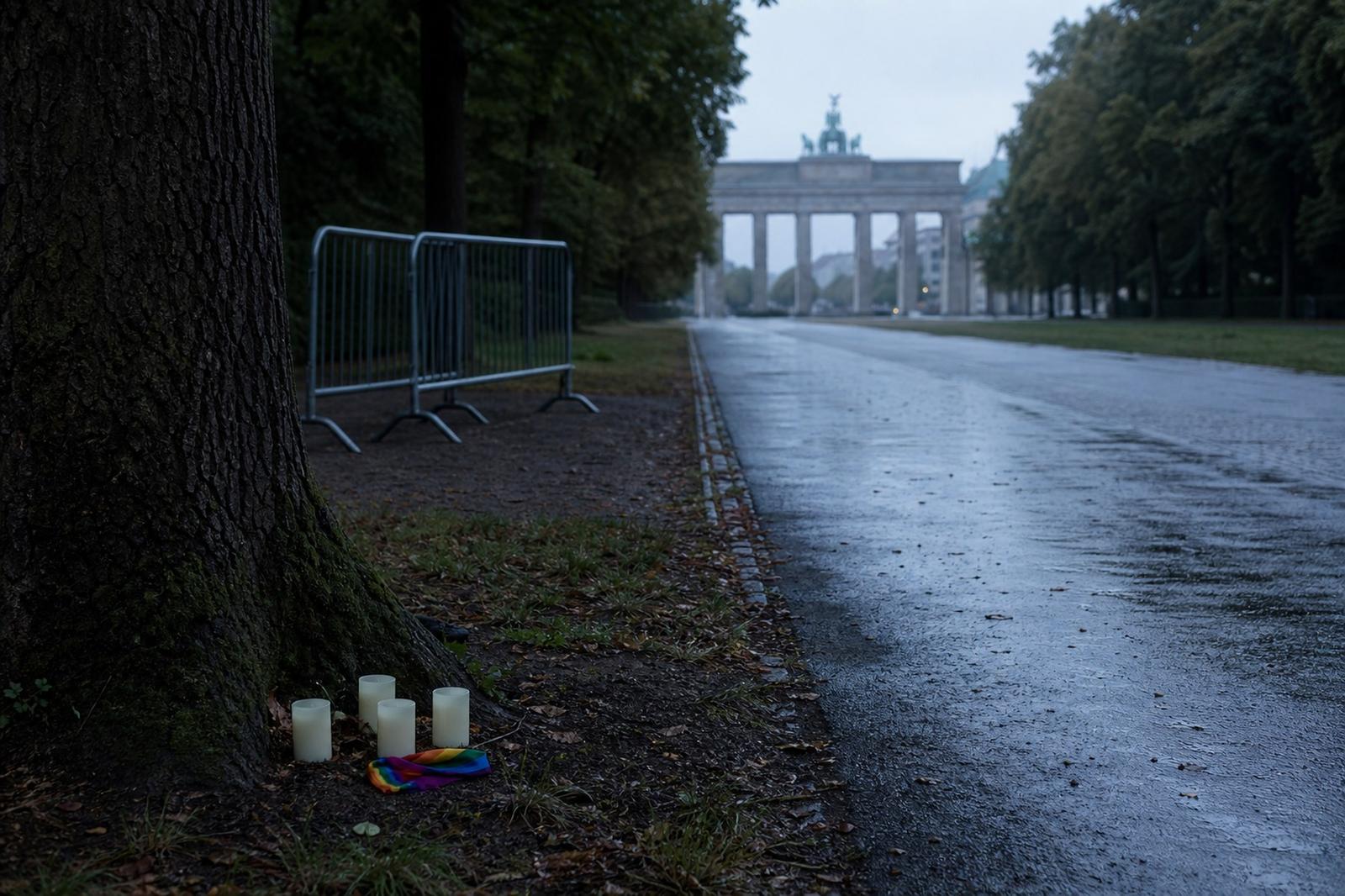
German police mounted an intensive search on Sunday for a 21-year-old man suspected of carrying out a vehicle and stabbing attack beside Berlin’s Pride celebrations. One woman was killed and 29 people were injured, eight of them seriously, according to the latest figures given by federal Interior Minister Alexander Dobrindt.
The public appeal identifies the suspect under German privacy rules as Abdul B. Police have warned that he may be armed and dangerous and should not be approached. Officers at railway stations, airports and Germany’s borders were alerted as the search expanded beyond the capital. The woman who died and the wounded had not been publicly identified.
What investigators can establish
The attack began at about 10 p.m. on Saturday on the Ahornsteig, a path through the Großer Tiergarten in central Berlin. Investigators say a white minivan drove into people in the park before striking a tree. The police and Berlin’s public prosecutor said that one or more people then apparently left the vehicle and that several victims may also have been wounded with bladed weapons.
Dobrindt said some of the injuries were inflicted with a machete. The precise sequence remains under investigation, including whether more than one person took part and how the vehicle and knife attacks were connected. Police found the damaged vehicle but did not arrest the suspected driver at the scene.
The suspect was already known to police and associated by the authorities with Berlin’s Islamist milieu. Police had initially stressed that they did not yet have evidence establishing his specific motive. On Sunday, Dobrindt said the evidence available to the authorities supported a terrorism assessment.
“Everything we see here indicates that we are dealing with an Islamist terrorist attack.”
— German Interior Minister Alexander Dobrindt
That assessment describes the present direction of the investigation; it is not a judicial finding. Authorities have not yet published evidence explaining the suspect’s alleged planning, whether the victims were selected individually or whether the Pride celebration itself was the intended target. The distinction matters while the manhunt and forensic work continue.
Pride ended early, mourning filled the gate
Berlin’s Christopher Street Day had brought hundreds of thousands of people into the city earlier on Saturday. A parade of about 80 trucks had crossed central Berlin before a closing party began near the Brandenburg Gate. The attack occurred several hundred metres away in the Tiergarten, rather than on the official parade route, at the stage or inside the closing-party area.
Organisers halted the celebration at about 10.15 p.m., interrupting a performance and asking participants to leave without crossing the park. The location and timing nevertheless placed the violence in the immediate surroundings of one of Europe’s largest LGBTQ+ gatherings, at the moment when people were dispersing from the festivities.
On Sunday, hundreds of people laid flowers and lit candles at Pariser Platz in front of the Brandenburg Gate. The memorial reached capacity shortly after 2.30 p.m., according to Berlin authorities. Chancellor Friedrich Merz and Berlin’s Governing Mayor Kai Wegner condemned the attack and urged the public not to let violence divide or intimidate the country.
Security plans under review
Dobrindt asked organisers and police forces to reassess protection at forthcoming Pride celebrations and other large events. He said the possibility of imitation could not be excluded, while stopping short of announcing a broader or specific threat. The review is likely to focus on access routes, vehicle barriers and the movement of crowds beyond formally protected event areas.
The effects were already visible outside Germany. Amsterdam, which is hosting World Pride, said its authorities and organisers were monitoring the situation and would add measures where necessary. Their stated aim was to preserve the celebrations without allowing heightened precautions to dominate them.
Berlin has previously experienced the use of a vehicle as a terrorist weapon, most notably at the Breitscheidplatz Christmas market in 2016. Saturday’s attack will therefore renew difficult questions about how far security perimeters can extend around large, open gatherings. For now, investigators are asking witnesses to submit photographs and video while warning the public not to contact the wanted man directly.
Frequently asked
- What happened near Berlin Pride?
- A white minivan drove into people in the Tiergarten at about 10 p.m. on Saturday and struck a tree. Investigators say several people may also have been attacked with bladed weapons.
- Why are German authorities treating the incident as terrorism?
- Interior Minister Alexander Dobrindt said the evidence points to an Islamist terrorist attack, and police associate the wanted suspect with Berlin’s Islamist milieu. His specific motive has not yet been publicly established.
- Did the attack occur inside the Pride event?
- No. It happened on a path in the Tiergarten several hundred metres from the closing party near the Brandenburg Gate, but while participants were still leaving the celebrations.
Sources
Around Europe
A look at recent reporting on europe from the Étude newsroom.
Related by topic
Other Étude stories tagged with the same topics as this article.
More in Europe


Kyiv Holds the Line, and the West's Economic Weapons Start to Bite

The Scarcest Thing in Tech Is Now a Computer

Trending at Étude
Tourism Luxembourg Records 922,000 International Tourists in 2025, Up 5% with Higher Spend per Visitor
United Kingdom Starmer Quits, and Britain Lines Up Its Seventh Prime Minister in a Decade
Newcomer's guide How Healthcare Works in Luxembourg, and How to Register With the CNS
Critical minerals Washington Backs a Kazakh Tungsten Mine. The President's Sons Are Inside the Deal.