Demographic reckoning
Germany Bets Its Pensions on Working Longer
A government commission hands Friedrich Merz 33 proposals — a retirement age tied to longevity, a Swedish-style funded tier and millions of new contributors. He calls failure no option.

For two decades, German politicians have circled the country's state pension like a problem to be deferred rather than solved. On Tuesday, a government-appointed commission removed the option of waiting.
The panel handed the coalition of Chancellor Friedrich Merz a slate of 33 recommendations that, taken together, amount to the most far-reaching overhaul of Germany's pay-as-you-go retirement system in a generation: a statutory retirement age pinned to rising life expectancy, a new funded tier invested in the capital markets, and millions of people — the self-employed, civil servants, even members of the Bundestag — drawn into a scheme they have so far been able to avoid.
Merz, who has staked early political capital on the plan, left little doubt about how he intends to treat it.
“Doing nothing is not an option. Failure is not an option,” Merz said, pledging to implement the commission's proposals “in full” and quickly.
The arithmetic of a longer life
The core proposal is also the most politically combustible. From 2031, the age at which Germans can draw a full state pension would no longer be fixed at 67 but would track life expectancy, rising by roughly six months each decade if Germans keep living longer at the current pace. On that trajectory the threshold reaches about 68 around 2051 and approaches 70 by the early 2090s.
Constanze Janda, who co-chaired the commission alongside Frank-Jürgen Weise, framed the shift as gradual rather than punitive. The increase, she said, would be “moderate” — a matter of months per decade, anchored to demographic reality rather than to budget cycles. German men currently live to 78.5 on average and women to 83.2, according to the federal statistics office, even as the baby-boom generation retires and the working-age population that funds today's pensions shrinks.
A Swedish idea lands in Berlin
Alongside the pay-as-you-go pillar that has defined German retirement since the post-war decades, the commission wants to graft on a funded one. Workers and employers would each pay an extra one percent of wages — two percent in total — into a centrally managed fund invested in equities and bonds, an explicit borrowing from Sweden's premium-pension model. The current contribution rate of 18.6 percent of gross wages, the panel warns, cannot by itself hold the system together as the ratio of pensioners to workers deteriorates.
The other recommendations push in the same direction — keep people contributing for longer, and widen the base of who pays in:
- Phasing out “Rente mit 63,” the popular early-retirement route after 45 years of contributions, by first lifting the threshold to 64 and then linking it to the standard age.
- Raising the entry age for partial retirement from 55 to 58.
- Bringing the self-employed, newly appointed civil servants, company board members and members of parliament into the statutory system.
- Reviving a “sustainability factor” that would let pension increases lag wage growth when the demographic balance worsens.
A thin majority and an angry base
The politics are unforgiving. Merz's coalition commands only a slim parliamentary majority, and the package lands on a country instinctively protective of a retirement settlement it regards as earned. Labour Minister Bärbel Bas, the SPD co-leader, has lined up behind implementation, signalling rare cross-coalition alignment. The unions have not.
The services union Verdi dismissed much of the report outright, arguing the commission's proposals were “in large part” not suited to being simply enacted. The head of the DGB labour federation called the abolition of full pensions after 45 years of contributions unjust, insisting “it must be kept.” From the opposition, the Greens' parliamentary leader Britta Haßelmann called it a “mistake not to stabilise the pension level at 48 percent,” while the Left rejected the blueprint wholesale.
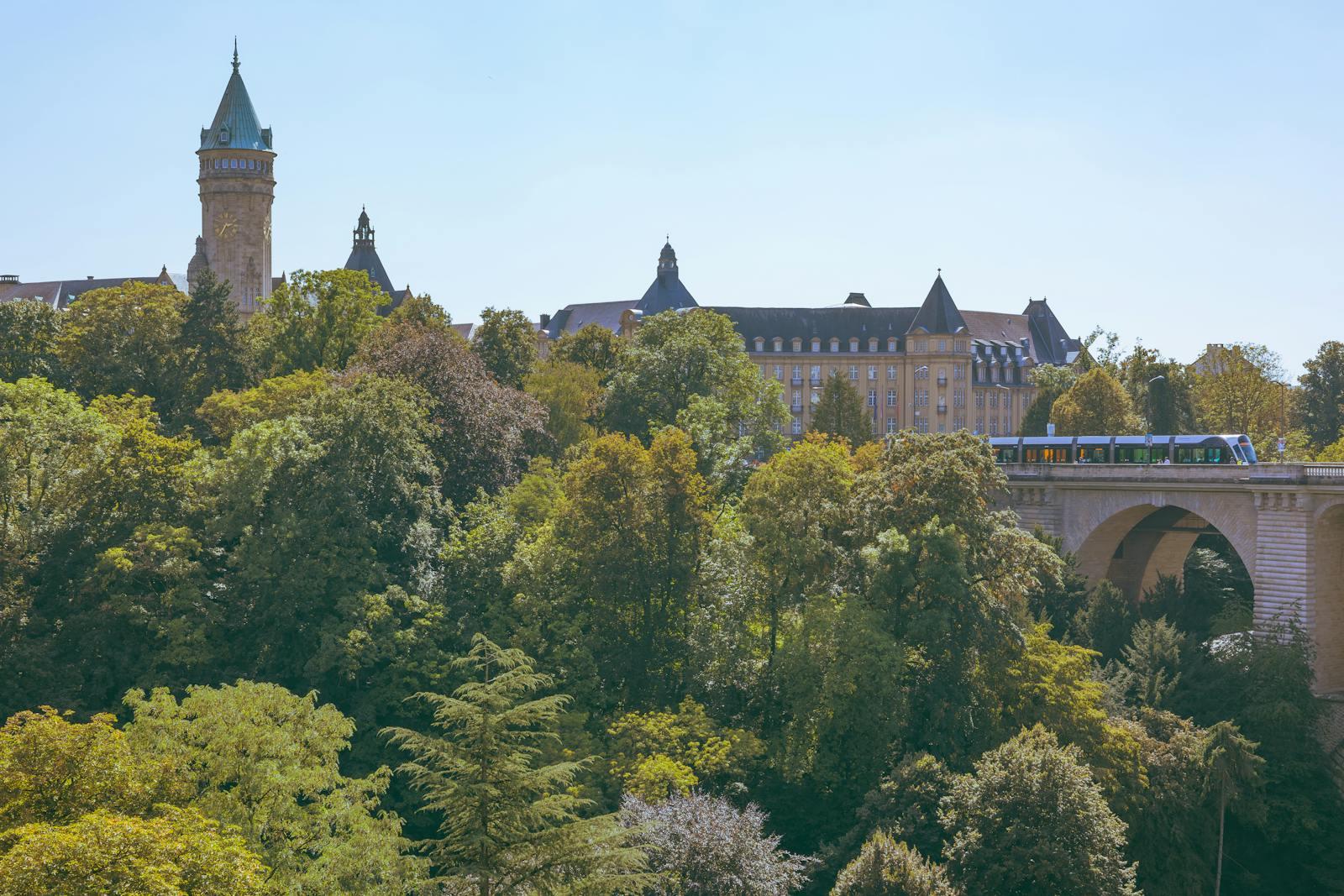
The reckoning is not Germany's alone. Across the European Union, ageing populations are forcing governments into the same narrow choice between higher contributions, later retirement and thinner benefits. For Luxembourg — where tens of thousands of German cross-border workers pay in each day, and where economists have long warned that the grand duchy's own generous system will slide into deficit in the decades ahead — Berlin's decision is a preview of an argument the whole continent is about to have.
Frequently asked
- What is the headline change?
- The statutory retirement age, fixed at 67 today, would rise automatically with life expectancy from 2031 rather than being set by political decision.
- How high could the retirement age go?
- On current demographic trends, the commission projects about 68 years by 2051 and close to 70 by the early 2090s.
- Why does this matter beyond Germany?
- It previews a debate facing ageing societies across the EU, including Luxembourg, whose own pension system faces long-term deficits.
Sources
Around Europe
A look at recent reporting on europe from the Étude newsroom.
Related by topic
Other Étude stories tagged with the same topics as this article.
More in Europe


Trending at Étude
Financial regulation Luxembourg regulator will let Israeli bond prospectus expire on 31 August
Startup Guide How to Start and Fund a Startup in Luxembourg: A 2026 Founder's Guide
Culture Luxembourg's cuisine: the national dish and traditional classics
Languages Luxembourg's three official languages — Luxembourgish, French and German — and where each is used