Spain wildfires
Wildfire near Almería kills at least 12 in Spain, most of them foreign holidaymakers
A blaze that broke out near Los Gallardos and raced through tinder-dry hills overnight is among the deadliest in Spain's recent history, with more than 20 people still missing.
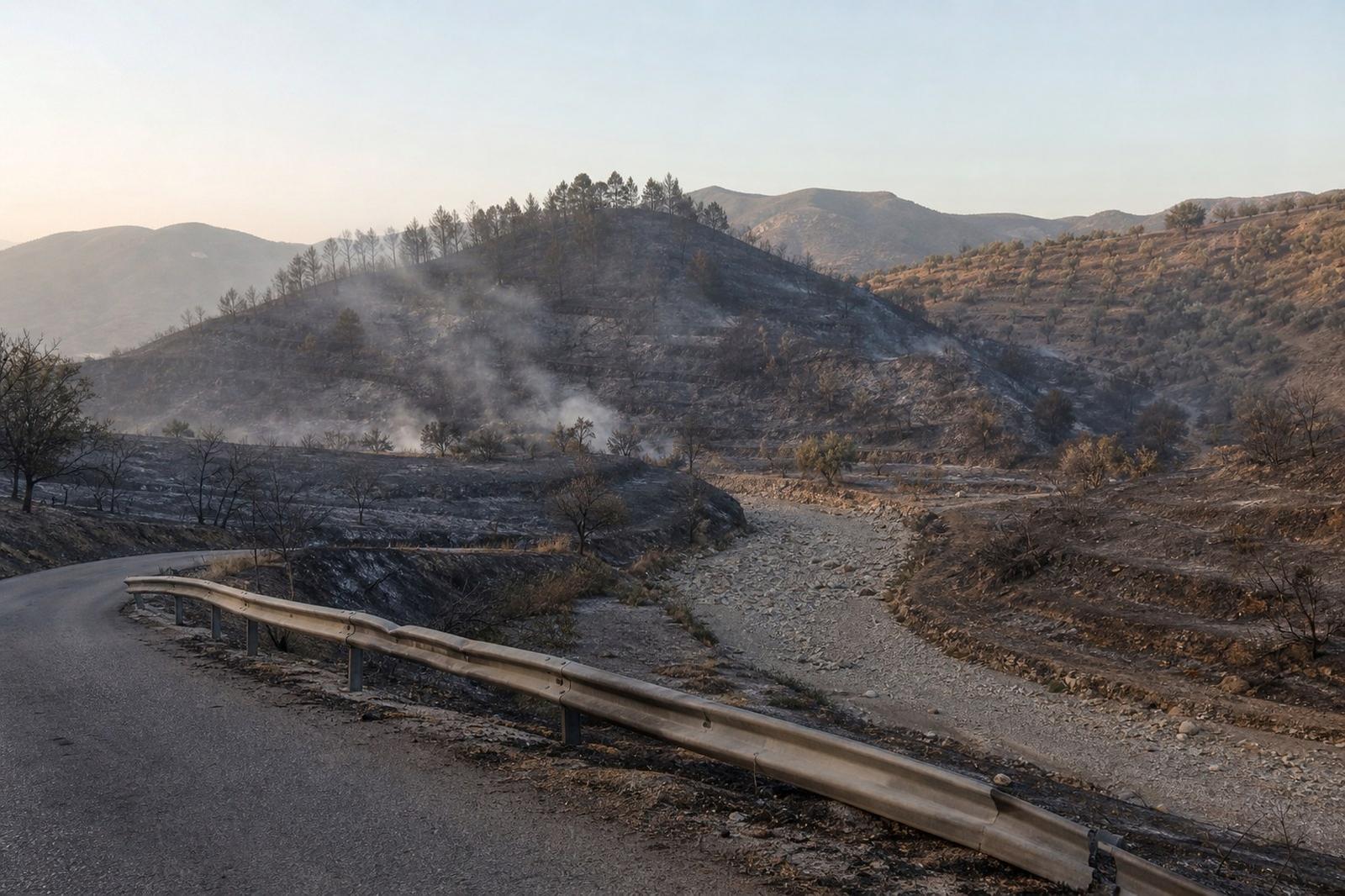
At least 12 people were killed and more than 20 remained missing on Saturday after a wildfire tore through a remote stretch of hills in Spain's south-eastern province of Almería, in what officials described as one of the deadliest blazes the country has seen in recent memory. Most of the dead were foreign nationals — among them British and Belgian holidaymakers and long-term residents who had settled in the sun-baked hinterland of Andalusia.
The fire broke out late on Thursday near the town of Los Gallardos, at the foot of the Sierra de los Filabres, and spread with ferocious speed overnight, driven by gusting winds and terrain left tinder-dry by weeks of extreme heat. By Saturday it had consumed more than 3,200 hectares. Hundreds of firefighters, backed by soldiers from Spain's Military Emergency Unit, were still working to contain the flames and to comb the charred ground for those unaccounted for.
A dry riverbed that became a trap
Many of the victims appear to have died not in their homes but on the roads, after choosing to flee rather than shelter in place as the authorities had urged. Several are believed to have abandoned the official evacuation route and driven down a dry riverbed in search of a way out, only to be caught by the fire. Four of the dead, found together in a single car — its steering wheel on the right — are thought to have been British.
“It turned into a death trap,” said Antonio Sanz, who heads the Andalusian regional government's emergency response, describing the ravine where several bodies were recovered. Emergency crews said the speed of the fire had left those on the move almost no time to react. Eight people were injured, some seriously.
Weeks of heat, then a firestorm
The disaster came at the peak of a heatwave that has pushed temperatures across southern Spain above 40C for days on end, drying out vegetation and turning the region's pine and scrub into ready fuel. Juan Manuel Moreno, the president of the Andalusian regional government, said the combination of drought and wind had made catastrophe almost inevitable.
“Everything is extremely dry because of the heatwaves, and that makes it the perfect fuel; combined with the wind, it is a ticking time bomb.”
Prime Minister Pedro Sánchez said he felt “immense sadness and desolation in the face of the terrible consequences of the fire affecting the province of Almería,” and said national resources had been placed at the region's disposal. The cause of the blaze is under investigation.
A foreign community in the firing line
The hills around Los Gallardos and neighbouring Bédar are dotted with villas and converted farmhouses bought by northern Europeans drawn to Almería's cheap land, dependable sun and quiet valleys. That same isolation — scattered homes at the end of winding tracks, far from town centres — left many residents dangerously exposed when the fire arrived in the dark.
Consular officials from several countries were working with Spanish authorities to identify the dead and trace the missing, a task made harder by the condition of the bodies and by the number of visitors in the area at the height of the summer season. Officials cautioned that the toll could still rise as search teams reached ground that had been inaccessible while the fire was at its fiercest.
Europe's summer of fire
The Almería fire is the deadliest single incident in a summer that has again seen swathes of southern Europe burn, as a persistent heat dome settles over the Mediterranean and scientists link the lengthening, more intense fire seasons to a warming climate. Hundreds of residents and holidaymakers were evacuated from villages, campsites and isolated homes in the fire's path, and roads across the area were closed.
The tragedy is a pointed reminder of how exposed Europe's citizens can be far from home. The dead in Almería were, for the most part, ordinary holidaymakers and retirees from the north of the continent; the presence of Belgian victims among them has brought the disaster close to home for the Low Countries. Spain, like any member state overwhelmed by such an emergency, can call on the European Union's civil-protection mechanism and its shared fleet of firefighting aircraft — a system built up precisely because the continent's fire seasons have grown longer and more destructive.
Frequently asked
- Where and when did the fire start?
- It broke out late on Thursday, 9 July, near the town of Los Gallardos at the foot of the Sierra de los Filabres in Spain's south-eastern province of Almería, and spread rapidly overnight.
- Who were the victims?
- Most were foreign nationals, including British and Belgian holidaymakers and long-term residents. Four believed to be British died together in a car after leaving the official evacuation route.
- What caused the fire?
- The cause is still under investigation. Officials pointed to weeks of extreme heat, drought and strong winds that left the terrain tinder-dry and made the blaze spread with exceptional speed.
Sources
Around Europe
A look at recent reporting on europe from the Étude newsroom.
Related by topic
Other Étude stories tagged with the same topics as this article.
More in Europe



Trending at Étude
Semiconductors Apple Raises Mac and iPad Prices, Blaming the AI Memory Crunch
Your rights at work Paid Holiday and Working Hours in Luxembourg: What the Law Guarantees
Russia's war economy Kyiv Holds the Line, and the West's Economic Weapons Start to Bite
Wages and purchasing power Luxembourg's next wage-indexation tranche forecast for June 2026, pending official index data