A diminished Mediterranean foothold
Syria takes control of Russian bases and converts them into joint training centres
Damascus will administer the Hmeimim airfield and a commercial berth at Tartus, while Russia retains a narrower presence under an agreement reached after 18 months of negotiation.
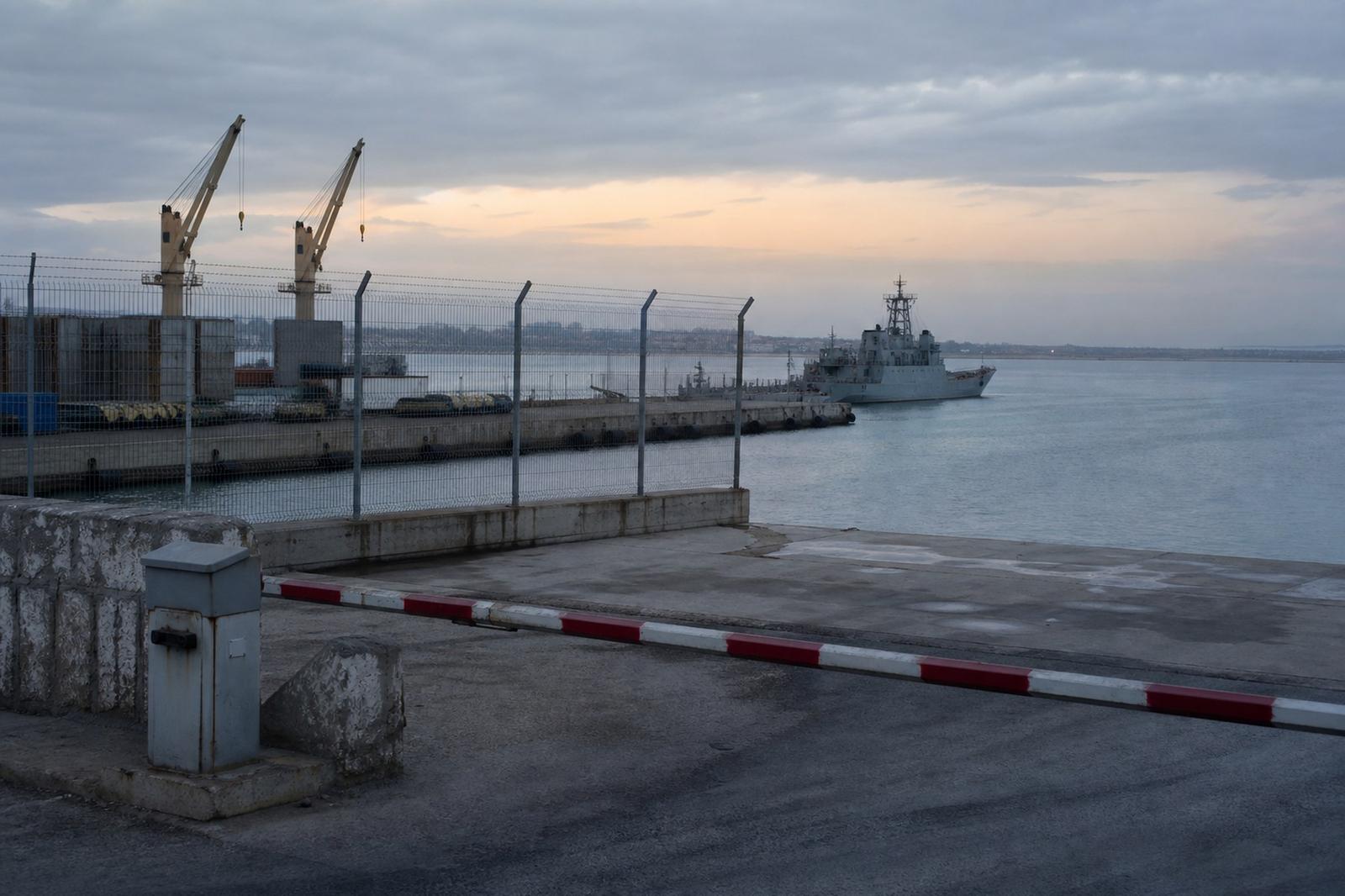
Syria has reached an agreement with Russia that ends Moscow’s exclusive control over two of the most strategically valuable military sites on the eastern Mediterranean. Under the memorandum announced by the Syrian Foreign Ministry on Sunday, Damascus will assume civil administration of the Hmeimim airfield near Latakia and the commercial berth used by Russia at Tartus.
The military sections of both sites are to be recast as joint Syrian-Russian training and qualification centres. The formula preserves a Russian presence but strips the installations of their previous status as largely autonomous outposts from which Moscow projected air and naval power across Syria, the Mediterranean and beyond.
The distinction matters. This is not an announced total Russian withdrawal, and the Syrian statement did not disclose troop numbers, command arrangements, weapons restrictions or the duration of Moscow’s future access. Russia had not publicly commented on the agreement by Sunday. What has changed is the governing principle: the facilities will operate under a negotiated partnership rather than the broad privileges Russia enjoyed under Bashar al-Assad.
Two bases that anchored Russian power
Hmeimim became the centre of Russia’s air campaign after Moscow intervened in Syria in 2015. Russian aircraft operating from the base helped Assad’s forces recover territory and altered the course of the civil war. Tartus, meanwhile, gave the Russian navy a repair and resupply position on the Mediterranean and served as a logistical link to operations farther afield.
Those advantages appeared vulnerable when Assad was overthrown in December 2024 by an insurgency in which Syria’s current president, Ahmad al-Sharaa, had played a leading role. Assad and his family received asylum in Russia. Moscow did not intervene decisively to save his government and subsequently withdrew forces from positions elsewhere in Syria, concentrating much of its remaining presence on the coast.
Damascus nevertheless resisted calls for an abrupt break. Syria still uses large amounts of Russian-made military equipment, and its new leaders have sought working relations with several rival powers at once. Al-Sharaa has visited Russian President Vladimir Putin in Moscow twice since taking power, with the bases among the central subjects of discussion.
“This move marks the most significant development since negotiations began approximately a year and a half ago, paving the way for a new phase in Syrian-Russian relations,” the Syrian Foreign Ministry said.
Sovereignty without a complete rupture
The agreement is therefore both a recovery of Syrian authority and a compromise with the power that sustained Assad. Damascus gains direct control over civilian infrastructure and limits Russia’s freedom to use the coast as an independent military platform. Moscow, for its part, avoids the humiliation and strategic cost of being expelled altogether.
The designation of the remaining military facilities as joint training centres leaves important questions unanswered. It is not yet clear whether Russian combat aircraft or naval vessels may deploy there, whether Russian personnel will operate under Syrian oversight, or what enforcement provisions the memorandum contains. The answers will determine whether the arrangement amounts to a substantive retreat or a change of legal form around a continuing Russian capability.
Damascus broadens its options
The deal also reflects the wider foreign-policy turn since Assad’s removal. Syria’s new authorities have restored ties with Arab governments that had isolated Damascus during the repression of the uprising. They have cultivated Washington and European capitals while keeping channels to Moscow open. The United States has lifted most of its sanctions, and French President Emmanuel Macron visited Syria in July, announcing that the two countries would exchange ambassadors for the first time in 14 years.
That diversification gives Damascus leverage. A complete Russian departure could deprive Syria of technical support and expose the government to new regional pressures. Preserving Moscow in a reduced and supervised role, however, allows al-Sharaa’s administration to demonstrate sovereignty without binding the country exclusively to the West, Turkey or the Gulf states.
For Russia, the settlement formalises a sharp contraction from the position it held under Assad. Its Mediterranean presence survives, but on Syrian terms that are more limited and potentially reversible. For Syria, the agreement is a test of whether reclaimed legal authority can be converted into effective command over territory, airspace and ports after years in which foreign powers treated all three as instruments of their own wars.
Frequently asked
- Is Russia leaving Syria completely?
- No. Russia is expected to retain a role at joint training centres, although the agreement ends its previous exclusive control over the two sites.
- Why are Hmeimim and Tartus important?
- Hmeimim supported Russia’s air operations in Syria, while Tartus provided its navy with a strategic Mediterranean repair and resupply facility.
- What details remain unknown?
- Damascus has not disclosed future troop numbers, command structures, weapons limits, access rights or the duration of the arrangement.
Sources
Around World
A look at recent reporting on world from the Étude newsroom.
Related by topic
Other Étude stories tagged with the same topics as this article.
More in World


Trending at Étude
Banking Luxembourg bank interest rates in 2026: savings and mortgage figures published by Spuerkeess, BGL, Raiffeisen and BIL
Cross-border rail CFL to halt all trains between Luxembourg and Thionville for five weeks this summer
Financial regulation Luxembourg regulator will let Israeli bond prospectus expire on 31 August
Startup Guide How to Start and Fund a Startup in Luxembourg: A 2026 Founder's Guide