A rescue race across a fractured island
Indonesia earthquake kills at least 47 as rescuers seek cut-off villages
Landslides, power failures and damaged roads are slowing the search on Flores after a shallow magnitude-7.7 quake.
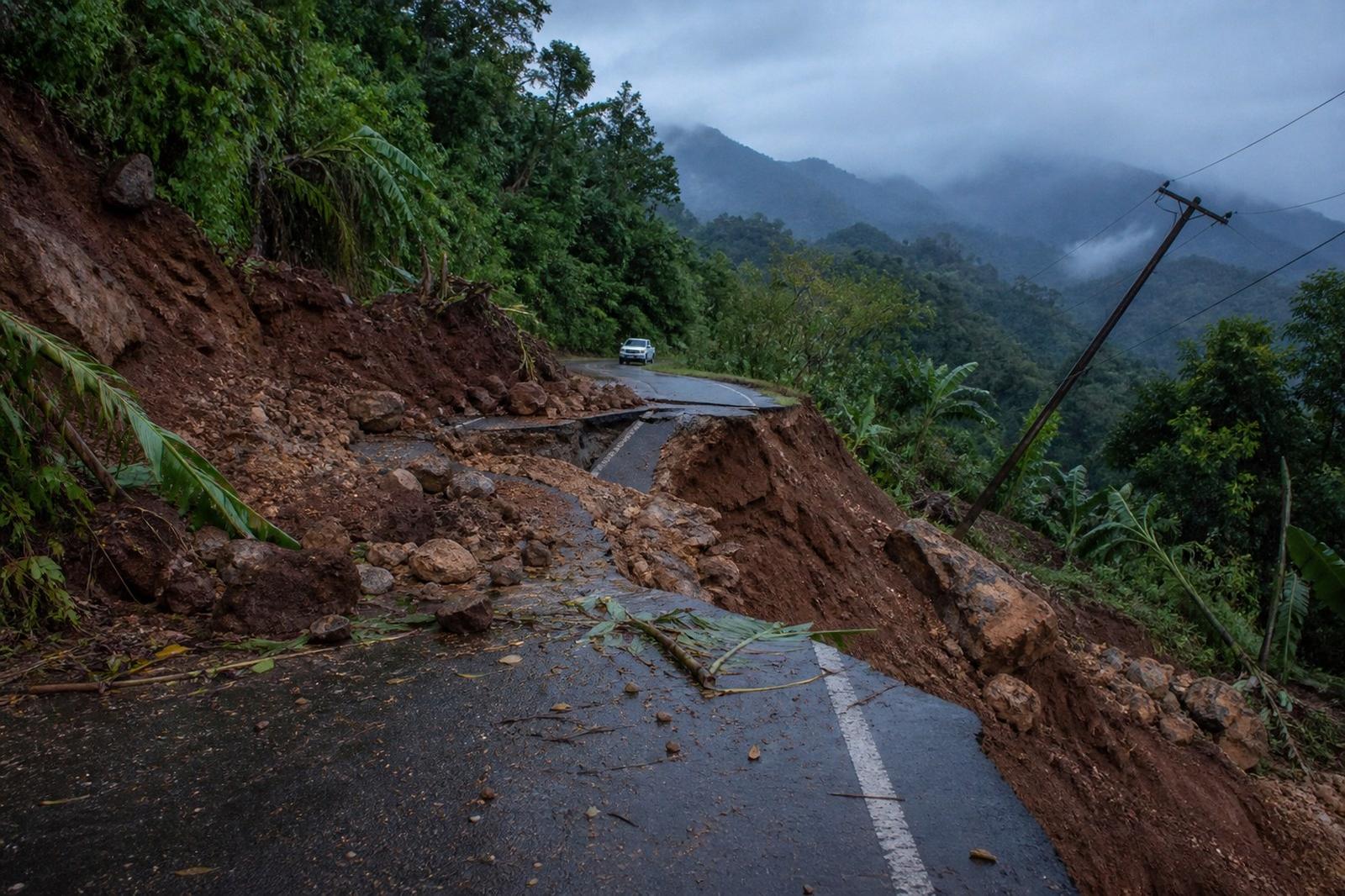
Rescue teams were trying to reach isolated communities across the Indonesian island of Flores on Saturday after a magnitude-7.7 earthquake killed at least 47 people, brought down buildings and triggered landslides across a mountainous region. The official toll remained provisional as electricity cuts, broken communications and blocked roads prevented authorities from obtaining a complete picture of the disaster.
Indonesia's National Disaster Management Agency said most of the bodies recovered so far were found in the regencies of Sikka, Manggarai and East Manggarai. At least 50 people were taken to hospitals. Officials warned that the number of casualties could rise as teams enter villages that have been inaccessible since the earthquake.
The US Geological Survey placed the epicentre 68 kilometres north-northwest of Ende in East Nusa Tenggara province. The earthquake struck at 5.58am local time at a depth of about 10 kilometres. Its shallow origin increased the potential for destructive shaking at the surface.
Landslides turn the response into an access crisis
The immediate challenge is no longer confined to collapsed structures. Earth loosened by the shaking has covered roads and cut off settlements across six regencies. In Ende, landslides blocked sections of the Trans-Flores highway, the roughly 700-kilometre route that links Labuan Bajo in the west with Larantuka in the east.
That road is the island's principal overland connection. When it is severed, ambulances, excavators, food and medical supplies must negotiate narrow alternative routes or wait for debris to be removed. Power failures are also limiting telephone and internet service, leaving officials dependent on fragmented reports from towns and villages.
We are continuing to collect reports of damage and casualties, but there are communication disruptions.
Rudi Darmoko, East Nusa Tenggara police chief
Authorities said at least 157 houses had been flattened and nearly 200 more damaged. More than 100 public facilities, including schools, medical centres and churches, were destroyed. About 2,000 residents had moved into temporary shelters or safer areas, adding the need for drinking water, sanitation and medical care to the search operation.
Three helicopters and a rescue vessel were deployed to support evacuations and deliver supplies. Their role is especially important in East Nusa Tenggara, where communities are spread among islands and steep terrain can turn a damaged road into a prolonged isolation.
Tsunami warning lifted after coastal evacuations
Indonesia's meteorological agency initially issued a tsunami warning for parts of East Nusa Tenggara, West Nusa Tenggara, South Sulawesi and Southeast Sulawesi. Coastal residents were told to leave beaches and riverbanks and move to higher ground.
The warning was later lifted after monitoring showed no significant change in sea level posing a continuing threat, although small tsunami waves were reported. The evacuation nevertheless carried particular weight on Flores, where memories of an earlier catastrophe remain strong.
The earthquake was felt across much of the island. Damage was reported around Maumere, the principal city in Sikka, while shaking also reached Labuan Bajo, the gateway to Komodo National Park. Reports of damage came from Bima in neighbouring West Nusa Tenggara and from parts of southern Sulawesi.
At a seminary in Sikka, students and religious staff escaped as part of an assembly-hall roof collapsed during morning Mass. At Maumere's port, the waiting area was among the structures reported damaged. Such incidents illustrate how the early hour exposed people inside homes, churches and other buildings even as many residents fled outdoors or uphill.
A region with a long seismic memory
Flores sits in one of Indonesia's most active seismic zones. The archipelago lies along the Pacific Ring of Fire, where several tectonic plates meet and earthquakes and volcanic eruptions are frequent. Indonesia consists of more than 17,000 islands, a geography that magnifies the logistical difficulty of responding to large disasters.
In 1992, an earthquake and tsunami on Flores killed about 2,500 people. In 2018, a magnitude-7.5 earthquake and a local tsunami devastated communities around Palu on Sulawesi, killing more than 4,400. Those disasters transformed tsunami warnings into an urgent instruction for coastal communities, even when an alert is subsequently withdrawn.
For Flores, the decisive question now is how quickly rescue teams can reopen roads and establish contact with remote settlements. The confirmed figures already describe a severe disaster: at least 47 dead, dozens receiving hospital treatment, hundreds of homes destroyed or damaged and roughly 2,000 people displaced. Yet until the cut-off villages can be assessed, the full human cost will remain unknown.
Frequently asked
- Where did the Flores earthquake strike?
- The epicentre was about 68 kilometres north-northwest of Ende in Indonesia's East Nusa Tenggara province, at a depth of roughly 10 kilometres.
- How many casualties have been reported?
- Authorities have confirmed at least 47 deaths, while at least 50 people were taken to hospitals; the totals remain provisional.
- Is there still a tsunami warning?
- No. Indonesia's meteorological agency lifted the warning after monitoring found no significant sea-level changes posing a continuing threat, although small waves were reported.
Sources
Around World
A look at recent reporting on world from the Étude newsroom.
More in World

Luxembourg public holidays 2026: the full list and what's open or closed


Luxembourg regulator will let Israeli bond prospectus expire on 31 August

Trending at Étude
Money & Work Unemployment benefits in Luxembourg: who qualifies and how much is paid
Culture Luxembourg's cuisine: the national dish and traditional classics
Explainer The Grand Duchy of Luxembourg: Its Monarchy and How the Country Is Governed
Mobility Alzingen bypass: why Luxembourg is moving a EUR 390 million road bill now