China–Japan tensions
Two Detentions in Dalian, and a New Front in the Rare-Earth Wars
Beijing is holding two employees of a Japanese machinery maker over an alleged attempt to move rare-earth materials — on the same day it invited the public to inform on illegal exporters.
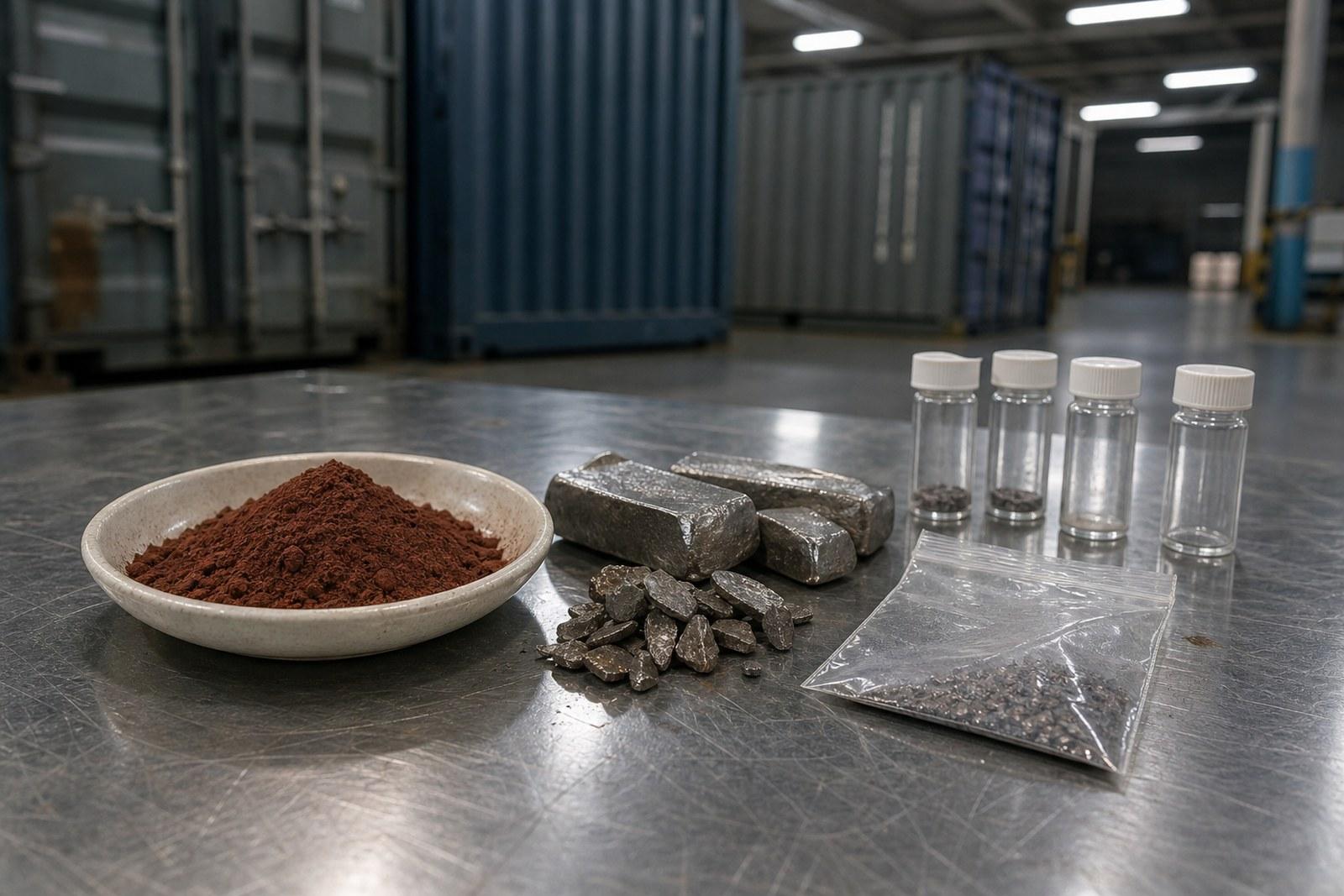
Japan said on Wednesday that Chinese authorities had detained two of its citizens — both employees of a major Japanese machinery maker — over an alleged attempt to take rare-earth materials out of the country, the latest sign that Beijing is prepared to turn its dominance of the world's most strategic minerals into an instrument of pressure.
One man was detained in the north-eastern port city of Dalian on 18 May and the second a week later, on suspicion of breaching Chinese laws on the export of restricted goods, Chief Cabinet Secretary Minoru Kihara told reporters in Tokyo. Both are held in the same case; one works at the company's Chinese subsidiary. Japanese consular officials in Dalian and Shenyang have been notified.
Mr Kihara said the two were “in good health” and that the government would “respond appropriately from the standpoint of protecting our nationals overseas.” He declined to identify the men or their employer, citing the investigation and the families' privacy.
A hotline for informers
The detentions surfaced on the same day that China's commerce ministry unveiled a new tool in its export-control arsenal. Under Announcement No. 26, Beijing has opened a dedicated hotline and online portal — effective 1 July — inviting the public to report the unauthorised export of strategic minerals and dual-use goods, with rewards promised for verified, real-name tips.
The message to companies operating in China is unambiguous: the state intends to police the movement of rare earths down to the level of individual shipments, and it is recruiting insiders to help. For foreign firms whose engineers and buyers handle restricted materials daily, the line between routine business and an alleged smuggling offence has rarely looked thinner.
A near-monopoly, put to work
Rare earths — a group of seventeen elements essential to electric motors, wind turbines, smartphones and precision-guided weapons — are not especially rare in the ground. China's leverage lies in processing: it refines roughly nine-tenths of global supply, a chokepoint built over decades that no rival has come close to matching.
Beijing has been steadily converting that industrial position into diplomatic muscle. In January it widened its dual-use export controls in ways that singled out Japan. Relations had already soured after Prime Minister Sanae Takaichi suggested late last year that Japan could respond militarily to Chinese action against Taiwan — a remark Beijing has not forgotten.
China's foreign ministry framed the detentions as a simple matter of law.
“We hope the Japanese side will educate and remind its nationals and enterprises in China to abide by Chinese law,” said Guo Jiakun, a ministry spokesman.
Tokyo, which has spent the past two years trying to “de-risk” its supply chains by funding mines and processing plants in Australia and elsewhere, now faces a colder reality: diversification takes years, and its nationals are exposed in the meantime.
Why Europe should be watching
For European readers, the case is more than a distant quarrel between two Asian powers. The European Union depends on the same minerals and to a comparable degree; its Critical Raw Materials Act, adopted in 2024, was a direct response to exactly this vulnerability, setting targets for domestic mining, processing and recycling that remain years from being met.
What is being tested in Dalian is whether a government can use access to critical inputs — and the legal jeopardy of the people who handle them — as a routine lever of statecraft. If the answer is yes, every industrial economy that runs on Chinese rare earths, Europe's included, has reason to take note.
- Two Japanese nationals detained in Dalian, on 18 and 25 May, in the same case.
- One allegedly tried to export rare-earth-related materials; both work for a Japanese machinery maker.
- China simultaneously opened a whistleblower hotline for illegal mineral exports, effective 1 July.
For now, two engineers remain in custody in a port city few outside the industry could place on a map, and four governments — in Tokyo, Beijing, Washington and Brussels — are reading the same signal, each in its own language.
Frequently asked
- Why do rare earths matter so much?
- They are essential to electric motors, wind turbines, electronics and precision weapons, and China refines about nine-tenths of global supply, giving it unusual leverage.
- What is the new whistleblower hotline?
- A Chinese commerce-ministry channel, effective 1 July 2026, inviting the public to report illegal exports of strategic minerals and dual-use goods, with rewards for verified, real-name tips.
- How does this affect Europe?
- The EU depends on the same minerals to a comparable degree, and its 2024 Critical Raw Materials Act targets are still years from being met, so Brussels and European industry are watching closely.
Sources
Around World
A look at recent reporting on world from the Étude newsroom.
Related by topic
Other Étude stories tagged with the same topics as this article.
More in World



Trending at Étude
Financial regulation Luxembourg regulator will let Israeli bond prospectus expire on 31 August
Startup Guide How to Start and Fund a Startup in Luxembourg: A 2026 Founder's Guide
Culture Luxembourg's cuisine: the national dish and traditional classics
Languages Luxembourg's three official languages — Luxembourgish, French and German — and where each is used