Colombia · Presidential runoff
Colombia Swings Right as a Trump-Backed Outsider Claims the Presidency
Abelardo de la Espriella, a flamboyant lawyer who has never held office, edged the leftist Iván Cepeda by less than a point — and the losing camp is demanding a recount.
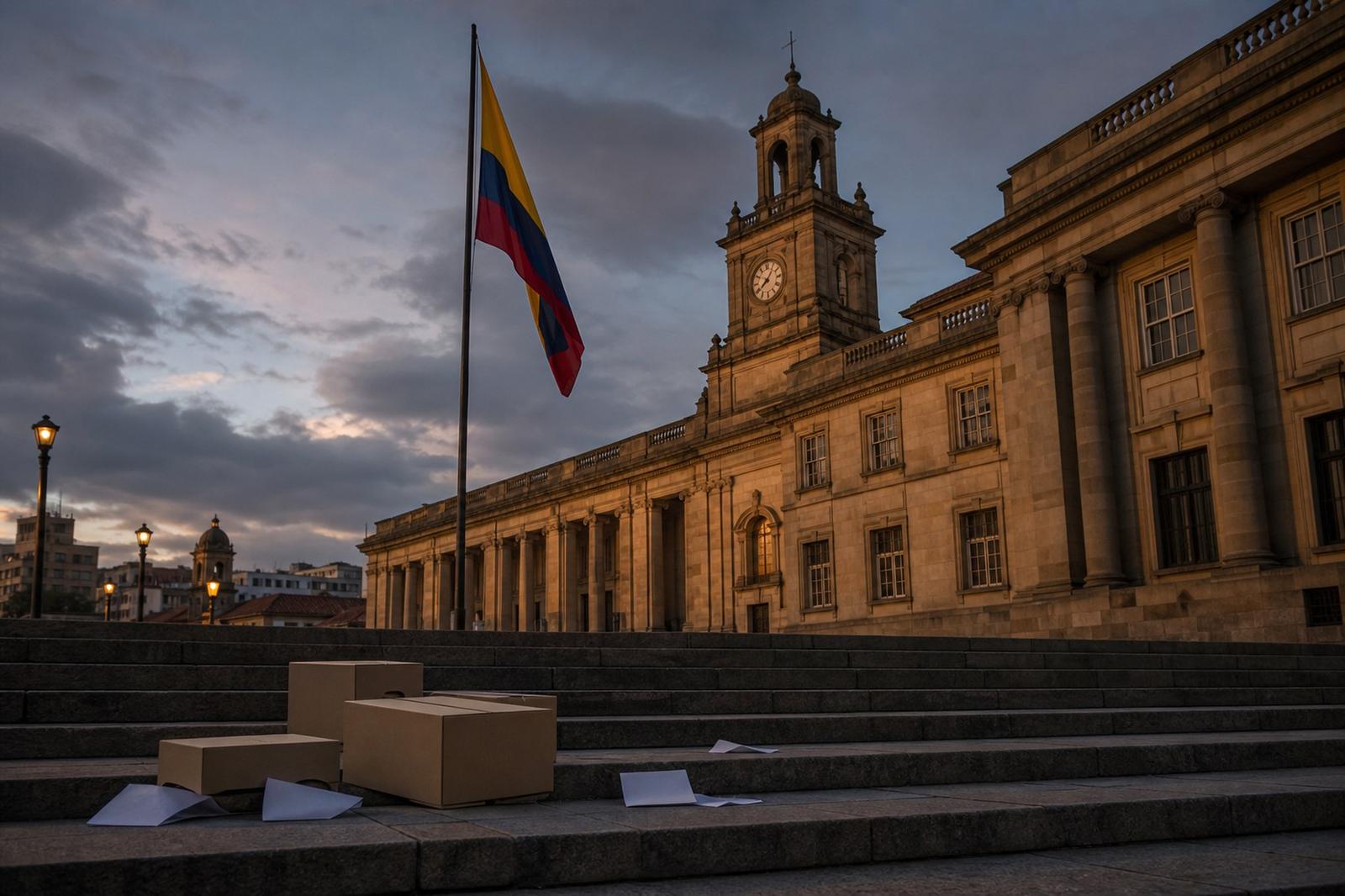
Colombia has chosen its most polarising leader in a generation. Preliminary results from Sunday's runoff handed a wafer-thin victory to Abelardo de la Espriella, a flamboyant criminal-defence lawyer and businessman who has never held elected office and who built his campaign around an uncompromising promise to crush crime and corruption.
The national electoral authority's rapid count, with nearly all ballots tallied, put de la Espriella on 49.65 percent against 48.70 percent for Iván Cepeda, a left-wing senator backing the outgoing government. The gap was under 250,000 votes out of more than 25 million cast. Paradoxically, even in defeat, both men drew historic numbers: with roughly 12.96 million ballots, de la Espriella became the most-voted presidential candidate in Colombian history.
From the courtroom to the Casa de Nariño
De la Espriella, 47, is an improbable president-elect. Born in Bogotá and raised on the Caribbean coast, he founded a law firm in 2002 that grew into one of the country's best-known practices, with offices from Barranquilla to Miami, defending high-profile and at times notorious clients. He cultivated a swaggering public persona — he calls himself "El Tigre," the Tiger — and a large social-media following before entering politics for the first time in this cycle.
His pitch was security above all: an iron-fisted assault on the armed groups and trafficking networks that still scar much of the country, paired with open admiration for hardline leaders elsewhere in the region and for President Donald Trump, who endorsed him. To supporters he is the strongman Colombia needs; to critics he is an authoritarian risk with no governing record. In the first round on 31 May he led with about 44 percent to Cepeda's 41 percent, setting up Sunday's duel.
A contested verdict
Cepeda, an architect of the outgoing administration's "Total Peace" negotiations with armed groups, said he recognised the rapid count but would not let the result stand unexamined. His campaign is challenging results from some 33,000 polling stations and has asked for a full manual recount.
"I request a recount of all polling stations and a recount of all votes, along with a study of the vulnerabilities in the electoral software and the polling stations that were affected," Cepeda said.
Outgoing President Gustavo Petro, Colombia's first leftist head of state and Cepeda's closest ally, went further, alleging irregularities in the count and insisting that neither candidate could be "proclaimed" until the tally was ratified. He urged Colombians to stay calm while the process played out. De la Espriella, for his part, claimed victory on social media. "Today begins a new stage for our country," he wrote, "a stage built on the free and democratic will of millions of citizens who chose to believe in a great, safe and prosperous Colombia full of opportunities."
A region tilting right
The result, if confirmed when authorities certify the final count, would end Petro's single term and the left's first stint in the presidency after decades of conservative and centrist rule. It also extends a rightward drift across Latin America and a pattern of leaders openly aligned with Washington. De la Espriella is set to be inaugurated on 7 August.
For Colombia's institutions, the coming weeks matter as much as the night itself. A new president taking office on the back of a sub-one-point margin, amid recount demands and claims of fraud from the sitting head of state, will test the credibility of an electoral system that has so far held. What is not in doubt is the scale of the turnout and the depth of the divide it revealed.
Frequently asked
- Who is Abelardo de la Espriella?
- A 47-year-old Colombian criminal-defence lawyer, businessman and first-time candidate who calls himself 'El Tigre' and was endorsed by Donald Trump.
- How close was the result?
- The preliminary count gave him roughly 49.65% to Cepeda's 48.70%, a gap of fewer than 250,000 votes.
- Is the result final?
- Not yet. Cepeda is contesting about 33,000 polling stations and President Petro alleges irregularities; the count must still be ratified.
- When would he take office?
- De la Espriella is scheduled to be inaugurated on 7 August 2026, succeeding Gustavo Petro.
Sources
Around World
A look at recent reporting on world from the Étude newsroom.
Related by topic
Other Étude stories tagged with the same topics as this article.
More in World



Trending at Étude
Luxembourg taxes Luxembourg's income-tax classes (1, 1a, 2) explained: who falls into each
Homeownership explained How to buy a property in Luxembourg: the process, costs and notary
Connectivity Mobile and internet providers in Luxembourg compared
Personal finance How the Luxembourg state pension works: retirement age, contributions and how it's calculated