Middle East Diplomacy
Vance Hails a ‘Foundation' for Peace With Iran. Tehran Says Little Changed.
A first formal round in Switzerland yielded a 60-day roadmap, eased oil sanctions and a Hormuz pledge — and two clashing accounts of what Iran actually conceded.
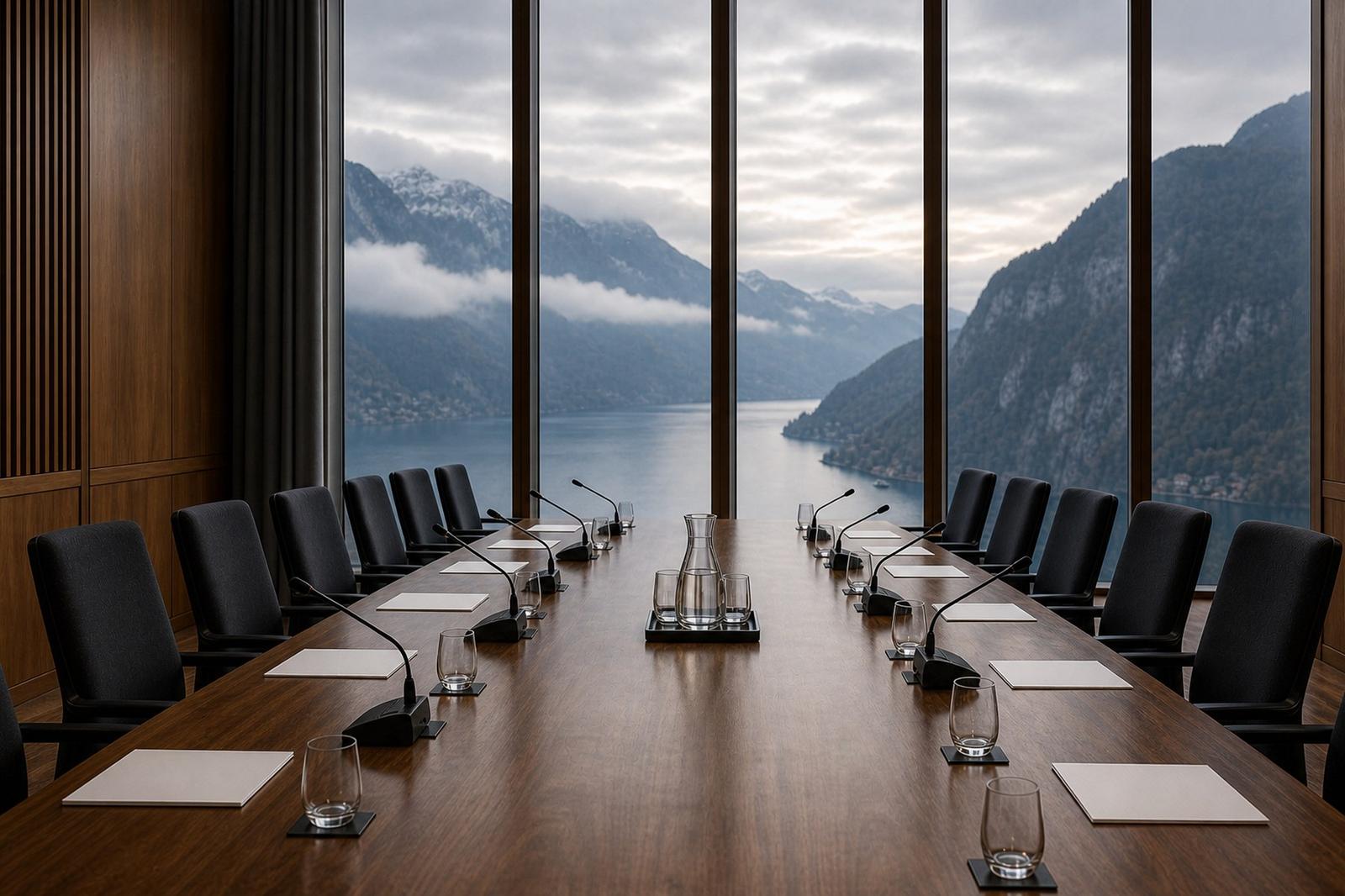
The first formal round of talks between Washington and Tehran since a four-month war was paused last week ended on Monday not with a treaty but with a metaphor. “The final deal is the house,” US Vice-President JD Vance told reporters after a long day of negotiations at the Bürgenstock resort, perched above Lake Lucerne in central Switzerland. “We set the foundation. We haven't built the house.”
The negotiations were the first since a US-brokered agreement last week paused a conflict that had drawn in Israel and the United States and rattled global energy markets through much of the spring. That truce stopped the shooting; it left almost every underlying dispute to the diplomats who gathered this week in Switzerland.
By the American telling, the foundation is real and load-bearing. Vance said Iran had agreed to readmit inspectors from the International Atomic Energy Agency, the United Nations' nuclear watchdog, describing it as “a major milestone.” Treasury Secretary Scott Bessent said Tehran had “committed to free and open transit in the Strait of Hormuz and to permit International Atomic Energy Agency inspectors into their country.” Hours earlier, the US Treasury had issued waivers allowing Iran to resume selling crude oil, petrochemicals and refined products on world markets through 21 August.
Two accounts of one room
Then came Tehran's version, and it did not match. Iran's foreign ministry spokesman, Esmaeil Baghaei, said the Iranian delegation had not negotiated over the country's nuclear programme at all and had accepted no new commitments. Foreign Minister Abbas Araghchi, who led the delegation alongside parliament speaker Mohammad Bagher Ghalibaf, framed the day's gains in narrower terms: relief from oil and petrochemical sanctions and the partial release of frozen assets — not concessions on enrichment or inspections.
The gap is not merely rhetorical. It goes to the heart of what, if anything, Iran has promised about the centrifuges and the stockpile of highly enriched uranium that helped bring the region to war. Both governments have an audience to satisfy at home: an American administration eager to show a war ended on its terms, an Iranian leadership determined to prove it conceded nothing under fire.
What the two sides did agree
Beneath the competing headlines, the talks produced a scaffolding of process rather than a settlement. Mediated by Qatar and Pakistan, with Vance flanked by advisers Jared Kushner and Steve Witkoff, the delegations agreed to:
- a roadmap toward a final agreement within 60 days, with technical talks continuing through the summer;
- a high-level committee to steer the process, supported by working groups on the nuclear file, sanctions, monitoring and dispute resolution;
- a “de-confliction cell” to police the halt to fighting in Lebanon;
- a standing communication line on the Strait of Hormuz to prevent incidents and keep commercial shipping moving.
“The final deal is the house. We set the foundation. We haven't built the house.” — JD Vance, US Vice-President
Europe in the waiting room
For a continent that once sat at the centre of Iran diplomacy, the venue was the only European thing about the day. The 2015 nuclear accord was built around the so-called E3 — Britain, France and Germany — and the European Union, which chaired the negotiations. This time the Europeans were absent from the table, their role inherited by Gulf and South Asian intermediaries. The shift is a quiet measure of how far Washington now prefers to run Middle East policy through partners of its own choosing.
Europe will still feel the consequences. The Treasury's waivers clear the way for Iranian barrels to return to a market that supplies European refiners, and a calmer Hormuz — through which a large share of seaborne crude and liquefied natural gas passes — eases the risk premium that has weighed on energy prices since the spring. For households from Lisbon to Luxembourg, the most tangible effect of a deal struck without Europe may be felt at the pump and on the heating bill.
The hard questions, deferred
What the Bürgenstock round conspicuously did not resolve is most of what matters. Negotiators left unsettled whether Iran may keep enriching uranium at all, what becomes of its existing stockpile, how intrusive inspections will be and how quickly sanctions relief becomes permanent rather than a revocable waiver. Mediators spoke of progress; they also acknowledged that the two sides spent much of the day relitigating points that the framework signed last week was supposed to have closed.
Sixty days is not long to build a house on contested ground. For now, both governments can tell their own people a story they want to hear — which is its own kind of achievement, and its own kind of warning.
Frequently asked
- Where and when were the talks held?
- At the Bürgenstock resort above Lake Lucerne, Switzerland, on 22 June 2026 — the first formal round since the four-month war was paused last week.
- Why do the two sides disagree about the outcome?
- Washington said Iran agreed to readmit IAEA inspectors and committed to safe transit through Hormuz, while Iran's foreign ministry said it did not negotiate over its nuclear programme and made no new commitments.
- How does it affect Europe?
- Iranian oil returning to market and a calmer Hormuz could ease energy prices for European consumers, even though European powers were absent from the negotiations.
Sources
Around World
A look at recent reporting on world from the Étude newsroom.
Related by topic
Other Étude stories tagged with the same topics as this article.
More in World


Trending at Étude
Luxembourg taxes Luxembourg's income-tax classes (1, 1a, 2) explained: who falls into each
Homeownership explained How to buy a property in Luxembourg: the process, costs and notary
Connectivity Mobile and internet providers in Luxembourg compared
Personal finance How the Luxembourg state pension works: retirement age, contributions and how it's calculated