European Parliament
Luxembourg's lone MEP draws an ethics probe over the road to St Petersburg
Roberta Metsola has asked the assembly's conduct committee to weigh whether Fernand Kartheiser opened an unofficial line to Moscow — and whether he broke the rules to do it.
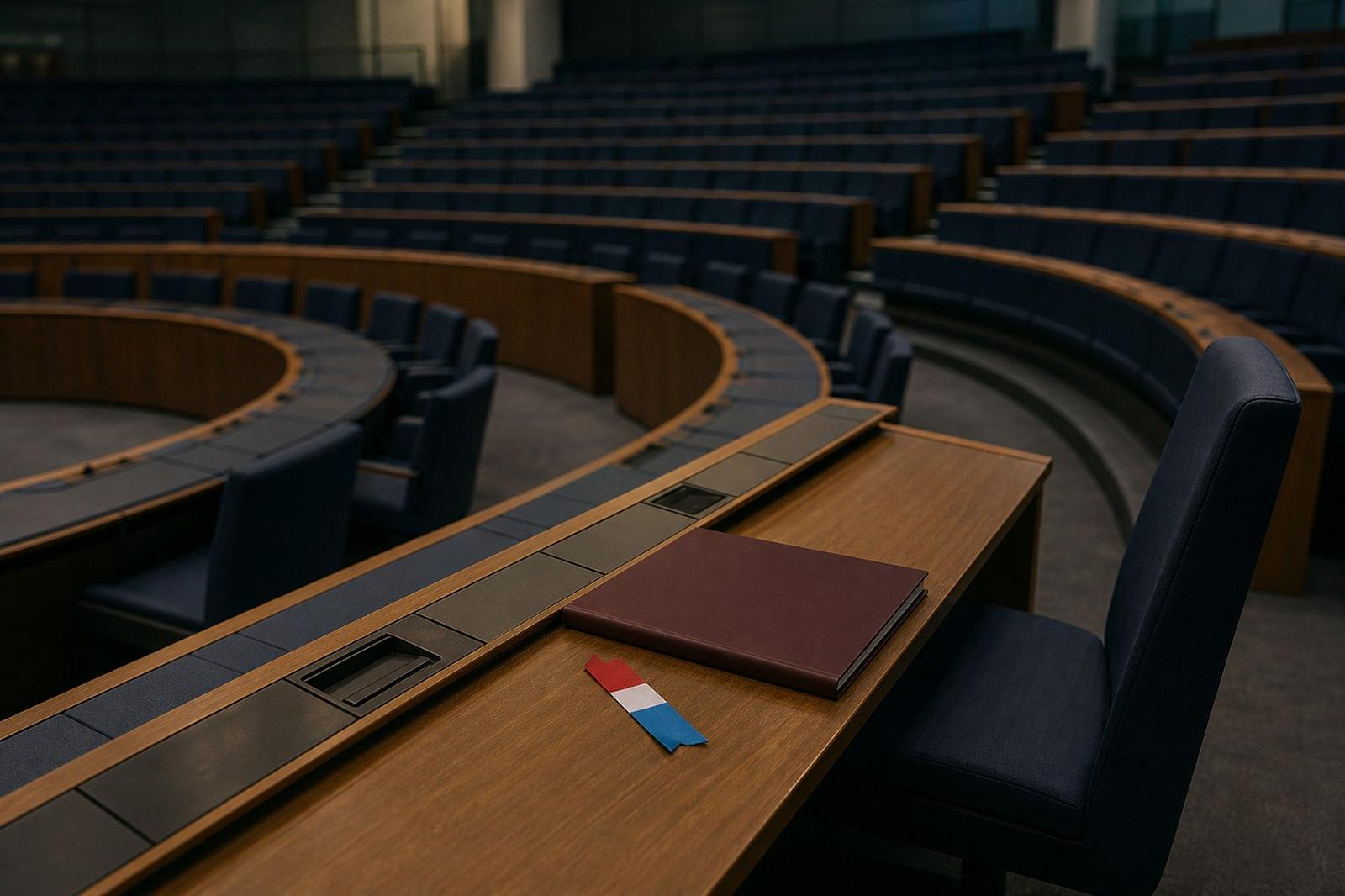
For most members of the European Parliament, the assembly's code of conduct is a bureaucratic footnote — a register of meetings and gifts that few voters ever read. For Fernand Kartheiser, the Grand Duchy's only seat in the chamber, it has become the centre of a quarrel that runs from Brussels to the banks of the Neva.
Roberta Metsola, the Parliament's president, has asked the chair of its Advisory Committee on the Conduct of Members to examine whether Kartheiser broke the institution's rules through his dealings with Russia. The immediate trigger was his appearance on 3 June at the St Petersburg International Economic Forum, the Kremlin's annual investment showcase, and a declaration he circulated afterwards urging the restoration of relations between the European Union and Moscow — a text that makes no mention of Russia's war in Ukraine.
An “informal channel” to the Duma
It is that document, more than the journey itself, that has alarmed the Parliament's leadership. According to a letter from Metsola seen by several European outlets, the declaration records a pledge by Kartheiser and other signatories to continue and deepen cooperation with the Russian State Duma — language that, in the president's view, blurs the line between a lone member's initiative and the institution he sits in.
The statements “give rise to serious concern, first and foremost because it may create the impression that there exists an informal channel of communication between the European Parliament and the [Russian] State Duma,” Metsola wrote to the committee's chair.
The Advisory Committee, made up of members drawn from across the political groups, will now assess whether any of the assembly's rules were breached. Two obligations are in focus:
- the requirement that members disclose, on the Parliament's public register, all meetings with representatives of the public authorities of non-EU countries;
- the rules on accepting trips, hospitality or other benefits funded by third parties.
If the committee finds a breach, the sanctions available to Metsola range from a simple reprimand to far heavier measures: a member can be barred from representing the Parliament abroad, stripped of internal roles such as rapporteurships, and denied access to confidential documents.
From the ECR to the back benches
Kartheiser is no stranger to this kind of friction. A former diplomat who served as Luxembourg's ambassador in several European capitals, he entered the European Parliament in 2024 as the first member ever elected for the Alternative Democratic Reform Party (ADR), the country's national-conservative force. Within a year his foreign-policy instincts had set him apart from his allies.
In May 2025 the European Conservatives and Reformists group expelled him over an earlier visit to Moscow, where he had met Russian lawmakers to discuss bilateral relations and the war in Ukraine. “By travelling to Putin's Russia, Fernand Kartheiser has crossed a red line for the ECR Group,” its co-chairs Nicola Procaccini and Patryk Jaki said at the time. Since then he has sat as a non-attached member, outside any political group — a status that leaves him with fewer resources but also fewer party minders.
His outreach runs against a decade of institutional practice. The Parliament suspended official contacts with Russian lawmakers after the annexation of Crimea in 2014 and cut them off entirely after the full-scale invasion of Ukraine in 2022. Kartheiser has consistently framed his trips as an exercise in parliamentary diplomacy meant to keep a line open and, he argues, to help bring the war to an end.
A small country, a loud seat
For Luxembourg, the affair is awkward precisely because of its size. With just six seats in the Parliament, the Grand Duchy's voice in Strasbourg is carried by a handful of figures, and Kartheiser — whatever his isolation in Brussels — speaks from one of them. A conduct case against him is therefore also a story about how a country of 680,000 people is represented in the institution where so much of its law is written.
Kartheiser has rejected the premise of the inquiry. He said he had not yet seen Metsola's letter and found it “strange that important issues affecting an MEP were being presented to the press before a specific person had been consulted.” His contacts, he maintains, break no rule and serve the cause of peace.
The committee's deliberations are confidential, and there is no fixed deadline for its findings. But the episode has already sharpened a question the EU has wrestled with since 2022: where the boundary lies between a member's freedom to speak and the Parliament's insistence that no single voice should appear to negotiate, in its name, with a state at war on Europe's border.
Frequently asked
- Who is Fernand Kartheiser?
- A former Luxembourg diplomat and the first member of the Alternative Democratic Reform Party (ADR) elected to the European Parliament, in 2024; he is the Grand Duchy's only MEP and now sits outside any political group.
- Which rules might he have broken?
- The committee will look at whether he failed to declare meetings with non-EU officials on the Parliament's public register and whether he accepted third-party-funded travel, both governed by the code of conduct.
- What penalties could he face?
- Anything from a reprimand to being barred from representing the Parliament abroad, losing internal roles, and being denied access to confidential documents.
Sources
Around Europe
A look at recent reporting on europe from the Étude newsroom.
Related by topic
Other Étude stories tagged with the same topics as this article.
More in Europe


Trending at Étude
Luxembourg taxes Luxembourg's income-tax classes (1, 1a, 2) explained: who falls into each
Homeownership explained How to buy a property in Luxembourg: the process, costs and notary
Connectivity Mobile and internet providers in Luxembourg compared
Personal finance How the Luxembourg state pension works: retirement age, contributions and how it's calculated