Sudan
The Siege Tightens on El Obeid, and the World Names the Crime in Advance
As paramilitary forces mass for an assault on North Kordofan's capital, Washington and a coalition of European governments warn that mass atrocities may be only days away.
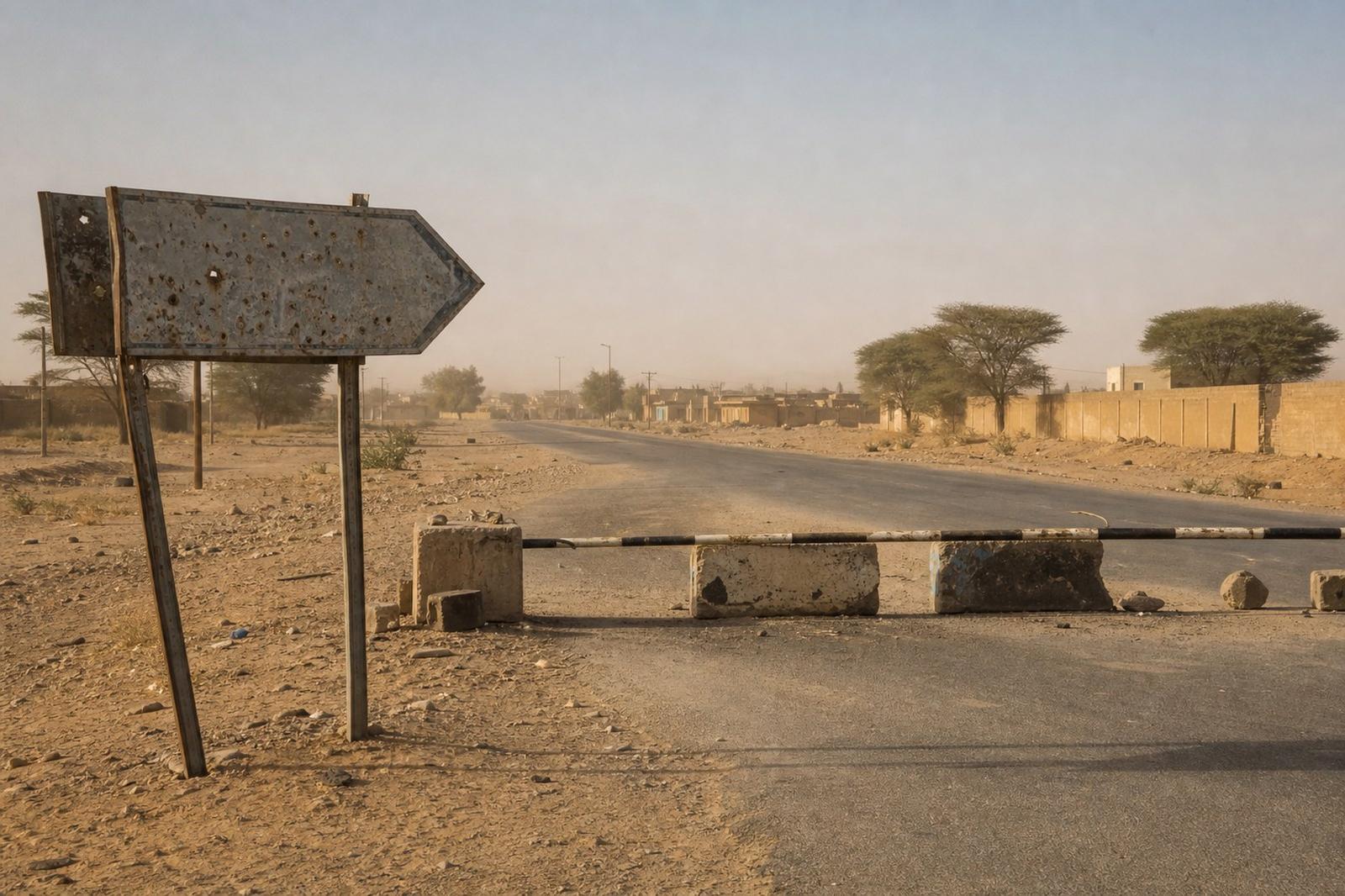
El Obeid has always been a city that other places pass through. The capital of Sudan's North Kordofan state sits where the roads from Khartoum, from Darfur in the west and from the country's south converge — a market town turned military prize in a war now in its fourth year. Whoever holds it holds the country's middle. That is why the paramilitary Rapid Support Forces (RSF) have spent recent weeks massing fighters and equipment on its outskirts, and why the warnings now reaching the outside world carry a particular dread.
On 22 June, the United States State Department said the RSF was concentrating forces around the city and that the threat to civilians had become acute.
"There are alarming indications that mass atrocities could be imminent, further worsening Sudan's already catastrophic humanitarian crisis."
It is an unusual thing for a government to say out loud: not that a crime has been committed, but that one is about to be. The phrasing was deliberate. Sudan's own recent history has lent the language of prevention a grim precedent.
A city at the crossroads
El Obeid is one of Sudan's largest cities and the administrative heart of Kordofan, a region both warring sides treat as decisive — the hinge on which the country either holds together or splits in two. The army broke an earlier RSF siege in early 2025 and turned the city into a forward operations base for the Kordofan and Darfur fronts. For the RSF, capturing it would open a logistics corridor from its Darfur strongholds straight into central Sudan.
The cost is already being paid by the people inside. The UN says at least 50 civilians have been killed by drone strikes over ten days in El Obeid and the wider North Kordofan region. On Friday, a strike on the city's main power transformer plunged El Obeid into a total blackout; the Sudanese Doctors Network said the deliberate shelling of power and fuel infrastructure had forced hospitals to close and shut down water stations. Residents have endured siege-like conditions, on and off, for more than 18 months.
The warning, issued before the fact
Around 500,000 civilians are estimated to be at risk in and around the city. The UN Human Rights Council and the Security Council have both warned of a potential ground offensive, and the UN's human-rights chief, Volker Türk, said the danger bore the marks of patterns documented elsewhere in this war — at el-Fasher and the Zamzam displacement camp, where the RSF's advance last year was described by investigators as carrying the hallmarks of genocide.
That comparison is the heart of the alarm. The fear is not abstract. It is that El Obeid becomes the next name on a list that already exists.
Europe names it too
On 18 June, at the Human Rights Council in Geneva, Norway read a statement on behalf of a Coalition for Atrocity Prevention and Justice for Sudan — its core members Britain, Canada, France, Germany, Ireland, the Netherlands and Sierra Leone, joined by 21 other states. "We are gravely alarmed by the urgent risks of atrocities and deliberate killings in Sudan," the coalition declared.
The roll-call reads like a register of Europe's foreign ministries, and it is a reminder that the diplomatic energy behind these warnings is largely European. But it also exposes the war's defining frustration: the distance between naming a danger and stopping it. The conflict, which began in April 2023, has already killed tens of thousands and driven millions from their homes, with little outside leverage able to slow it.
- The army holds the city; the RSF has massed forces for an expected assault.
- Drone strikes have cut power, water and hospital access.
- The international response, so far, is words.
For now, the statements pile up faster than any plan to act on them. El Obeid waits — a crossroads in the dark, its half-million residents listening for what comes down the road next.
Frequently asked
- Why does El Obeid matter strategically?
- It is the capital of North Kordofan and sits at the crossroads of highways linking Khartoum, Darfur and southern Sudan; its capture would give the RSF a logistics corridor from Darfur into central Sudan.
- What is the RSF?
- The Rapid Support Forces, a Sudanese paramilitary group that has fought the national army since April 2023 in a war that has killed tens of thousands and displaced millions.
- What can the international community actually do?
- So far the response has been statements and demands for humanitarian access and restraint; outside actors have little direct leverage over the RSF on the ground.
Sources
Around World
A look at recent reporting on world from the Étude newsroom.
Related by topic
Other Étude stories tagged with the same topics as this article.
More in World



Trending at Étude
Luxembourg taxes Luxembourg's income-tax classes (1, 1a, 2) explained: who falls into each
Homeownership explained How to buy a property in Luxembourg: the process, costs and notary
Connectivity Mobile and internet providers in Luxembourg compared
Personal finance How the Luxembourg state pension works: retirement age, contributions and how it's calculated