Transatlantic
Pentagon Confirms Withdrawal of 5,000 US Troops from Germany
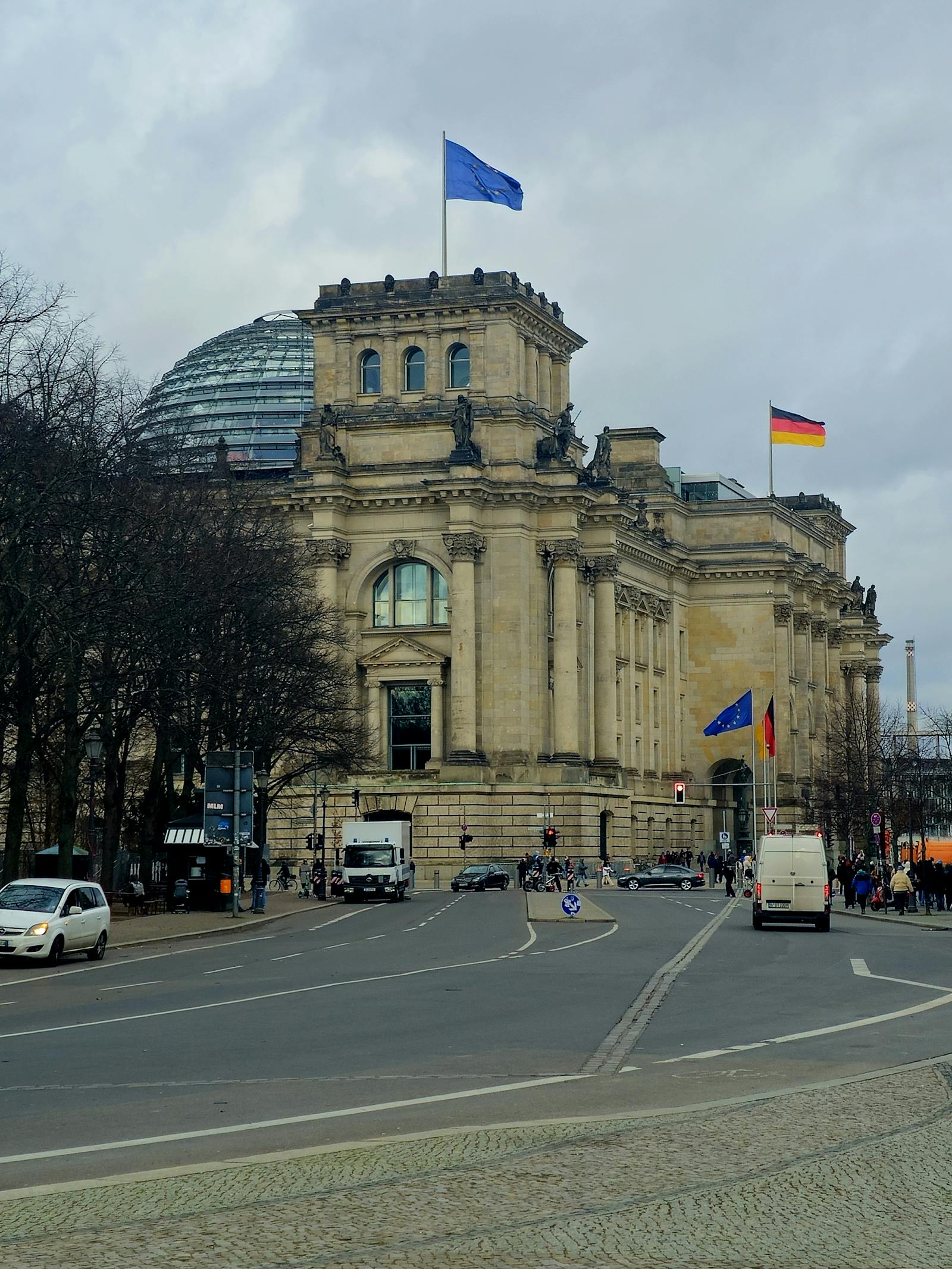
The American military presence in Germany has been one of the most stable elements of the post-Cold-War European security order. On 1 May 2026, the Trump administration announced a partial reversal of that posture: 5,000 US troops will be withdrawn from German territory, the Pentagon confirmed.
What is being withdrawn
The Pentagon's announcement specified the personnel total without yet detailing which units or installations are affected. The German base footprint hosts roughly 35,000 US service members across the Ramstein Air Base, Grafenwöhr training area, Wiesbaden, Stuttgart (US European Command and US Africa Command headquarters) and several smaller sites. A 5,000-troop drawdown is therefore meaningful but does not fundamentally alter the strategic posture.
The political context
The decision lands in the middle of a sustained public dispute between Trump and German Chancellor Friedrich Merz, who took office in May 2025 at the head of a CDU-SPD coalition. The two men have clashed over defence spending, tariffs and Trump's posture toward Russia. The drawdown was first floated as a threat during one of those exchanges and has now been operationalised.
Berlin's response has been measured. Merz has avoided escalating the rhetorical conflict, instead emphasising Germany's own commitment to higher defence spending — the country's coalition agreement contains pledges that take German military expenditure well above the NATO 2% threshold over the next several years.
What it means strategically
For NATO, the drawdown is more political signal than capability change. 5,000 troops can be reconstituted; the message — that the US is willing to shrink its European footprint when it does not get its way on adjacent files — is harder to undo.
For Germany, the drawdown intensifies an ongoing debate about European strategic autonomy. The argument made publicly by Luxembourg's Prime Minister Luc Frieden at Harvard in February — that Europe must reduce dependency on the US — has gained traction in Berlin, Paris and Warsaw in equal measure.
Where the troops go
The Pentagon has not specified the destinations. Historical precedent points to a mix: some personnel rotated home, some redeployed to other allied territory (Poland and the Baltic states are the obvious candidates), and some absorbed into the Indo-Pacific theatre. The composition of the drawdown will tell observers more about the strategic intent than the headline number.
What to watch
Two things. First, whether further drawdowns follow — the 5,000-troop figure is sized to register politically without crossing operational red lines, but it can be repeated. Second, whether European NATO members accelerate their own rearmament timelines in response. The answer to the second question will shape the alliance's posture deep into 2027.
Frequently asked
- How many US troops are leaving Germany?
- 5,000, according to the Pentagon's 1 May 2026 announcement.
- How many remain?
- Roughly 30,000, across Ramstein, Stuttgart, Grafenwöhr, Wiesbaden and other installations.
- Why now?
- The drawdown follows a public clash between Trump and Chancellor Merz over defence spending and trade and was previously floated as a threat.
Around Politics
A look at recent reporting on politics from the Étude newsroom.
Related by topic
Other Étude stories tagged with the same topics as this article.
More in Politics




Trending at Étude
Homeownership explained How to buy a property in Luxembourg: the process, costs and notary
Demography Japan Records a 10th Consecutive Record-Low Birth Year as South Korea's Fertility Rate Rises
Personal Finance How to Open a Bank Account in Luxembourg: A Guide for Newcomers, Residents and Cross-Border Workers
Personal finance How the Luxembourg state pension works: retirement age, contributions and how it's calculated