EU diplomacy
Luxembourg's Bettel loses patience as EU foreign ministers again fail to agree Israel measures
A long-demanded Commission paper on curbing settlement trade ran straight into the EU's unanimity wall in Brussels on Monday. Luxembourg's foreign minister no longer hides his exasperation.
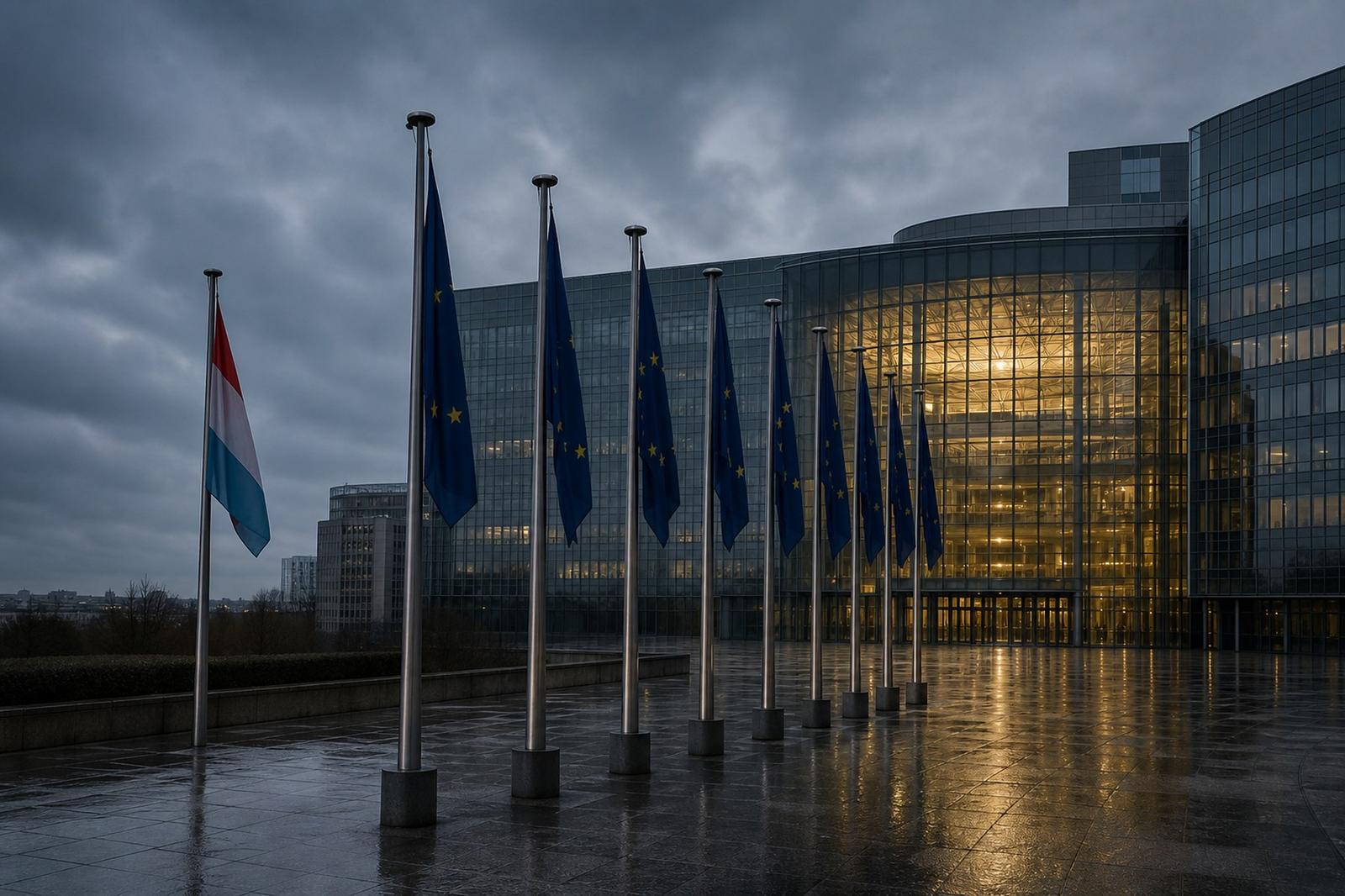
Luxembourg's foreign minister, Xavier Bettel, ran out of diplomatic vocabulary in Brussels on Monday. “I am at my wit's end,” he told the Luxembourg broadcaster RTL at the EU's Foreign Affairs Council, where the bloc's foreign ministers once again failed to agree on any new measure against Israel over the devastation in Gaza and record settler violence in the occupied West Bank.
The immediate casualty was an options paper from the European Commission on restricting trade with Israeli settlements — communities the EU itself considers illegal under international law. Some twenty member states had spent months demanding it. When it finally reached ministers on Monday, it sank within hours into a dispute over voting rules. The EU's chief diplomat, Kaja Kallas, opened the meeting by observing that “everybody agrees that the situation in the West Bank is really intolerable”; she closed it by conceding that although many governments want economic measures, “no consensus on that was reached today”.
Three options and a legal trap
The Commission paper sketches three ways of curbing settlement trade:
- prohibitive tariffs on goods produced in Israeli settlements;
- a special licensing regime for settlement exporters;
- a full or partial ban on settlement imports.
The sums involved are almost symbolic. A 2012 estimate — still the most commonly cited, and widely considered outdated — put the EU's imports from the settlements at some €300 million a year, a rounding error next to total EU–Israel trade of roughly €70 billion in 2024. The EU is Israel's largest trading partner, which is precisely why supporters see trade as the bloc's only real lever. “Even if it's just two euros, it's important that our trade policy is aligned with international law,” a senior EU diplomat told Euronews.
The trap is legal, not economic. The Commission treats the restrictions as foreign policy, which requires unanimity among the 27 — a threshold Israel's friends in the bloc can block indefinitely. France and Sweden, backed by Spain, Ireland, the Netherlands and Belgium, counter that import rules are trade policy, decided by qualified majority: 15 countries representing 65 per cent of the EU's population. According to remarks reported by The National, Kallas herself has pointed out that the Council's legal service reads it as a trade question. Several diplomats accused the Commission of “delay tactics”, noting that its paper landed too late for any decision before the next formal Council in October.
Berlin's wall, Rome's hesitation
Germany's foreign minister, Johann Wadephul, suggested before the meeting that verbal condemnation of violent settlers would suffice, and that ministers should concentrate on Gaza and Lebanon. His Italian counterpart, Antonio Tajani, warned that new measures could “put the Lebanon negotiations at risk” — Italy hosts the US-brokered talks — though diplomats say Rome could still swing behind a majority-based route. The Czech Republic completes the core group shielding Israel from consequences.
The pattern has become a ritual. On 15 June, ministers failed to agree sanctions on Israel's far-right national security minister, Itamar Ben-Gvir. In May, unanimity could be found only for sanctions on Hamas leaders and on figures of the violent settler movement — four entities and three individuals in all. And a review by the EU's diplomatic service concluded back in June 2025 that there were indications Israel was in breach of Article 2 of the EU–Israel association agreement, the human-rights clause underpinning the entire relationship. Germany, Italy and several eastern member states have blocked every attempt to act on that finding since.
Luxembourg's slow-burning anger
For Bettel, Monday capped a long hardening. Luxembourg formally recognised the State of Palestine on 22 September 2025, a step he took to the United Nations in New York alongside Prime Minister Luc Frieden. At the May Council he pleaded with colleagues that “you can't just turn a blind eye”. By June, in an interview with the Luxembourg Times, he was describing Gaza as “one of those situations where there's less and less grey”.
“I told Israel that we can't help them if they don't create conditions in which we can help them. What they're doing isn't justifiable — we have to tell them this.”
Bettel has even floated acting without Europe: around the recognition of Palestine, he said he would put a bill to Luxembourg's parliament allowing the Grand Duchy to take further measures of its own, including sanctions, according to RTL. For a founding member state whose foreign policy has always been built on European unity, it is a striking admission that unity has become the obstacle.
What happens next is procedural — which is precisely Bettel's complaint. Kallas said she would ask the Commission to prepare, before ministers reconvene, a concrete list of options for trade measures, including ways of keeping settlement goods out of the single market. Ministers also discussed Ukraine on Monday. On Israel, though, the EU's answer was once again a promise of more paperwork — and at least one foreign minister said out loud that he can no longer explain why.
Frequently asked
- Why can't the EU agree on measures against Israel?
- The European Commission classifies trade restrictions on settlements as foreign policy, which requires unanimity among all 27 member states — and Germany, Italy and the Czech Republic oppose them. Supporters argue import rules are trade policy, which needs only a qualified majority of 15 countries representing 65 per cent of the EU's population.
- What options are on the table?
- A Commission paper sets out three: prohibitive tariffs on settlement goods, a special licensing regime for settlement exporters, or a full or partial ban on imports from Israeli settlements in the occupied West Bank.
- What has the EU already done?
- In May 2026 ministers unanimously sanctioned Hamas leaders and figures of the violent settler movement — four entities and three individuals — but they failed in June to sanction minister Itamar Ben-Gvir, and have not acted on the June 2025 finding that Israel appears to breach Article 2 of the association agreement.
- Where does Luxembourg stand?
- Luxembourg recognised the State of Palestine in September 2025, backs settlement-trade measures, and foreign minister Xavier Bettel has floated a national bill enabling Luxembourg to take its own measures, including sanctions, if the EU cannot move.
Sources
Around Politics
A look at recent reporting on politics from the Étude newsroom.
Related by topic
Other Étude stories tagged with the same topics as this article.
More in Politics




Trending at Étude
Cybersecurity Britain's £1.9 Billion Hack, and a Trail That May Lead to Moscow
Money & Work Unemployment benefits in Luxembourg: who qualifies and how much is paid
The compute crunch The Scarcest Thing in Tech Is Now a Computer
Your rights at work Paid Holiday and Working Hours in Luxembourg: What the Law Guarantees