NATO 3.0
America tells Europe to lead its own defence — and Luxembourg does the maths
Pete Hegseth's six-month review of US forces in Europe leaves small, wealthy allies like the Grand Duchy facing an uncomfortable spending gap.
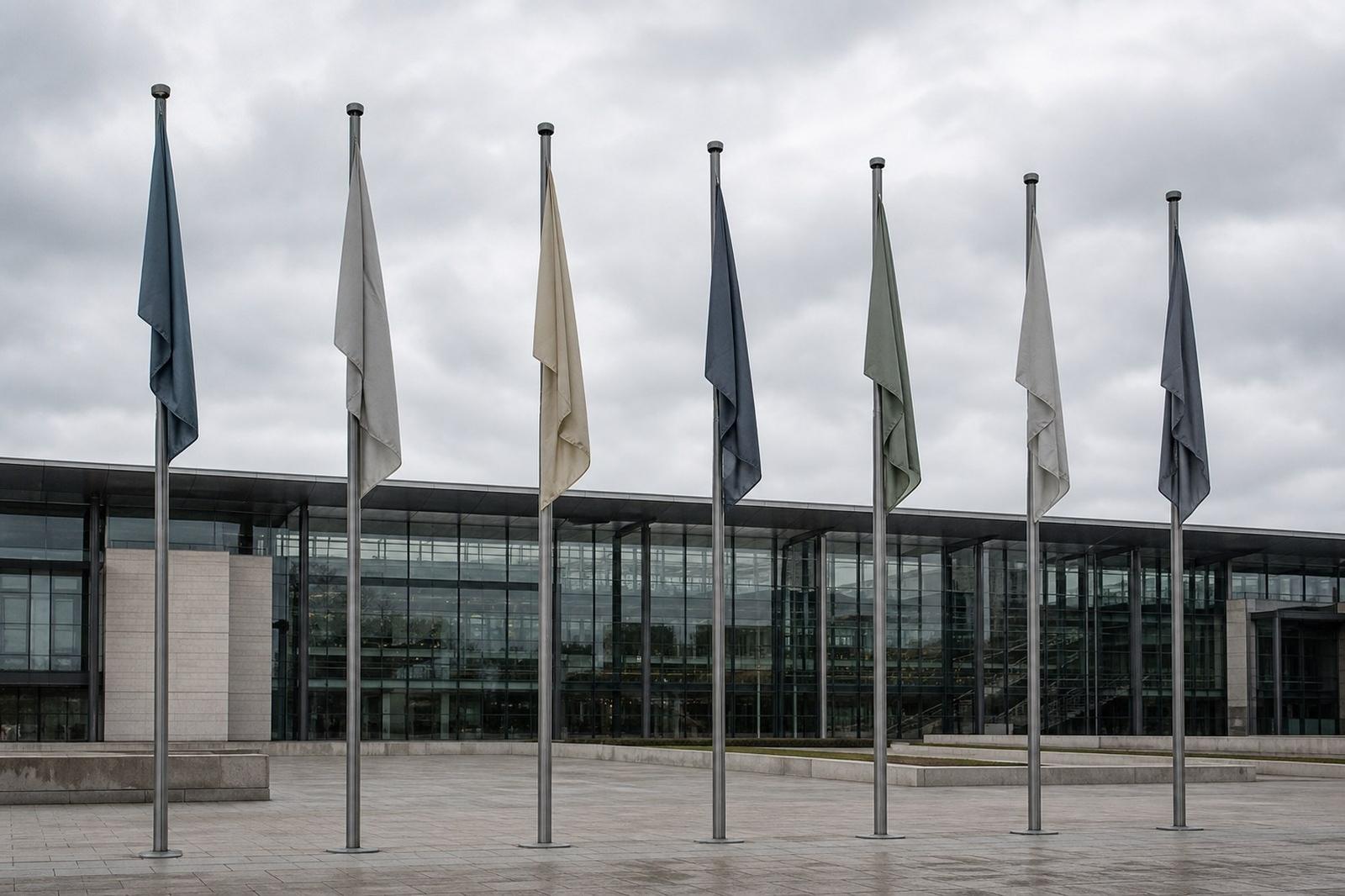
For decades, the United States has quietly underwritten the defence of Europe. In Brussels on Wednesday, Defense Secretary Pete Hegseth told the continent that the arrangement is ending — and started the clock.
Speaking after a meeting of NATO defence ministers, Hegseth announced a six-month Pentagon review of the American military footprint in Europe, the centrepiece of what the Trump administration is calling “NATO 3.0.” Its conclusions, he said, will depend on how quickly European governments take charge of their own security.
“This will be a real review. It will be designed to ensure that NATO is moving fast and irreversibly toward Europe leading, stepping up to take primary responsibility for the defense of Europe,” Hegseth said.
He did not soften the message. Hegseth accused allies of denying US forces “predictable access, basing and overflight” for operations against Iran — behaviour he branded “shameful” — and complained that “instead of tanks and fighters and air defenses, the focus has been on gender equity and climate change and defense austerity.” Some countries, he warned, would “fail” the coming assessment, while others would “pass with flying colors.”
A six-month verdict
The review will examine US force posture and basing across Europe and is expected to report within six months, drawing on input from American commanders, Congress and allied capitals. NATO Secretary-General Mark Rutte sought to show momentum, noting that European allies and Canada spent roughly $90 billion more on defence last year — a 20 percent increase over 2024.
For European capitals, the warning is unambiguous: the American security guarantee can no longer be assumed. A drawdown of US troops or of enabling capabilities — intelligence, air defence, logistics — would fall on Europeans to replace, at speed and at cost. The pressure is not new. At the Hague summit in June 2025, all 32 allies agreed to lift defence-related spending to 5 percent of output by 2035, split between 3.5 percent for core military spending and 1.5 percent for broader security investment.
Luxembourg's awkward arithmetic
Few allies illustrate the dilemma as sharply as Luxembourg. On 20 May, Defence Minister Yuriko Backes set out a trajectory the government calls measured:
- 2027: 2.1 percent of gross national income, about €1.37 billion
- 2028: 2.2 percent, about €1.51 billion
- 2029: 2.3 percent, about €1.67 billion
That is an increase of 0.1 percentage point a year. “This increase in defence spending is a measured response to the challenges arising from the current geopolitical context,” Backes said. Yet even 2.3 percent by 2029 sits well short of the 3.5 percent core target due by 2035. Luxembourg measures its effort against gross national income rather than GDP — a concession it secured because cross-border workers and a vast financial sector inflate output and depress any ratio. The accounting is defensible; the political optics, as Washington recalculates, are harder.
The agency in Capellen
There is an irony in the geography. Luxembourg is home to the NATO Support and Procurement Agency, the alliance's logistics and acquisition backbone, headquartered in Capellen and led by Stacy Cummings. The body that keeps allied fuel, ammunition and spare parts moving sits in one of the alliance's lowest spenders by share of output.
That hosting role is part of Luxembourg's answer to its critics: a small country can contribute through niche capabilities, cyber investment and institutional weight rather than raw percentages. Whether the argument survives a Pentagon review designed to reward those who “pass with flying colors” is the test now facing the Grand Duchy. At the next summit, in Ankara, allies are expected to present credible pathways toward the Hague target — including the country that hosts NATO's logistical engine.
Frequently asked
- What is “NATO 3.0”?
- It is the Trump administration's label for a reshaped alliance in which Europe takes primary responsibility for its own defence; its centrepiece is a six-month review of the US military presence in Europe.
- Why does Luxembourg measure defence spending against GNI rather than GDP?
- Cross-border workers and a large financial sector inflate Luxembourg's GDP, so gross national income is treated as a more realistic denominator for its spending ratio.
- What is the NSPA and why does it matter here?
- The NATO Support and Procurement Agency, based in Capellen, manages the alliance's logistics and procurement — meaning NATO's supply hub sits in one of its lowest spenders by share of output.
Sources
Around Politics
A look at recent reporting on politics from the Étude newsroom.
Related by topic
Other Étude stories tagged with the same topics as this article.
More in Politics



Trending at Étude
Luxembourg taxes Luxembourg's income-tax classes (1, 1a, 2) explained: who falls into each
Homeownership explained How to buy a property in Luxembourg: the process, costs and notary
Connectivity Mobile and internet providers in Luxembourg compared
Personal finance How the Luxembourg state pension works: retirement age, contributions and how it's calculated