Sustainable finance
An EU court in Luxembourg says the private jet can be 'green'
The General Court annuls Brussels' exclusion of business-jet manufacturing from the EU taxonomy, in a case brought by Dassault Aviation.
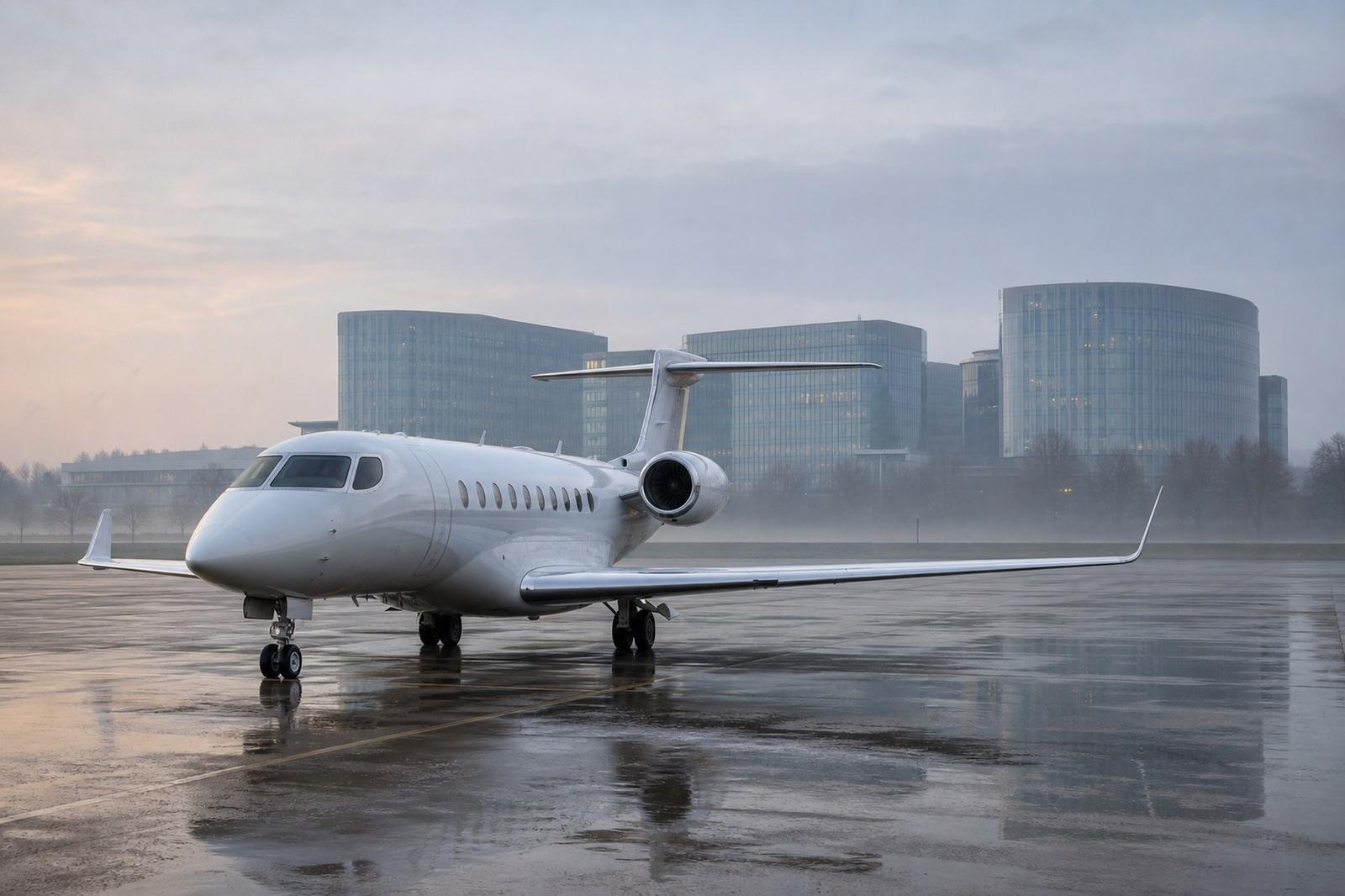
For three years the European Commission held that there was nothing sustainable about a business jet, and that the money spent building one had no place on the bloc's official list of climate-friendly investments. On Wednesday, in a courtroom on the Kirchberg plateau in Luxembourg, that position was struck down.
The General Court of the European Union annulled the Commission's 2023 decision to keep aircraft built for private and business aviation out of the EU taxonomy, the classification system that tells investors which economic activities the Union regards as environmentally sustainable. The challenge had been brought by Dassault Aviation, the French manufacturer whose Falcon jets dominate the European market, and which argued that the exclusion was unlawful. The judges agreed.
A metric that measured the wrong thing
At the centre of the case lay a deceptively simple question: what was the Commission supposed to be assessing? The taxonomy classifies economic activities, and the activity here was the manufacture of aircraft. To justify shutting business jets out, however, Brussels had relied on a figure describing how they are flown — carbon-dioxide emissions per passenger-kilometre, set against other modes of transport such as the train.
That was the wrong yardstick, the court found. The emissions figure concerns the operation of an aircraft, not its construction, and the per-passenger-kilometre parameter does not appear in the Taxonomy Regulation that the Parliament and member states actually adopted. The Commission, in other words, had built its case on a criterion of its own making.
The court did not stop there. Other forms of transport, it said, could not automatically be treated as low-carbon alternatives, because business aircraft offer something else entirely — flexibility, speed and connectivity. And in tallying the climate cost, the Commission had ignored the fact that such jets can be flown on sustainable aviation fuel.
Other modes of transport could not necessarily be seen as low-carbon alternatives, the General Court found, because private aircraft have specific characteristics in terms of flexibility, speed and connectivity.
Why a label is power
The taxonomy levies no fines and forbids nothing. It is, at bottom, a dictionary — a common definition of what may be sold to investors as green. But in a market where trillions of euros now move under environmental, social and governance labels, a definition is leverage. To sit inside the taxonomy is to be eligible for capital that is bound, by contract or by policy, to sustainable assets; to sit outside it is to be quietly cut off from that money.
For Dassault the stakes were as much reputational as financial. A ruling that business jets were categorically dirty would have shadowed the company in every conversation with a lender or a fund. Wednesday's judgment lifts that mark — at least until any appeal is decided.
It also complicates a tidy story Brussels has told about its own rulebook. Only last year the same court upheld the Commission's far more contentious choice to admit nuclear power and natural gas to the taxonomy. The system, regulators argued, could withstand scrutiny. It can; but the Dassault case shows it can be pushed the other way too, by a determined manufacturer with persuasive lawyers.
Luxembourg's quiet stake
The decision was handed down in the right city. Luxembourg is not only the seat of the EU's courts; it is the largest domicile for investment funds in Europe and a centre of gravity for the sustainable-finance products the taxonomy was written to discipline. Every loosening or tightening of the rules is registered first by the managers and administrators along the Grand Duchy's boulevards, who must decide, fund by fund, what they are entitled to call green.
For them the ruling is unsettling in its own way. The taxonomy was meant to end the arguments about greenwashing by replacing opinion with law. A court has now shown that the law itself is contestable, and that the border of sustainability can be moved outward as well as in.
The Commission has two months to appeal to the Court of Justice, the senior chamber a short walk away on the same plateau. It may well do so: the politics of stamping private aviation as green, in a summer when much of Europe is buckling under record heat, are not comfortable. For now, though, the law says what the regulators did not want it to say.
Frequently asked
- What is the EU taxonomy?
- It is a classification system that defines which economic activities the EU regards as environmentally sustainable, used to steer investors and curb greenwashing. It imposes no fines and bans nothing.
- Does the ruling force investors to treat private jets as green?
- No. It only means the manufacture of business aircraft can no longer be categorically excluded from the taxonomy; it does not mandate that anyone classify it as sustainable.
- Can the decision still be overturned?
- Yes. The European Commission may appeal to the Court of Justice within two months of the judgment.
Sources
Around Europe
A look at recent reporting on europe from the Étude newsroom.
More in Europe




Trending at Étude
Financial regulation Luxembourg regulator will let Israeli bond prospectus expire on 31 August
Startup Guide How to Start and Fund a Startup in Luxembourg: A 2026 Founder's Guide
Languages Luxembourg's three official languages — Luxembourgish, French and German — and where each is used
Public finances Luxembourg inherits about €400 million from an heirless estate — enough to pay for the tripartite package