Public health
France Detects Its First Ebola Case, and a Distant Epidemic Feels Closer
A humanitarian doctor flown home from Congo is isolated in a Paris ward. Officials call the wider risk low — but the outbreak behind the case is the fastest-spreading on record.
For the first time, France is treating a patient for Ebola. The country's health ministry confirmed on 24 June that a doctor who had returned from the Democratic Republic of Congo had tested positive for the virus, and that he had been placed in isolation on arrival in Paris.
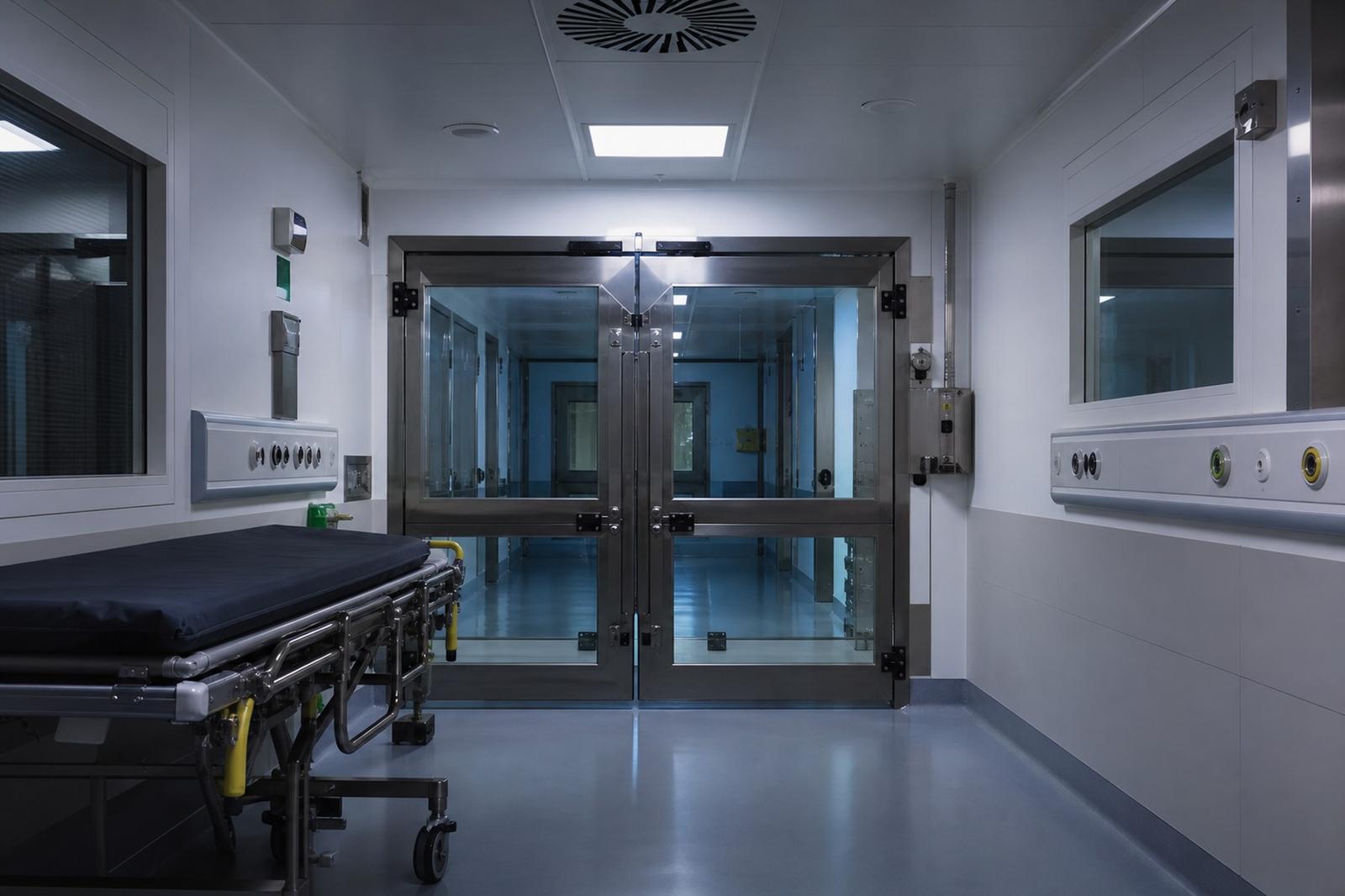
The man works for the medical charity ALIMA and had been on a mission in the DRC, where the deadliest Ebola outbreak in years is now in its second month. He flew into Paris on Tuesday from Kinshasa, carrying what doctors described as a low viral load, and was moved under secure conditions to a designated high-risk infectious-disease unit, where he is cared for in a negative-pressure isolation room.
"All precautionary measures, including the patient's isolation, were implemented upon arrival," the ministry said, noting that France has specialised capacity for handling highly transmissible diseases. An epidemiological investigation is under way to trace anyone the doctor may have been in contact with; those identified will be asked to isolate at home for 21 days, the length of the virus's incubation period, under close monitoring.
The epidemic behind the case
The single case in Paris is the visible edge of something far larger. On 15 May, the DRC declared its seventeenth Ebola outbreak, centred on Ituri province in the country's north-east. Two days later the World Health Organization classified it as a public health emergency of international concern, its highest level of alarm. As of 23 June, authorities had recorded more than 1,000 confirmed cases and over 260 deaths.
What unsettles epidemiologists is the speed. The WHO's Abdirahman Mahamud noted that this outbreak reached 250 deaths in 37 days — against 78 days during the West African epidemic of 2014 to 2016, which eventually killed more than 11,000 people. By case count it is already the second largest Ebola outbreak on record, and the fastest-growing of any to date. Cases have also crossed into Uganda.
The virus driving it is the Bundibugyo strain, a less common member of the Ebola family. That detail matters: the vaccines and antibody treatments developed against the better-known Zaire strain are not licensed for Bundibugyo. For now, doctors have only supportive care — fluids, oxygen, the management of complications — which, started early, still saves lives.
How alarmed should Europe be?
Officially, not very. The European Centre for Disease Prevention and Control put the risk to people travelling to areas of active transmission at "low", and to the general European population at "very low". History is on the side of that judgement: fewer than 30 Ebola cases have been detected outside Africa in the past half-century, and the virus spreads only through direct contact with the bodily fluids of someone already showing symptoms — not through casual proximity or the air.
"The risk to the rest of the world is low; whether it's France or other countries in Europe, they shouldn't overreact," said Tedros Adhanom Ghebreyesus, the WHO's director-general.
That measured tone is itself a product of hard experience. The 2014 epidemic, which produced a handful of imported cases and infections in Europe and the United States, taught health systems both how to contain the virus and how quickly fear can outrun it. The French response — rapid isolation, contact tracing, a register of specialised hospitals — is the choreography those years left behind.
A test of distance
For Europe, the case is less a medical threat than a reminder of how short the distance has become between a remote epidemic and a capital city. The doctor in the Paris isolation ward is also a marker of who carries the cost of these outbreaks: the clinicians and aid workers who go toward the danger. ALIMA and others are working in a region where, the head of the Africa CDC, Jean Kaseya, has noted, around a million people live in camps as internally displaced people — conditions in which a haemorrhagic fever spreads with brutal ease.
None of that changes the immediate calculus in France, where the message from officials is containment, not contagion. But it does explain why a single patient, isolated and stable, drew the attention of an entire continent. The numbers that matter are still the ones in Ituri — and they are still climbing.
Frequently asked
- How did Ebola reach France?
- A doctor working for the medical NGO ALIMA contracted the virus during a mission in the DRC and flew home to Paris from Kinshasa, where he was isolated and treated in a high-security unit.
- Is the wider public in Europe at risk?
- Officials say the risk is very low. Ebola spreads only through direct contact with the bodily fluids of a symptomatic person, not through the air, and fewer than 30 cases have been detected outside Africa in 50 years.
- Why is this particular outbreak so concerning?
- It is the fastest-growing Ebola outbreak on record and already the second largest, and it is caused by the Bundibugyo strain, against which no vaccine or specific treatment is licensed.
Sources
Around Europe
A look at recent reporting on europe from the Étude newsroom.
Related by topic
Other Étude stories tagged with the same topics as this article.
More in Europe



Trending at Étude
Cross-border rail CFL to halt all trains between Luxembourg and Thionville for five weeks this summer
Culture Luxembourg's cuisine: the national dish and traditional classics
Startup Guide How to Start and Fund a Startup in Luxembourg: A 2026 Founder's Guide
Financial regulation Luxembourg regulator will let Israeli bond prospectus expire on 31 August