Longevity
Luxembourg Lives Longest in Its Corner of Europe
New Eurostat figures place the Grand Duchy fifth in the EU for life expectancy and ahead of every neighbour in the Greater Region — and explain why.
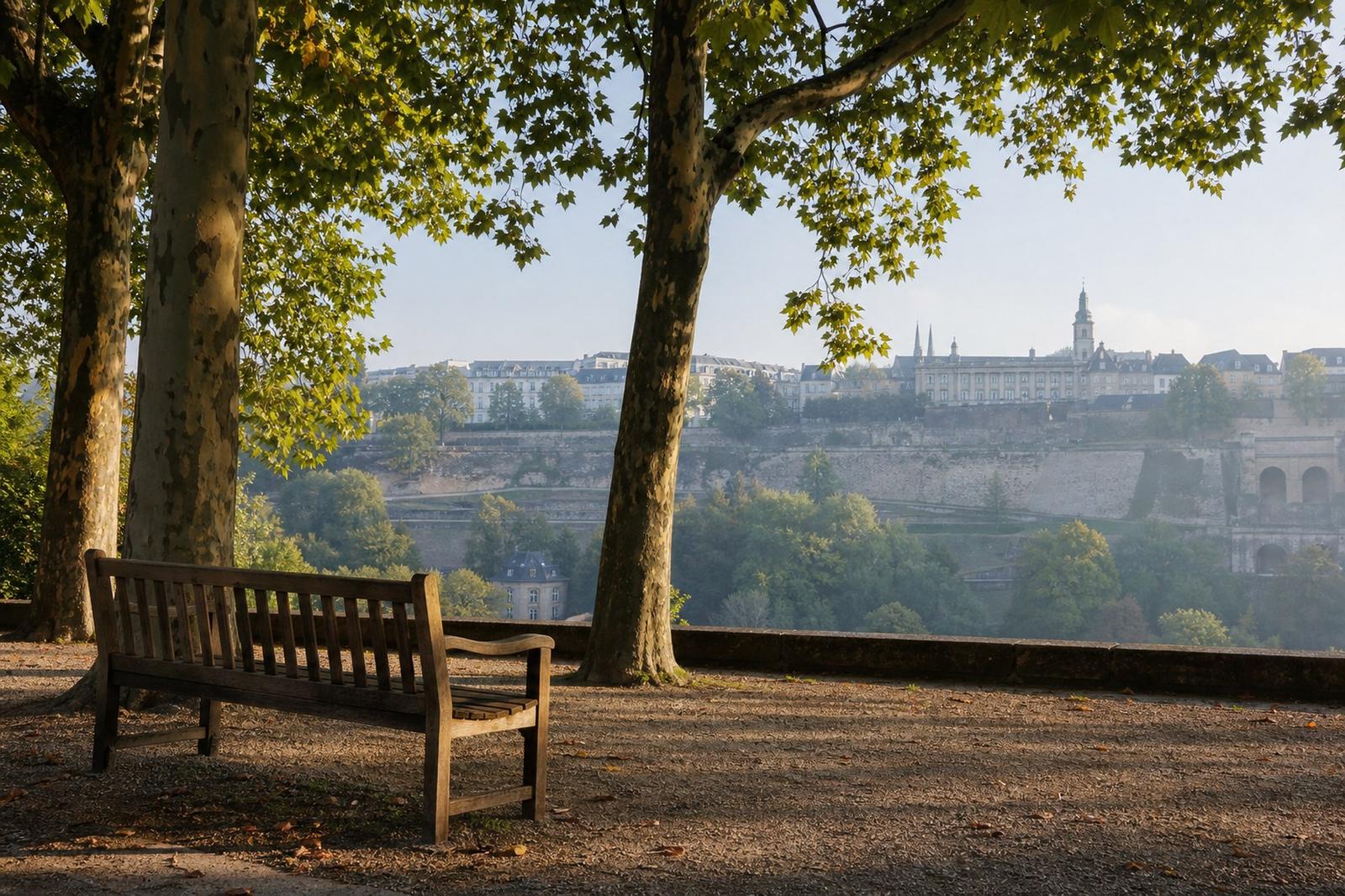
People in Luxembourg can expect to live longer than almost anyone else in the European Union — and longer than every one of their neighbours just across the border. That is the central finding of the latest demographic data from Eurostat, the EU's statistical office, which, in a small twist of European geography, does its counting from a tower on the Kirchberg plateau in Luxembourg City itself.
Life expectancy at birth in the Union reached 81.5 years in 2024, according to figures published in March 2026 — a marginal gain of 0.1 years on the year before, but a clear step past the pre-pandemic mark of 2019. Luxembourg sits comfortably above that line at around 83.4 years, the fifth-highest figure among the EU's twenty-seven members, behind only Spain, Sweden, Italy and Cyprus.
“In 2024, life expectancy at birth in the EU was 81.5 years, indicating a 0.1-year increase from 2023,” Eurostat reported.
A grand duchy of long lives
The national average conceals two rather different fates. The country's statistics institute, STATEC, puts female life expectancy at 85.3 years in 2024 and male life expectancy at 81.2 — a difference of about four years, narrower than the EU-wide gap of 5.2 years between women and men. That convergence is itself a sign of progress, since longevity has tended to rise fastest where it once lagged.
What sets the country apart is not only how long its residents live but how young its population remains. The median age in the Grand Duchy is 39.7 years, against an EU average of 44.7, and only around 15 percent of residents are aged 65 or over, compared with 21.6 percent across the Union. Decades of immigration and a large cross-border workforce have kept the country demographically younger than France, Belgium or Germany next door.
The map of European longevity
Zoom out, and the continent divides neatly in two. The longest-living region in the EU is the Spanish capital area of Madrid, at 85.7 years, followed by the Italian provinces of Trento and Bolzano and by Stockholm, each at 85.0. At the other end sit the regions of north-western Bulgaria — Severozapaden recorded just 73.9 years — alongside parts of Hungary and the French overseas department of Mayotte. Close to twelve years separate the Union's longest- and shortest-lived regions.
Within its own corner of the map — the cross-border Greater Region it shares with French Lorraine, German Saarland and Rhineland-Palatinate and Belgian Wallonia — Luxembourg comes out ahead of every neighbour. The ranking matters more than it might seem, because the same labour market straddles those borders every working day.
- Spain — about 84.0 years
- Sweden — about 83.8 years
- Italy — about 83.7 years
- Cyprus — about 83.5 years
- Luxembourg — about 83.4 years
Wealth, work and the cross-border question
Longevity tracks prosperity with uncomfortable reliability, and few places are as prosperous as Luxembourg. High incomes, a dense and well-funded health system, little heavy industry and a comparatively healthy lifestyle all push the figure up. But the Grand Duchy's good fortune rests in part on the labour of about half its workforce, who commute in each morning from regions that, statistically, do not live as long.
That is the quiet paradox behind the data. A frontalier who spends a career working in Luxembourg is counted, for these purposes, in the region where they sleep — in Thionville or Trier, not on the Kirchberg. The longevity crown, in other words, says something about where wealth is concentrated, not only about who is healthy. For an economy that lives off its neighbours, the gap is less a point of pride than the outline of an imbalance it has every reason to watch.
None of which dims the basic achievement. A child born in Luxembourg in 2024 can expect more than eight decades of life — a horizon that would have seemed fantastical a century ago, and one that still eludes much of the Union. The task now, demographers note, is less about adding years to life than about adding health to those years.
Frequently asked
- Where does Luxembourg rank in the EU for life expectancy?
- Fifth among the 27 member states, behind Spain, Sweden, Italy and Cyprus, at about 83.4 years.
- Which EU region lives longest?
- The Spanish capital region of Madrid, at 85.7 years; the lowest is north-western Bulgaria's Severozapaden, at 73.9 years.
- Why does the cross-border workforce matter to these figures?
- About half of Luxembourg's workers commute in from neighbouring regions and are counted there, so the data reflect where wealth is concentrated, not only health.
Sources
Around Greater Region
A look at recent reporting on greater region from the Étude newsroom.
Related by topic
Other Étude stories tagged with the same topics as this article.
More in Greater Region



Trending at Étude
Luxembourg taxes Luxembourg's income-tax classes (1, 1a, 2) explained: who falls into each
Homeownership explained How to buy a property in Luxembourg: the process, costs and notary
Connectivity Mobile and internet providers in Luxembourg compared
Personal finance How the Luxembourg state pension works: retirement age, contributions and how it's calculated