Employment without security
More Luxembourg workers seek free care as they struggle to pay medical bills
Médecins du Monde says people with jobs, homes and CNS coverage are appearing more often at its clinics because they cannot meet patient charges or pay for prescribed medicine.
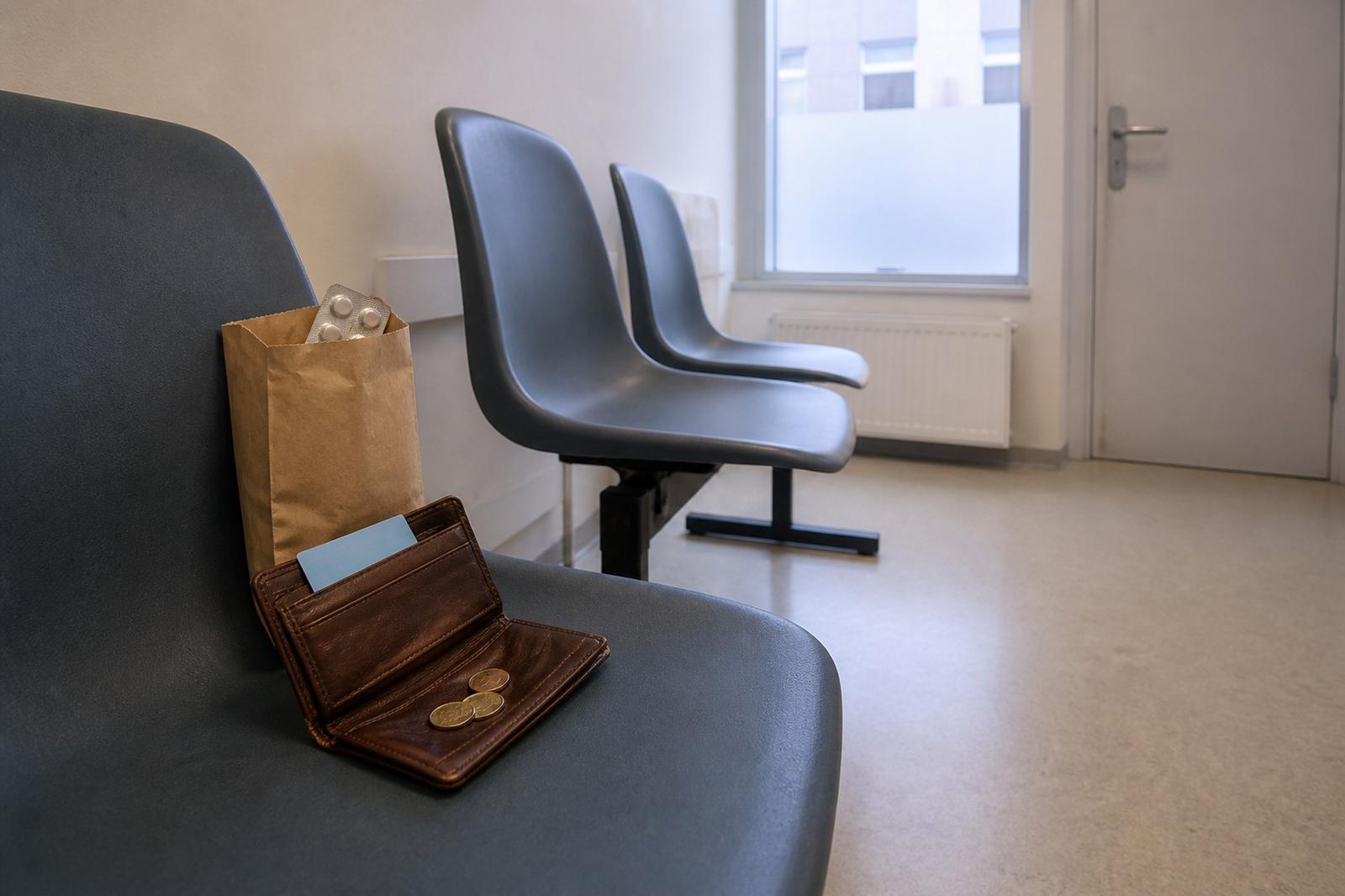
A job, a home and a CNS card are supposed to place a resident securely inside Luxembourg’s healthcare system. Médecins du Monde is encountering a different reality: people who possess all three but still arrive at its free clinics because the patient share of a bill or the cost of prescribed medicine is beyond their immediate means.
Bernard Thill, the charity’s honorary president, says these employed patients are appearing more frequently. They are not the population for whom the organisation’s services were originally designed. Its clinics principally assist people without social protection, including those who are homeless, undocumented or caught in an administrative gap. Their presence therefore turns the familiar idea of the working poor into a concrete health warning: insurance on paper does not necessarily produce affordable care in practice.
A clinic records the spillover
Médecins du Monde’s 2025 annual report counted 1,236 different beneficiaries, up from 1,209 in 2024. Sixty-four per cent were visiting the organisation for the first time. Patients represented 77 nationalities, and 72 per cent were men.
Those totals conceal a substantial volume of treatment. Volunteers delivered 3,010 individual consultations at the organisation’s drop-in clinics and winter shelter service. Forty-nine patients had to be directed to emergency care, while 69 people with chronic illnesses received continuing treatment. The charity also recorded 301 dental consultations for 110 patients, 168 physiotherapy sessions and 74 appointments involving psychological or psychiatric care.
Medication is itself a major part of the bill. Médecins du Monde says it paid €90,000 for medicines prescribed by its doctors in 2025. That expenditure matters to the working-poverty debate because the barrier is not always the absence of a diagnosis or insurance affiliation. It can arise after the consultation, when a patient is expected to finance an uncovered share or obtain the medicine needed to follow the treatment.
“Médecins du Monde does not under any circumstances want to replace the mainstream health system, but above all aims to open access to that system to as many of its beneficiaries as possible,” the organisation says in its annual report.
Work no longer guarantees distance from poverty
The warning is consistent with European income data. Eurostat found that 13.4 per cent of working adults in Luxembourg were at risk of poverty in 2024, the highest proportion in the European Union. The EU average was 8.2 per cent. The indicator covers employed and self-employed people aged 18 or over whose household disposable income falls below 60 per cent of the national median after social transfers.
That is a relative measure, not a count of destitution, and it should not be confused with the number of patients using one charity. It nevertheless describes a country in which the lower end of the income distribution has failed to keep pace with the middle. Luxembourg’s high median income also produces a high poverty threshold, while equally high housing and everyday costs determine what the remaining income can actually buy.
STATEC’s latest social-cohesion report put the overall at-risk-of-poverty rate at 18.1 per cent in 2024, corresponding to a monthly threshold of €2,540 for one person. It estimated that more than 130,000 residents faced poverty or social exclusion. Pre-committed expenses consumed an average of 30 per cent of household income, with housing accounting for three-quarters of that burden.
The figures explain how paid work and hardship can coexist. A salary must support an entire household, not only the person earning it. Rent, dependent children, insecure hours, part-time work and the income of other adults all affect whether employment provides protection. A January 2026 European Commission analysis concluded that job quality, household composition and income support all shape in-work poverty; even decent wages may be insufficient in households with dependants.
A legal bridge remains unfinished
Luxembourg has operated the Couverture universelle des soins de santé, or CUSS, as a route into ordinary care for people residing in the country without access to the public system. Médecins du Monde handled more than 280 CUSS consultations in 2025 for 38 affiliated people and 15 co-affiliates. Its social workers assess eligibility, prepare applications and follow patients after coverage is granted.
The mechanism remains limited in reach and has not yet acquired the statutory foundation sought by the charity. A parliamentary proposal creating a right to universal healthcare coverage was filed on 29 April 2026. Dossier 8744 was presented in the health and social-security committee on 29 June and remains in committee.
The government, meanwhile, has placed administrative simplification and targeted support at the centre of its anti-poverty policy. Measures announced for 2027 include a consolidated cost-of-living supplement, automatic renewals for eligible households and a €3,000 annual payment for low-income families. These may ease pressure, particularly where rent absorbs most disposable income. They do not erase the immediate evidence from the consultation room.
The policy test is consequently narrower and more demanding than whether Luxembourg formally provides insurance or maintains high employment. It is whether an ill person can use that coverage, obtain the prescribed treatment and continue it without choosing between health and the next essential household bill.
Frequently asked
- Why are insured workers using a free clinic?
- Médecins du Monde says some employed residents cannot afford patient charges or prescribed medicines even though they have housing and CNS coverage.
- How many people did Médecins du Monde assist in 2025?
- Its annual report records 1,236 different beneficiaries, 64 per cent of whom were first-time visitors.
- What is Luxembourg’s in-work poverty rate?
- Eurostat measured 13.4 per cent in 2024, compared with an EU average of 8.2 per cent.
- Has universal healthcare been placed in law?
- Not yet. Parliamentary dossier 8744, filed on 29 April 2026, remains under consideration in committee.
Sources
Around Luxembourg
A look at recent reporting on luxembourg from the Étude newsroom.
Related by topic
Other Étude stories tagged with the same topics as this article.
More in Luxembourg




Trending at Étude
Banking Luxembourg bank interest rates in 2026: savings and mortgage figures published by Spuerkeess, BGL, Raiffeisen and BIL
Languages Luxembourg's three official languages — Luxembourgish, French and German — and where each is used
Travel & Climate Weather and Climate in Luxembourg: What to Expect, Month by Month
Family finance Child Benefit in Luxembourg: Amounts and How to Claim the Allocations Familiales