Infrastructure and nature law
Mouvement Ecologique challenges legal case for €390m Alzingen bypass
The government says the road will relieve Hesperange; environmentalists question whether its impact on protected habitats can be legally justified.
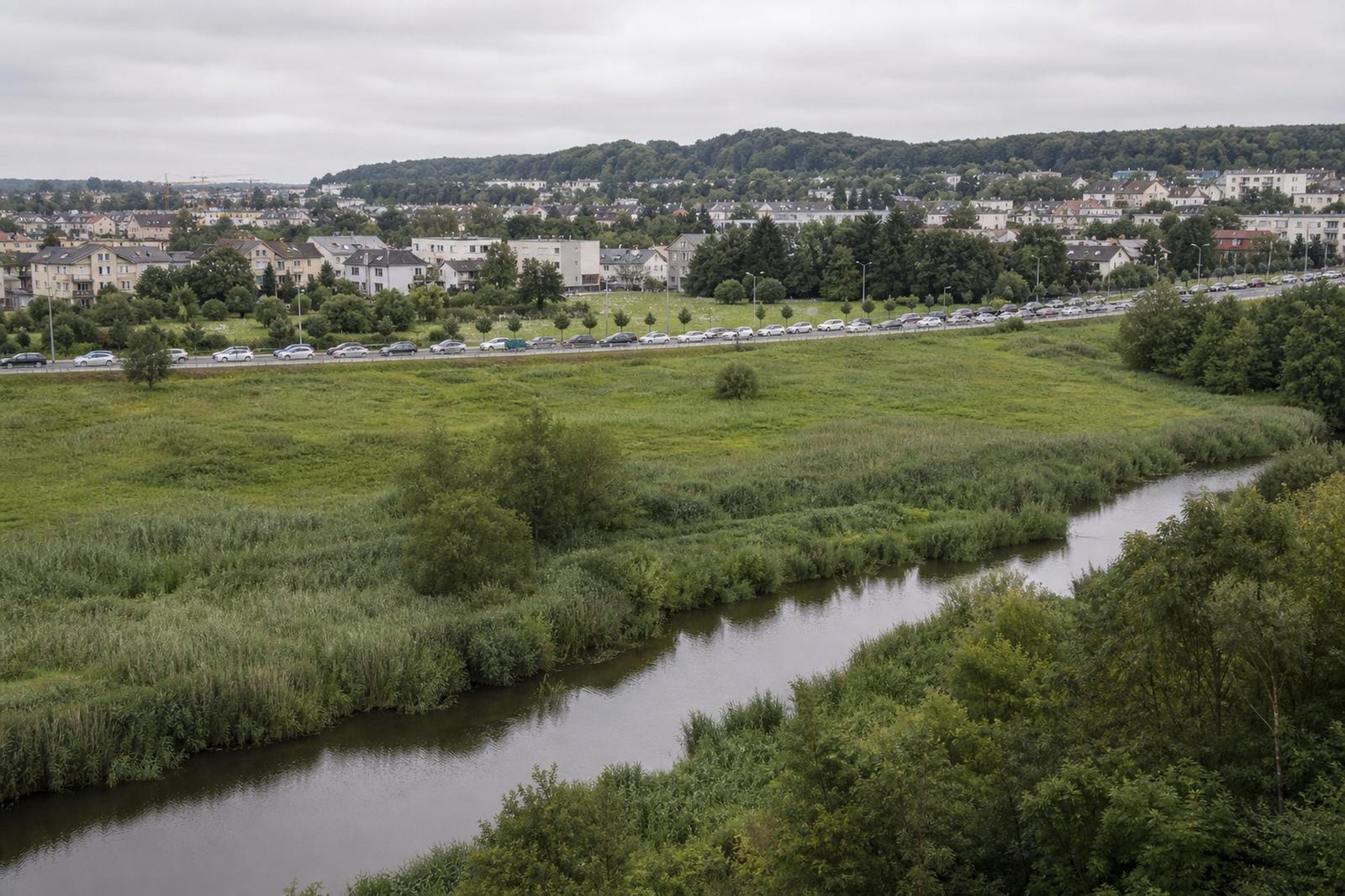
Luxembourg’s plan to build a €390 million bypass around Alzingen and Hesperange faces renewed scrutiny from Mouvement Ecologique, which says the state has not demonstrated a sufficiently robust legal basis for damaging protected habitats in the upper Alzette valley.
The intervention brings the environmental conditions attached to one of the country’s largest planned road projects back to the centre of the debate. The government approved the financing bill on 15 May, presenting the bypass as the answer to a bottleneck through which approximately 20,000 vehicles pass every day. Major work in environmentally sensitive areas is not expected to begin before preparatory measures are completed in 2032, and the road is provisionally due to be finished at the end of 2037.
Mouvement Ecologique is not claiming that a court has already invalidated the project. Its argument is that the state’s justification and assessment of alternatives may be vulnerable under Luxembourg and European nature law. That distinction matters: the present development is a legal warning and political challenge, not a judgment stopping construction.
A road through protected ground
The north-western route selected by the government is 6.032 kilometres long and includes 22 structures: eight underpasses, four overpasses, seven hydraulic structures and three wildlife crossings. It would link the Alzingen side of the N3 with the Howald area, running near existing motorway and railway infrastructure.
The environmental difficulty was acknowledged when the route was selected in 2022. The government concluded that none of the variants it examined could avoid significant effects on the Natura 2000 network. It therefore invoked imperative reasons of overriding public interest, citing public safety, health and economic considerations.
The road also depends on changing the protected status and boundaries of the Réiserbann national reserve. In the upper Alzette Natura 2000 site, the government plans to renaturalise the river and tributaries and create habitats for reproduction, rest and feeding before substantial construction begins in sensitive parts of the valley.
Mouvement Ecologique argues that these safeguards do not resolve the underlying legal questions. It says the environmental assessment showed only limited improvements in air quality and noise for existing residents, while the road would seal soil, affect a floodplain and disturb habitats. Its objection also cites 29 species under strict European protection, including four bird species recorded only within the special protection area.
The dispute over alternatives
A central point is whether the state examined less damaging options with enough depth. The organisation says the no-build scenario and possible transport alternatives were treated too briefly. It has questioned whether stronger public transport, park-and-ride capacity near the borders and a tunnel option received the comparative analysis required before authorities chose a surface road.
The government’s case rests on a broader redesign of mobility through Hesperange. Regional transit traffic would move off the N3, while modal filters and a shared-space scheme would give more room to buses, bicycles and pedestrians in the centre. The bypass is part of the PNM 2035 national mobility plan rather than a stand-alone road proposal.
“Hesperange and its surroundings have suffered for too long: 20,000 vehicles cross its residential districts every day,” Mobility and Public Works Minister Yuriko Backes said when the financing bill was approved.
That daily burden is the project’s strongest argument. It is also why the legal test will turn on evidence rather than on whether congestion exists. Authorities must show that the public interest served by the selected route is sufficiently important, that a less harmful feasible alternative is unavailable and that ecological compensation can preserve the coherence of the protected network.
Long timetable, live legal risk
The financing bill does not itself remove the remaining environmental, land and technical hurdles. The state must acquire property, complete engineering studies, secure permits and implement advance habitat measures. The government says the environmental work expected by 2032 is a prerequisite for large-scale construction in sensitive zones.
That sequence gives environmental groups several points at which to examine or contest individual decisions. Any future case would depend on the wording, evidence and timing of the relevant authorisations; a general political objection does not automatically suspend the project.
The debate now has two legitimate public interests in direct conflict. Residents want relief from a heavily trafficked corridor and space for safer local mobility. Nature law requires the state to treat protected habitats as more than an obstacle to be compensated after a route has been chosen. At €390 million and with completion more than a decade away, the Alzingen bypass will proceed only if Luxembourg can defend both the transport logic and the environmental sequence of the project.
Frequently asked
- Has a court stopped the Alzingen bypass?
- No. The current development concerns legal objections raised by Mouvement Ecologique, not a court ruling invalidating or suspending the project.
- Why does the government want the bypass?
- It says the road would divert regional traffic from the N3 and relieve residential areas through which about 20,000 vehicles pass daily.
- Why is Natura 2000 relevant?
- The selected route has significant effects on the protected upper Alzette valley, requiring a strong public-interest justification, assessment of alternatives and ecological compensation.
Sources
Around Luxembourg
A look at recent reporting on luxembourg from the Étude newsroom.
Related by topic
Other Étude stories tagged with the same topics as this article.
More in Luxembourg



Trending at Étude
Cross-border rail CFL to halt all trains between Luxembourg and Thionville for five weeks this summer
Languages Luxembourg's three official languages — Luxembourgish, French and German — and where each is used
Banking Luxembourg bank interest rates in 2026: savings and mortgage figures published by Spuerkeess, BGL, Raiffeisen and BIL
Safety Guide Safety in Luxembourg: A Guide for Visitors and Residents