Aviation
Luxair orders five Boeing and Embraer jets to expand its fleet
The national carrier has firmed two 737-10s and three E190-E2s, pairing more seats on busy routes with smaller jets for frequent business services.
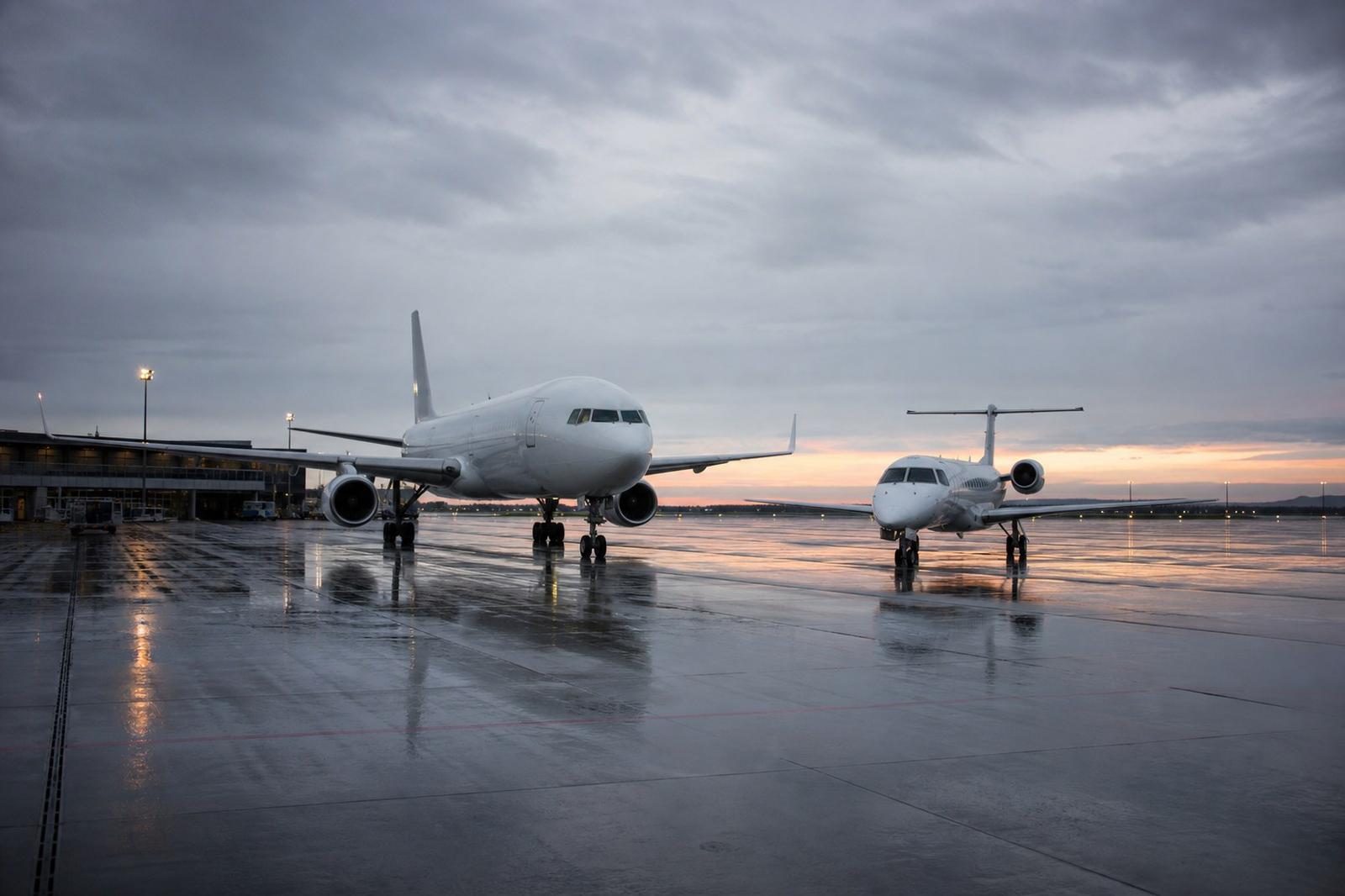
Luxair has committed to five more passenger aircraft in a substantial expansion of the fleet serving Luxembourg Airport, placing firm orders for two Boeing 737-10s and three Embraer E190-E2 regional jets.
The agreements, announced at the Farnborough International Airshow on Tuesday, turn rights that Luxair already held into binding orders. The airline converted two Boeing options into firm commitments and obtained options for two further 737-10s. It separately converted purchase rights for three E190-E2s and secured another purchase right from Embraer.
Taken together, the decisions give Luxair a clearer two-tier fleet for the next phase of its growth. The 213-seat 737-10 is intended for routes where demand justifies greater capacity, while the planned 100-seat E190-E2 can sustain frequent services on thinner business markets without requiring the airline to fill a much larger aircraft.
A larger order book for both manufacturers
Luxair’s firm Boeing backlog now comprises 12 aircraft: eight 737-8s and four of the larger 737-10. The latest transaction concerns the two 737-10 options attached to the airline’s 2024 agreement; those options are now firm orders, and two new options preserve room for another expansion.
Reuters reported that aviation consultancy IBA estimated the value of the two newly firmed Boeing aircraft at about $124 million after typical discounts. Luxair and Boeing did not disclose a contractual price.
The Embraer agreement brings Luxair’s firm E2 order book to nine aircraft. The airline had previously ordered six E195-E2s, four of which are already operating. The three new commitments are for the smaller E190-E2, with the first expected to join the fleet at the end of 2028.
Using both E2 variants gives Luxair commonality in areas such as flight-deck operations and maintenance while allowing it to match capacity more closely to individual routes. That matters at Findel, where the national carrier must combine high-frequency links to European business centres with larger leisure flows during peak periods.
“The Boeing 737-10 provides the additional capacity, operational efficiency and flexibility we need to support future demand,” Luxair chief executive Gilles Feith said.
More capacity, but execution remains the test
The order is a statement of long-term confidence rather than an immediate addition of seats. Aircraft manufacturing remains constrained by supplier bottlenecks, and the 737-10 was still completing key certification work when Boeing issued a programme update on 16 July. Luxair has not announced delivery dates for the newly firmed Boeing jets.
The E190-E2 schedule extends still further into the future. Its planned arrival from late 2028 means route decisions, crew requirements and the retirement or reassignment of older aircraft will be spread over several years.
That phased approach reduces the risk of introducing too much capacity at once, but it also leaves Luxair dependent on two manufacturers delivering to schedule. Airlines worldwide have faced disrupted fleet plans when delayed aircraft forced them to retain older jets or obtain short-term capacity elsewhere.
The choice of two aircraft sizes offers a commercial hedge. On strong leisure and business routes, the 737-10 can carry more passengers per departure. The E190-E2 is designed for markets where frequency is more valuable than maximum seat count, giving Luxair the option of keeping several daily rotations without deploying a 737.
The environmental claim needs context
Luxair says the new-generation Boeing aircraft will use about 20% less fuel and produce correspondingly fewer emissions than the aircraft they replace. That is a manufacturer-and-airline comparison per flight, not a promise that Luxair’s total emissions will fall.
If the larger fleet allows the airline to operate more flights or carry substantially more passengers, absolute emissions could still rise even as fuel consumption per seat improves. The environmental outcome will therefore depend on how quickly older aircraft leave service, how intensively the new jets fly and how demand develops.
The immediate significance for Luxembourg is nevertheless concrete. The national carrier is locking in scarce future production positions and deciding what kinds of connections it expects to operate from Findel late in the decade. Its plan combines larger aircraft for concentrated demand with regional jets suited to maintaining frequency—a consequential choice for a small country whose international business links depend heavily on air travel.
Frequently asked
- How many aircraft has Luxair newly ordered?
- Five firm aircraft: two Boeing 737-10s and three Embraer E190-E2s.
- How will the two aircraft types be used?
- The 213-seat 737-10 is intended for higher-demand routes, while the 100-seat E190-E2 is suited to frequent services on smaller business markets.
- When will the new aircraft arrive?
- The first E190-E2 is expected at the end of 2028. Luxair has not disclosed delivery dates for the newly firmed 737-10s.
Sources
Around Luxembourg
A look at recent reporting on luxembourg from the Étude newsroom.
Related by topic
Other Étude stories tagged with the same topics as this article.
More in Luxembourg



Trending at Étude
Intelligence Japan launches its first central spy agency since 1945 to counter Russia and China
Public finances Luxembourg inherits about €400 million from an heirless estate — enough to pay for the tripartite package
Circular economy EU bans large companies from destroying unsold clothes and shoes
Banking Luxembourg bank interest rates in 2026: savings and mortgage figures published by Spuerkeess, BGL, Raiffeisen and BIL