Travel guide
The Best Time to Visit Luxembourg, Season by Season
When to come for mild weather and festivals, when the Moselle vineyards turn gold, and when the Christmas markets glow, plus how to dodge the crowds and the high prices.

Picking the best time to visit Luxembourg comes down to a trade-off between weather, events and crowds. The short answer: late spring to early autumn (May to September) is the best overall window, but every season has a reason to come.
Late spring to early autumn (May–September): the sweet spot
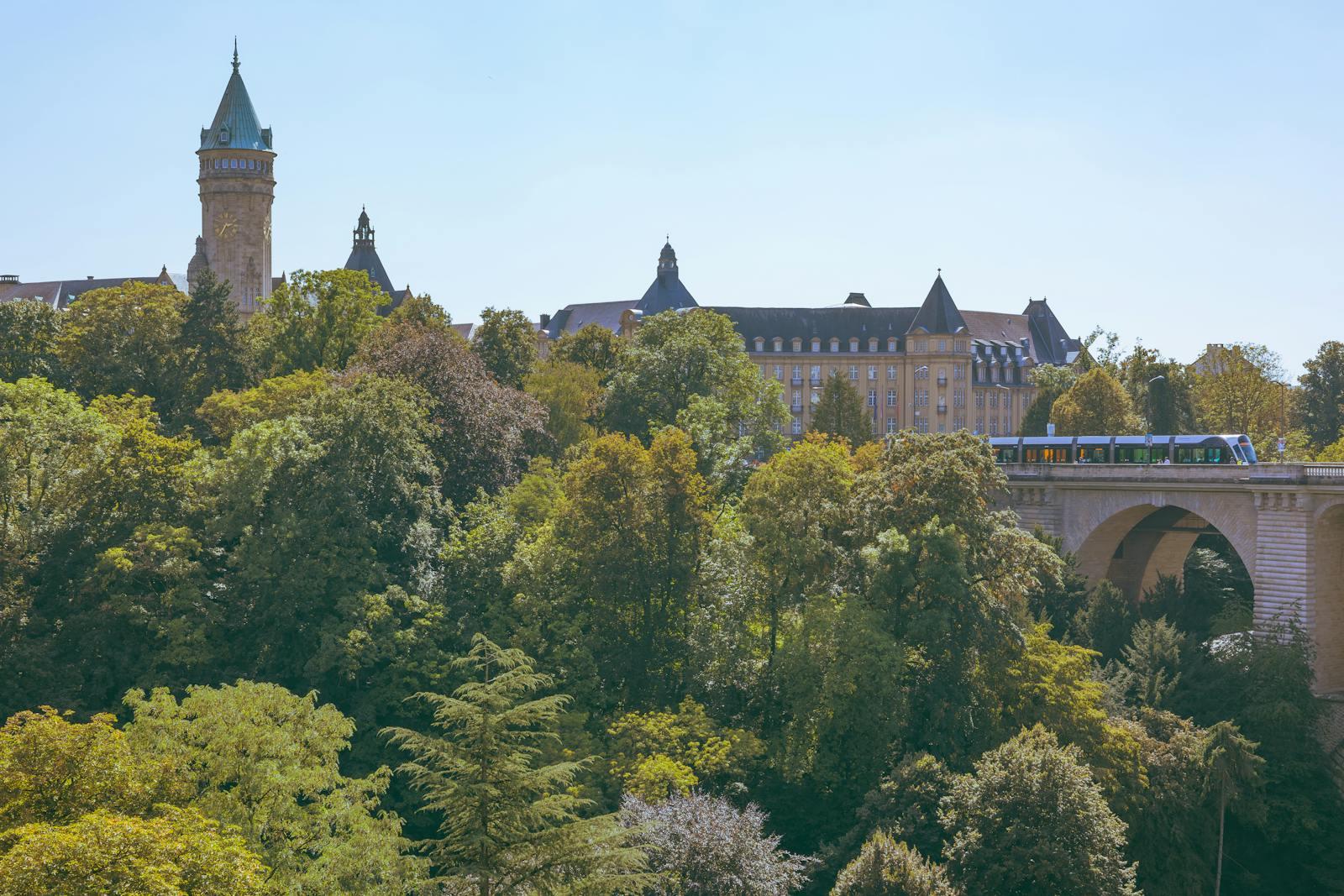
This is when the Grand Duchy is at its most welcoming. Summer daytime highs in Luxembourg City average around 22 to 24 degrees Celsius, with July the warmest month, and the country enjoys roughly 6 to 7 hours of sunshine a day, far more than the 1 to 3 hours of midwinter (Climates to Travel). Long daylight hours stretch well into the evening, terraces fill up across the Ville Haute and the Grund, and the network of hiking trails through the Mullerthal and the Ardennes is at its greenest.
The calendar is packed, too:
- National Day on 23 June is the headline event, with fireworks, a torchlight procession and concerts the evening before, then a military parade and the Te Deum on the day itself. The date was moved from January to June back in 1961 precisely so people could celebrate outdoors in warmer weather (Office Holidays).
- The Schueberfouer, the largest funfair in the Greater Region, runs from 21 August to 9 September 2026 on the Champ du Glacis and draws close to two million visitors (Visit Luxembourg).
May and June are a particular delight: the countryside is in full bloom, the days are already long but the heaviest crowds have not yet arrived, and you can pair city sightseeing with the casemates and the UNESCO-listed old quarter in comfort. The catch is that July to early September is peak season: hotel rates are highest and the most popular sights are busiest, especially around National Day and during the Schueberfouer, so book accommodation well ahead if you are travelling then.
Autumn (September–October): wine, harvest and foliage
If you prefer mellow light and fewer people, autumn is hard to beat. Temperatures cool gradually and the Moselle valley turns gold as the grape harvest gets under way. The festival season is built around it: the Grape and Wine Festival in Grevenmacher is held on the second weekend of September, the Riesling Open in Wormeldange the third weekend, and the Hunnefeier in Schengen marks the end of the harvest on the third weekend of October (luxembourg.public.lu).
By the second half of autumn the weather turns grey, wet and windy, so pack a waterproof and aim for late September or early October if you want the foliage without the gloom.
Winter (December): Christmas markets and Winterlights
December is cold, often grey and short on daylight, but Luxembourg City answers with Winterlights, its festive season of Christmas markets, illuminations and concerts. The 2026 edition runs from 20 November 2026 to 3 January 2027 (Ville de Luxembourg), filling Place Guillaume II and Place de la Constitution with chalets, a Ferris wheel and mulled wine. It is atmospheric rather than balmy, so dress for temperatures hovering near freezing.
The quiet shoulder months: cheaper and calmer
For budget travellers, the shoulder months, roughly March to April and November, plus January to February after the markets close, offer the lowest prices and the smallest crowds. The weather is the obvious compromise: cool, often damp, with foggy spells and limited daylight in deep winter, when the city sees just 1 to 3 hours of sunshine a day. But museums, the casemates and the city's restaurants are far less busy, transport and hotels are cheaper, and you will rarely struggle to find a table or a room. Early spring also offers a first taste of warmer days without the summer price tag, making March and April a smart choice for travellers who care more about value than guaranteed sunshine.
Whichever season you choose, check the forecast before you pack, as Luxembourg's weather is changeable even in summer, when sunshine alternates with showers and the odd thunderstorm. For a fuller picture, see our companion guide to Luxembourg's climate.
Frequently asked
- What is the best overall time to visit Luxembourg?
- Late spring to early autumn, roughly May to September, is the best overall window. Daytime temperatures average around 20 to 25 degrees, days are long, terraces and hiking trails are open, and the events calendar is at its fullest.
- When is Luxembourg's National Day?
- National Day is celebrated on 23 June, with fireworks, a torchlight procession and concerts the evening before on 22 June. The date was moved from January to June in 1961 so celebrations could be held outdoors in warmer weather.
- When is the Schueberfouer funfair held?
- In 2026 the Schueberfouer runs from 21 August to 9 September on the Champ du Glacis in Luxembourg City. It is the largest funfair in the Greater Region, attracting close to two million visitors.
- When should I visit for the Moselle wine harvest?
- September and October. The Grape and Wine Festival in Grevenmacher is the second weekend of September, the Riesling Open in Wormeldange the third weekend, and the Hunnefeier in Schengen marks the end of the harvest on the third weekend of October.
- Is December a good time to visit for Christmas markets?
- Yes, if you don't mind the cold. The Winterlights season of Christmas markets and illuminations runs from 20 November 2026 to 3 January 2027, though daylight is short and temperatures hover near freezing.
- When is Luxembourg cheapest and least crowded?
- The shoulder months, roughly March to April, November, and January to February after the markets close, bring the lowest prices and smallest crowds, with cool, often damp weather as the trade-off.
Around Culture
A look at recent reporting on culture from the Étude newsroom.
Related by topic
Other Étude stories tagged with the same topics as this article.
More in Culture


How to buy a property in Luxembourg: the process, costs and notary

Kyiv Holds the Line, and the West's Economic Weapons Start to Bite
Trending at Étude
Somalia Somalia Prepares First Offshore Oil Drilling After Decades of Delays
Cross-border rail CFL to halt all trains between Luxembourg and Thionville for five weeks this summer
The compute crunch The Scarcest Thing in Tech Is Now a Computer
Demography Japan Records a 10th Consecutive Record-Low Birth Year as South Korea's Fertility Rate Rises