Aviation safety
Europe Orders Emergency Checks on the Wings of the World's Biggest Jet
After cracks were found in the wing's central spar, EASA has told operators to inspect 16 Airbus A380s — most of them flying for Emirates.
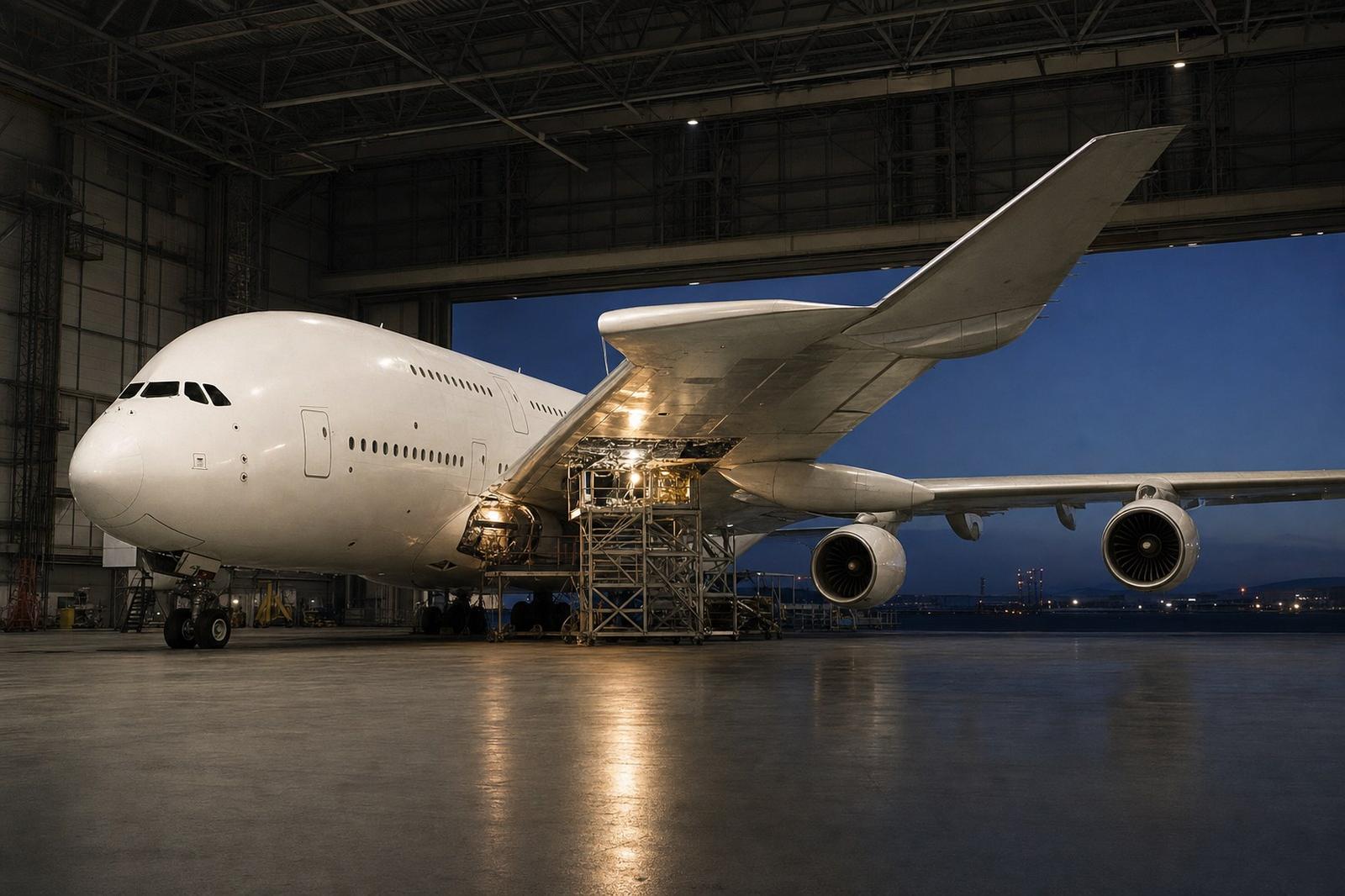
Europe's aviation regulator has ordered urgent inspections of the wings of the world's largest passenger aircraft, after cracks were found in a structural beam that helps carry the loads of flight. The emergency airworthiness directive, issued by the European Union Aviation Safety Agency on 22 June and taking effect on 24 June, names 16 Airbus A380 superjumbos — 15 operated by Emirates and one by Qantas.
The agency acted after reviewing data from earlier inspections, which showed that cracks in the affected area "could reduce the structural integrity of the wing." It stopped short of grounding the global A380 fleet, and said there was no sign of an immediate, fleet-wide safety risk.
Where the cracks are
The fault lies in the wing mid-spar, one of the long beams that run the length of the wing inside the so-called wing box. These spars absorb much of the aerodynamic stress an aircraft endures in the air, bending and flexing on every flight. On a machine the size of an A380 — a double-decker with a wingspan of nearly 80 metres — they are among the most heavily worked parts of the airframe.
Cracking of this kind is the sort of fatigue that engineers watch for as an aircraft accumulates flight cycles over many years. EASA's order is the result of a maintenance review, not of a mid-air incident, and no injuries or failures have been reported.
Two clocks for the airlines
The directive sets two timetables. Five of the Emirates aircraft must be inspected before they are allowed to fly again. The remaining 11 — ten more Emirates jets and the single Qantas aircraft — have a longer window and must be checked within 25 flight cycles. Operators are to obtain the detailed inspection procedure from Airbus and report their findings within seven days, whether or not cracks are found. Any aircraft showing damage must be repaired before returning to commercial service.
Emirates, which depends on the A380 more than any other carrier, said it would carry out the work without grounding its fleet.
Emirates will comply and carry out the inspections required in accordance with the airworthiness directive. We remain in close contact with Airbus and the relevant authorities to minimise any disruption to the operating schedule.
An ageing giant
The A380 entered service in 2007 as Airbus's answer to the jumbo era — a flagship that could carry well over 500 passengers between the world's busiest hubs. Commercially, it never paid off as hoped, and Airbus ended production in 2021. But the aircraft already built are far from retirement.
Emirates alone operates 116 A380s, the largest fleet in the world and more than half of all the superjumbos still flying. With no successor and strong demand on its long-haul routes, the Dubai carrier has bet heavily on keeping the type in the air well into the next decade. That makes the structural health of an ageing fleet a commercial question as much as a safety one.
- Directive issued 22 June, effective 24 June 2026.
- 16 aircraft affected: 15 Emirates, 1 Qantas.
- 5 jets to be inspected before next flight; 11 within 25 flight cycles.
- Findings reported to the regulator within seven days.
Pressure on Airbus
The order lands at an awkward moment for Airbus, whose chief executive has publicly argued that European regulation can be too heavy and too slow. Here the European regulator is doing precisely what it exists to do — flagging a structural concern on a European-built aircraft before it becomes a danger. For passengers, the practical message is reassurance: the system that monitors fatigue caught the problem on the ground. For the manufacturer, it is a reminder that the giants it built to last decades will demand close attention for every one of them.
Frequently asked
- Is the entire A380 fleet grounded?
- No. EASA ordered targeted inspections of 16 named aircraft, with five required to be checked before their next flight; the rest of the global fleet continues to operate.
- What exactly is cracked?
- The mid-spar of the wing — a long internal beam in the wing box that absorbs much of the aerodynamic stress of flight.
- Should passengers be worried?
- Regulators say there is no sign of an immediate safety risk; the cracks were identified through a maintenance review, not an in-flight incident, and affected aircraft must be repaired before flying commercially.
Sources
Around Tech & Science
A look at recent reporting on tech & science from the Étude newsroom.
Related by topic
Other Étude stories tagged with the same topics as this article.
More in Tech & Science




Trending at Étude
Financial regulation Luxembourg regulator will let Israeli bond prospectus expire on 31 August
Startup Guide How to Start and Fund a Startup in Luxembourg: A 2026 Founder's Guide
Culture Luxembourg's cuisine: the national dish and traditional classics
Languages Luxembourg's three official languages — Luxembourgish, French and German — and where each is used